Information
Landmark: Da Bia MountainCity: Phu Yen
Country: Vietnam
Continent: Asia
Da Bia Mountain, Phu Yen, Vietnam, Asia
Da Bia Mountain is a prominent geological formation located in Phu Yen Province, Vietnam. It is a significant natural landmark characterized by its distinctive rock formations.
Visual Characteristics
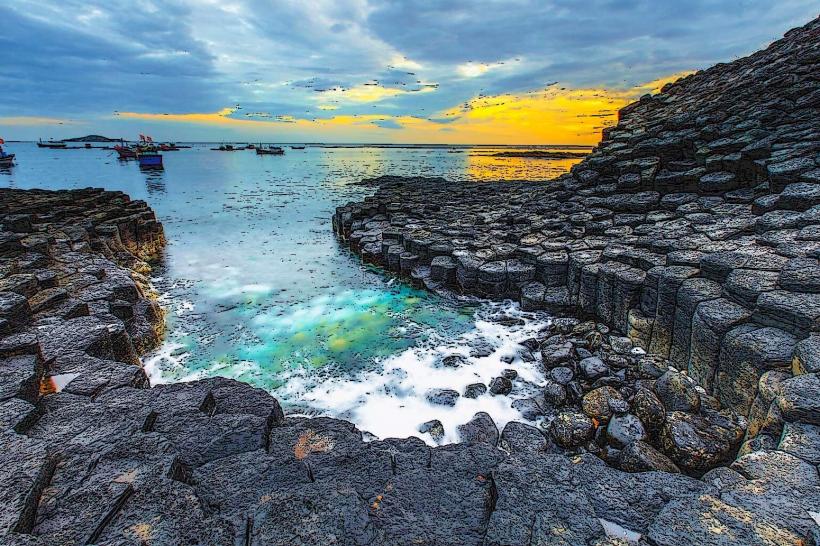
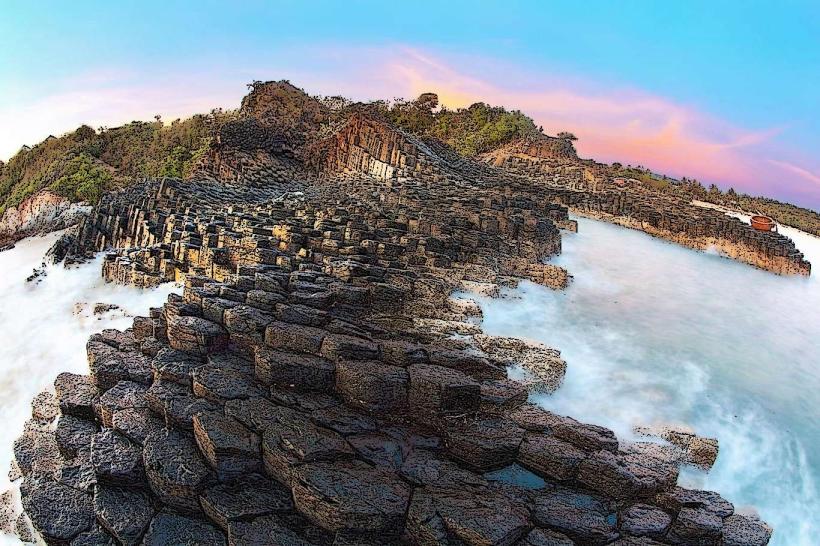
Da Bia Mountain is composed primarily of granite. Its most striking feature is a large, sheer rock face that rises vertically from the surrounding landscape. The rock surface exhibits variations in color, ranging from grey to reddish-brown, depending on mineral content and weathering. The summit area is sparsely vegetated, with hardy grasses and small shrubs clinging to the rock.
Location & Access Logistics
The mountain is situated approximately 10 kilometers east of Tuy Hoa city center. Access is via National Highway 1A, turning onto Provincial Road DT644 towards the coast. Parking is available at the base of the mountain, near the trailhead. Public transport options are limited; local buses serving Tuy Hoa may pass near the turn-off for DT644, requiring a subsequent taxi or motorbike taxi for the final approach.
Historical & Ecological Origin
Da Bia Mountain is a granite inselberg, a remnant of ancient geological processes where erosion has exposed resistant rock formations. Its ecological classification is a coastal rocky outcrop, supporting specialized flora adapted to arid and exposed conditions.
Key Highlights & Activities
Hiking to the summit is the primary activity. The ascent involves a well-defined trail with sections of rock scrambling. Reaching the top provides panoramic views of the coastline and surrounding plains. Observation of local bird species is also possible.
Infrastructure & Amenities
Basic amenities are available at the base, including informal food stalls selling local snacks and beverages. Restrooms are present but may be rudimentary. Shade is limited along the hiking trail, with more substantial cover found near the food stalls. Cell phone signal (4G) is generally available at the base and intermittently on higher sections of the trail.
Best Time to Visit
The optimal time for visiting is during the dry season, from January to August, to avoid heavy rainfall. Early morning or late afternoon offers more favorable lighting conditions for photography, with the sun casting longer shadows. The mountain is accessible year-round, but heat can be intense during midday in the summer months.
Facts & Legends
Local legend states that the mountain's name, "Da Bia" (meaning "stone tablet"), derives from a large, flat rock at the summit that resembles an ancient inscription. It is said that ancient Vietnamese kings used this rock as a marker or a place for proclamations.
Nearby Landmarks
- Nhan Tower (2.5km Southwest)
- Tuy Hoa Beach (3.0km South)
- Chua Da Bia (Temple) (0.8km West)
- Ong Cop Bridge (12.0km North)
- Ganh Da Dia (15.0km North)