Information
Landmark: Ghenh Da DiaCity: Phu Yen
Country: Vietnam
Continent: Asia
Ghenh Da Dia, Phu Yen, Vietnam, Asia
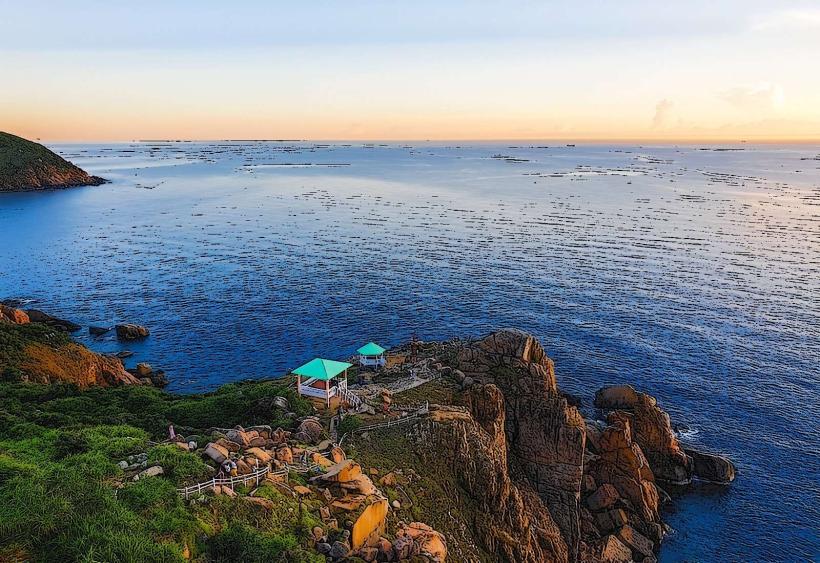
Ghenh Da Dia is a coastal rock formation located in Phu Yen Province, Vietnam.
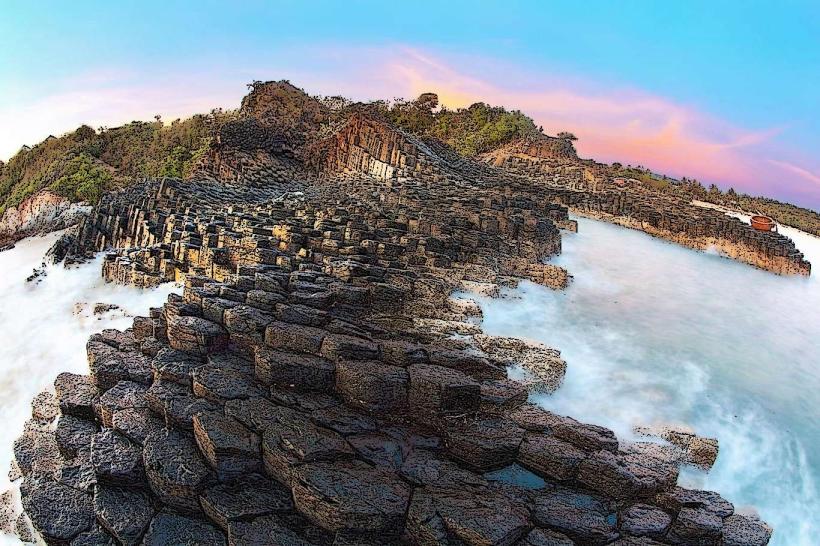
This geological site features a unique arrangement of basalt columns along the coastline.
Visual Characteristics
The formation consists of thousands of hexagonal and circular basalt columns, varying in diameter from 1 to 2 meters. These columns are dark grey to black, with some exhibiting reddish-brown oxidation. The rock surfaces are generally smooth and polished by wave action. The site extends approximately 200 meters along the coast and rises up to 10 meters above sea level.
Location & Access Logistics
Ghenh Da Dia is situated in An Ninh Dong Commune, Tuy An District, Phu Yen Province. It is approximately 25 kilometers north of Tuy Hoa city center. Access is via National Highway 1A, then turning onto Provincial Road DT641 towards the coast. Parking is available at designated areas near the site entrance. Public transport options include local buses from Tuy Hoa to Tuy An, followed by a short taxi or motorbike ride.
Historical & Ecological Origin
Ghenh Da Dia is a result of volcanic activity approximately 200 million years ago during the early Cretaceous period. Lava flowed into the sea, and rapid cooling caused the lava to contract and fracture into these distinctive columnar shapes. It is classified as a unique geological formation of volcanic origin.
Key Highlights & Activities
Observation of the basalt columns is the primary activity. Visitors can walk among the formations at low tide. Photography is a common pursuit due to the unusual geological structures. No specific guided tours are regularly scheduled, but local guides may be available for hire.
Infrastructure & Amenities
Restrooms are available at the entrance area. Limited shade is provided by natural rock overhangs. Cell phone signal (4G) is generally available. Food vendors are typically present near the parking area, offering local snacks and beverages.
Best Time to Visit
The best time of day for photography is during sunrise or sunset when the light casts long shadows across the columns. The dry season, from January to August, offers the most favorable weather conditions. Visiting during low tide is recommended to access more of the rock formations.
Facts & Legends
Local legend attributes the formation of Ghenh Da Dia to a battle between a giant and a dragon, with the dragon's scales falling to the earth and solidifying into the rock columns. Geologically, the uniform hexagonal shapes are a result of the specific cooling rate of the basaltic lava.
Nearby Landmarks
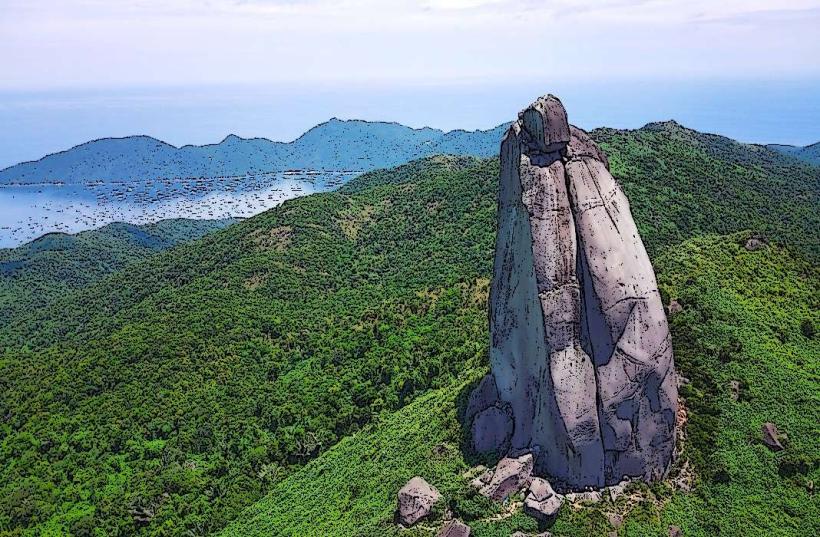
- Da Bia Mountain (2.5km Northwest)
- Nhan Tower (26km Southwest)
- Long Thuy Beach (18km Southwest)
- Mang Lang Church (15km West)