Information
Landmark: Ha Long BayCity: Ha Long
Country: Vietnam
Continent: Asia
Ha Long Bay, Ha Long, Vietnam, Asia
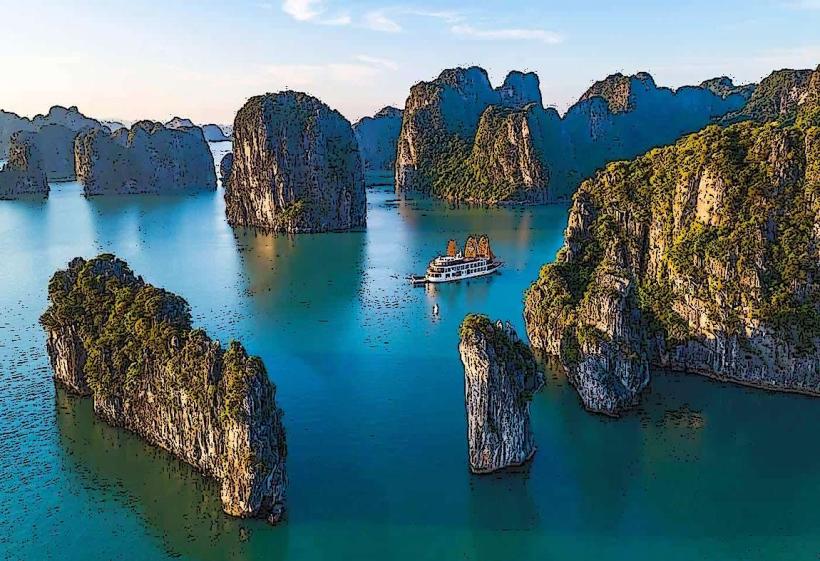
Ha Long Bay is a UNESCO World Heritage Site located in the Gulf of Tonkin, Quảng Ninh Province, Vietnam. It is characterized by thousands of limestone karsts and islets of various shapes and sizes.
Visual Characteristics
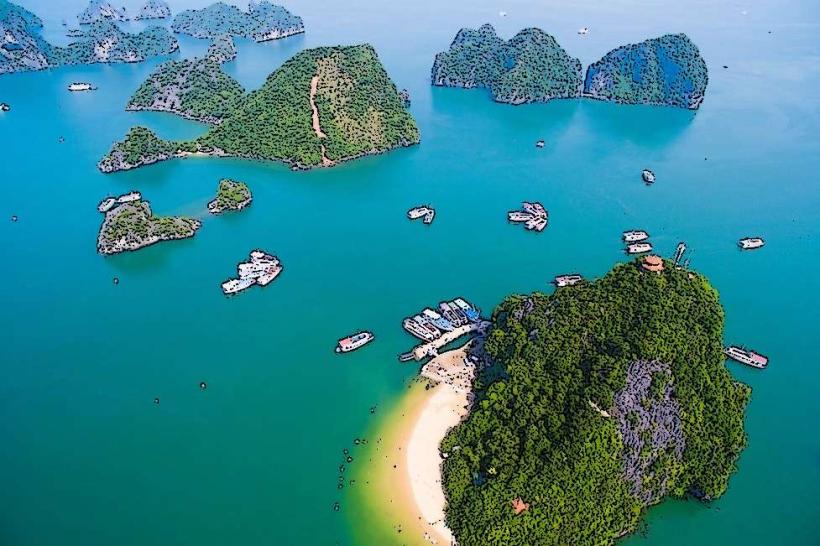
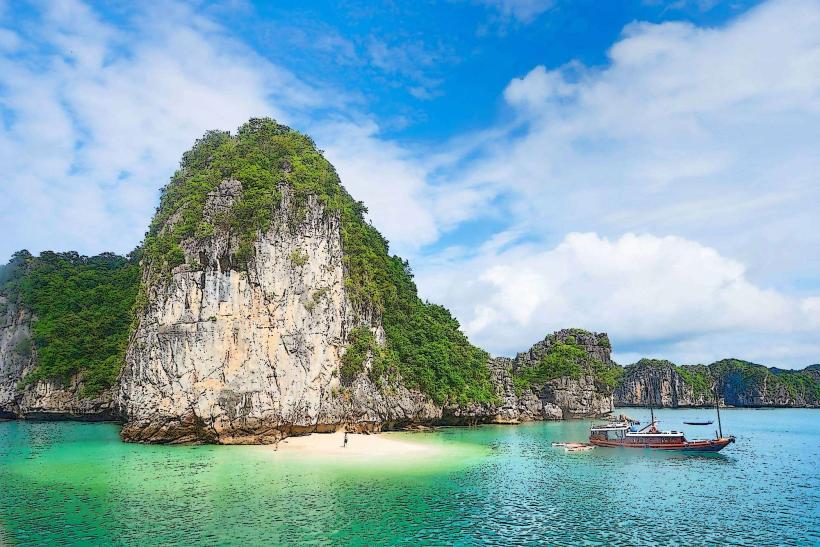
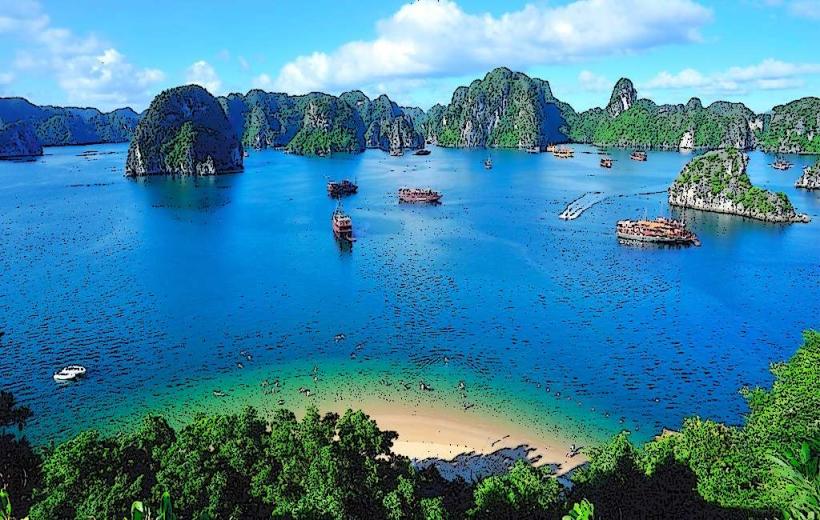
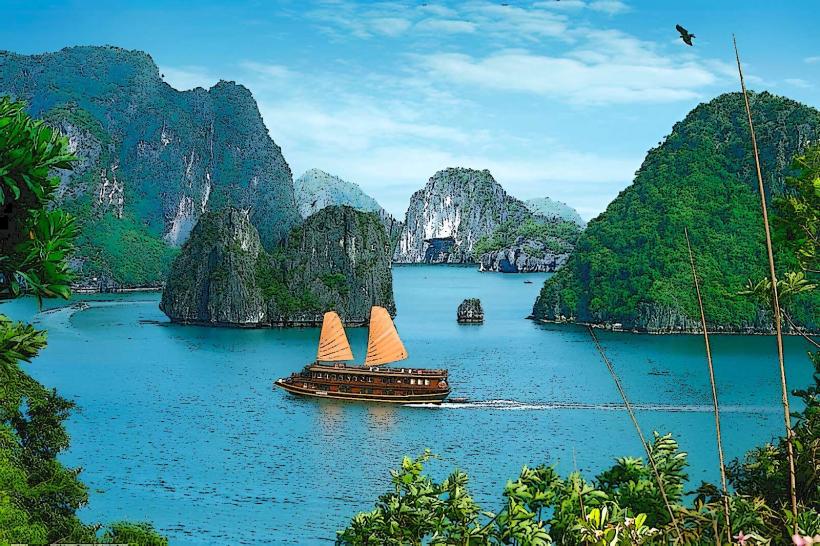
The bay features over 1,600 limestone karsts and islets, primarily composed of fossilized coral and limestone. These formations rise vertically from the emerald-green water, exhibiting diverse shapes sculpted by erosion. Vegetation, including tropical trees and vines, covers many of the karsts. The water color ranges from deep green to turquoise depending on light conditions and depth.
Location & Access Logistics
Ha Long Bay is situated approximately 165 kilometers east of Hanoi. Access is primarily from Ha Long City or the nearby town of Cẩm Phả. Major access routes include National Highway 18. Travel time from Hanoi is typically 3-4 hours by road. Parking is available at designated piers in Ha Long City, such as Tuan Chau International Port and Bai Chay Tourist Wharf. Public transport options include intercity buses from Hanoi's My Dinh Bus Station to Ha Long City. Boat tours are the primary means of exploring the bay, departing from these piers.
Historical & Ecological Origin
The karsts of Ha Long Bay are the result of millions of years of geological processes, primarily karst topography development. The limestone formations were uplifted and then eroded by wind, rain, and wave action. The bay is classified as a marine karst landscape. Ecologically, it supports a diverse marine ecosystem, including coral reefs and various fish species.
Key Highlights & Activities
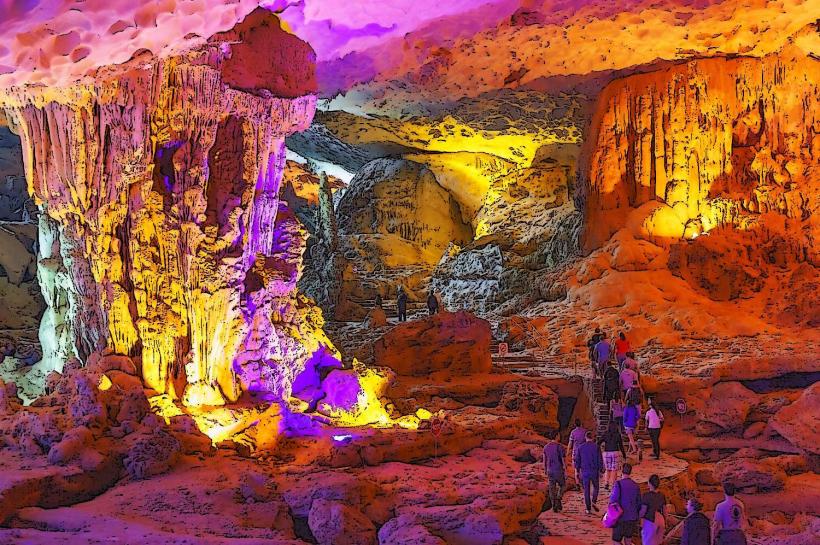
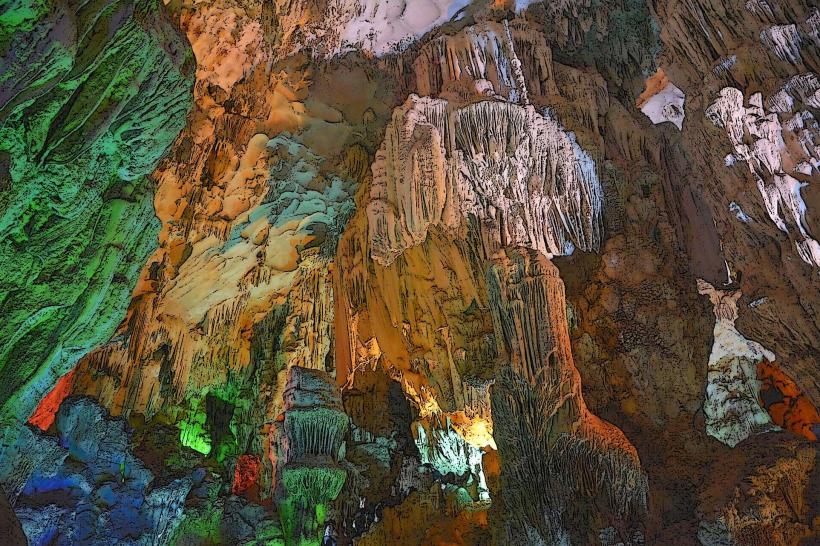
Activities include boat tours to explore the karsts and caves, kayaking through lagoons, swimming in designated areas, and visiting floating fishing villages. Specific caves accessible by tour include Sung Sot Cave (Surprise Cave) and Thien Cung Cave (Heavenly Palace Cave). Hiking trails are available on some larger islands, such as Ti Top Island.
Infrastructure & Amenities
Restrooms are available on most tour boats and at major piers. Shade is provided on tour boats and in some designated rest areas on islands. Cell phone signal (4G/5G) is generally available throughout the bay, though it can be intermittent in more remote areas. Food vendors are present at piers and on some larger tourist boats; smaller boats may offer limited food and beverage options.
Best Time to Visit
The best time for clear skies and comfortable temperatures is from October to April. The summer months (May to September) are hotter and prone to typhoons. For photography, early morning and late afternoon offer softer light and dramatic shadows on the karsts. High tide is generally preferred for kayaking and accessing certain lagoons.
Facts & Legends
Local legend states that Ha Long Bay was created by dragons sent by the gods to defend Vietnam against invaders. The dragons spat out jewels and jade, which formed the karsts and islets. A specific tip for visitors is to book tours that include kayaking to experience the intimate scale of the lagoons and grottoes.
Nearby Landmarks
- Bai Chay Tourist Wharf (0.2km West)
- Tuan Chau International Port (1.5km Southwest)
- Quang Ninh Museum (3.0km West)
- Ha Long Night Market (2.5km West)
- Yen Tu Mountain (45km Northwest)