Information
Landmark: Haeundae BeachCity: Busan
Country: South Korea
Continent: Asia
Haeundae Beach, Busan, South Korea, Asia
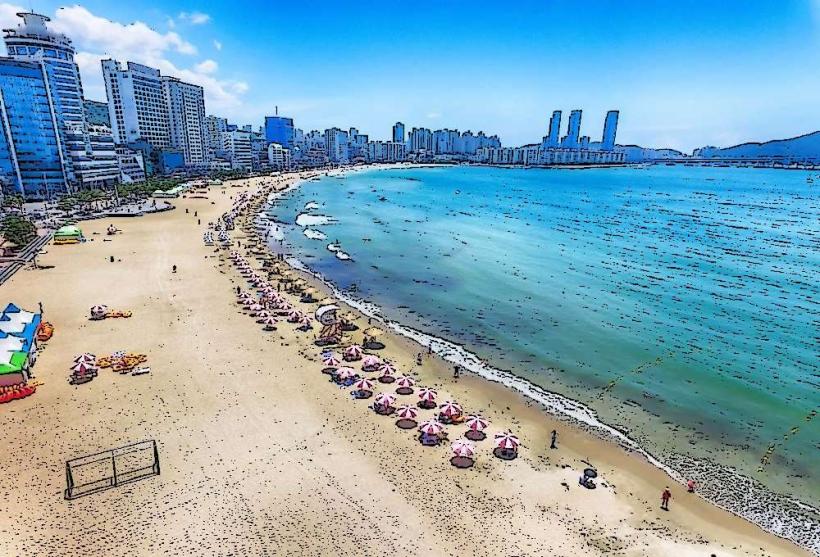
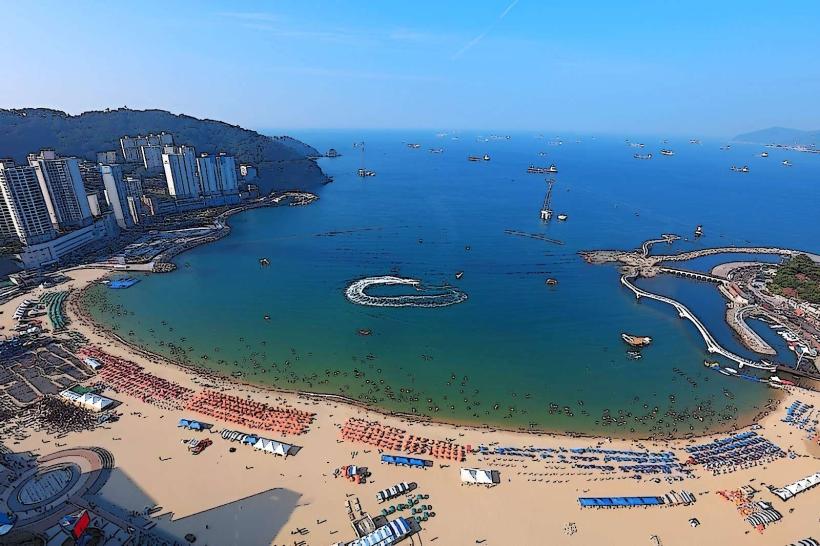
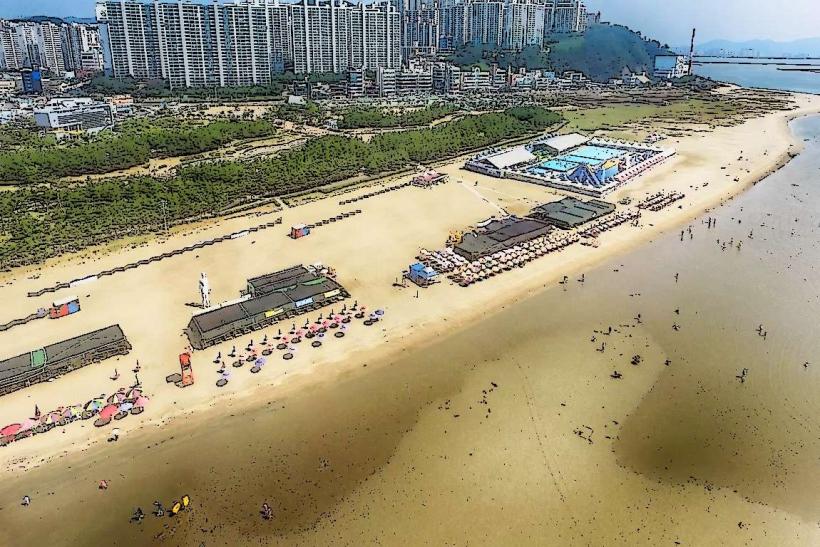
Haeundae Beach is a 1.5 kilometer long sandy shore located in the Haeundae District of Busan, South Korea. It is one of the country's most frequented coastal destinations.
Visual Characteristics
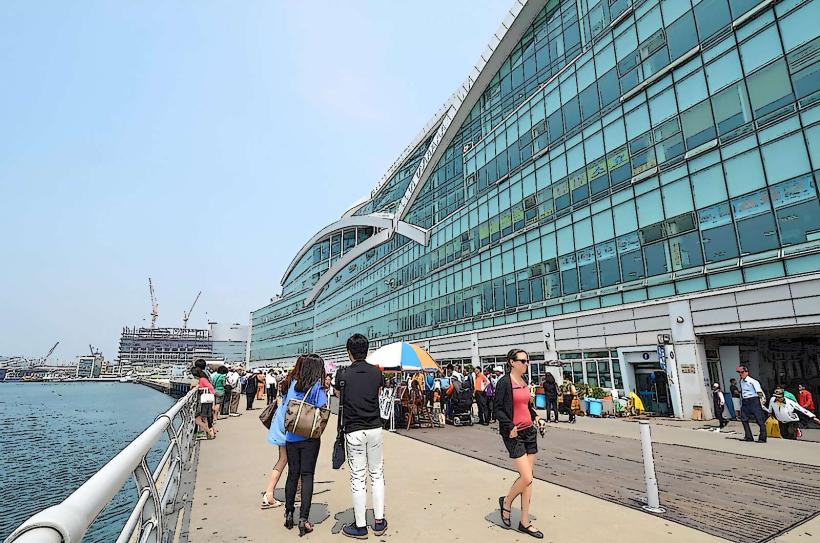
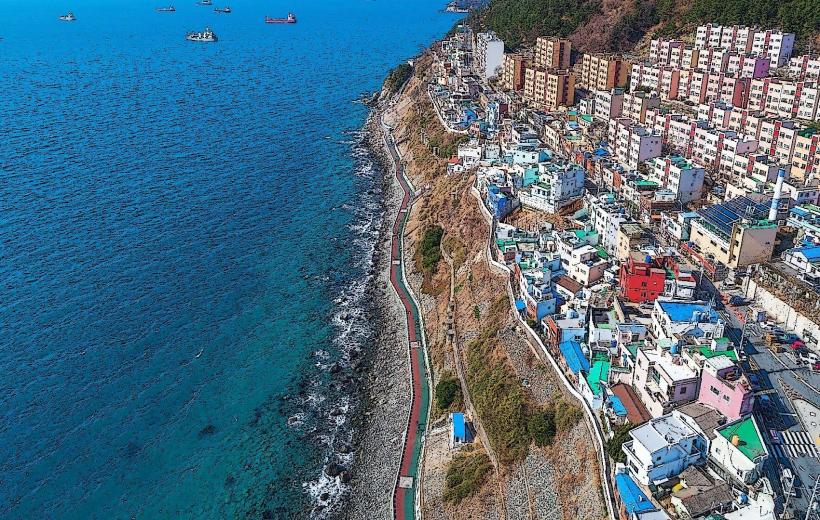
The beach features fine, white sand. The water color varies from light blue to deep blue depending on atmospheric conditions and depth. The shoreline is bordered by a paved promenade and backed by a dense urban landscape with numerous high-rise buildings.
Location & Access Logistics
Haeundae Beach is situated approximately 10 kilometers east of Busan's city center. Access is primarily via Haeundae Station (Busan Subway Line 2), which is directly connected to the beach area. Numerous city bus routes also serve the vicinity, including routes 100, 139, 200, and 1001. Paid parking is available in multi-story garages adjacent to the beach, such as the Haeundae Beach Parking Lot.
Historical & Ecological Origin
The beach is a natural formation, with its sand composed of shell fragments accumulated over millennia. Historically, it was a less developed area until the mid-20th century when Busan began its rapid urbanization. The surrounding area has since developed into a major tourist and residential hub.
Key Highlights & Activities
Swimming and sunbathing are primary activities during warmer months. The beach hosts various events, including the Haeundae Sand Festival in summer. Water sports such as jet skiing and parasailing are available for rent. Walking along the promenade offers views of the coastline and the Dalmaji-gil Road.
Infrastructure & Amenities
Public restrooms are located at multiple points along the promenade. Shade is provided by rental umbrellas and canopies. Cell phone signal (4G/5G) is generally strong throughout the area. Numerous restaurants, cafes, and convenience stores are situated directly behind the beach.
Best Time to Visit
The optimal period for visiting Haeundae Beach is from June to August for swimming and beach activities, with July and August being the peak season. For photography, early morning or late afternoon light provides softer illumination. High tide can reduce the visible sandy area.
Facts & Legends
A local legend states that the beach's name, "Haeundae," originates from the scholar Choi Chi-won, who was impressed by its beauty and named it after a mythical sea god's palace. A specific tip for visitors is to explore the nearby Dongbaekseom Island, accessible via a short walk from the western end of the beach, for coastal walking paths and views of the Nurimaru APEC House.
Nearby Landmarks
- Dongbaekseom Island (0.3km West)
- Nurimaru APEC House (0.4km West)
- Dalmaji-gil Road (0.8km Northeast)
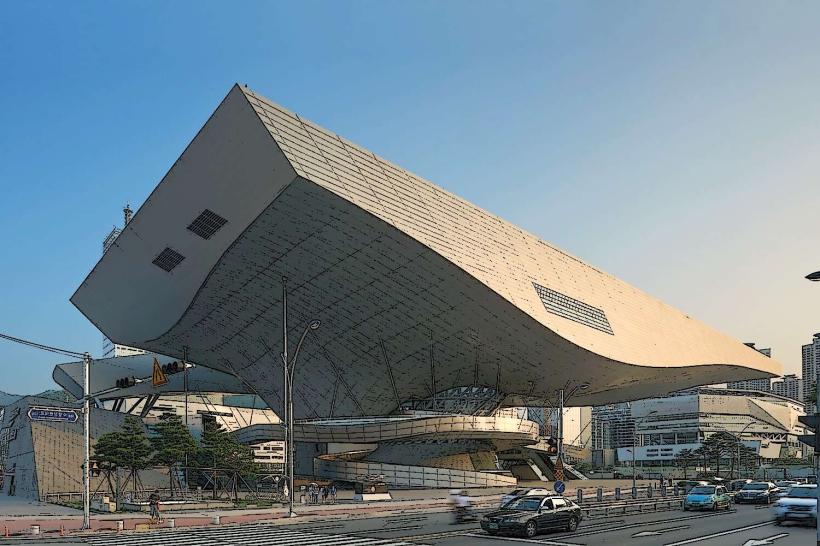
- Busan Cinema Center (2.5km Southwest)
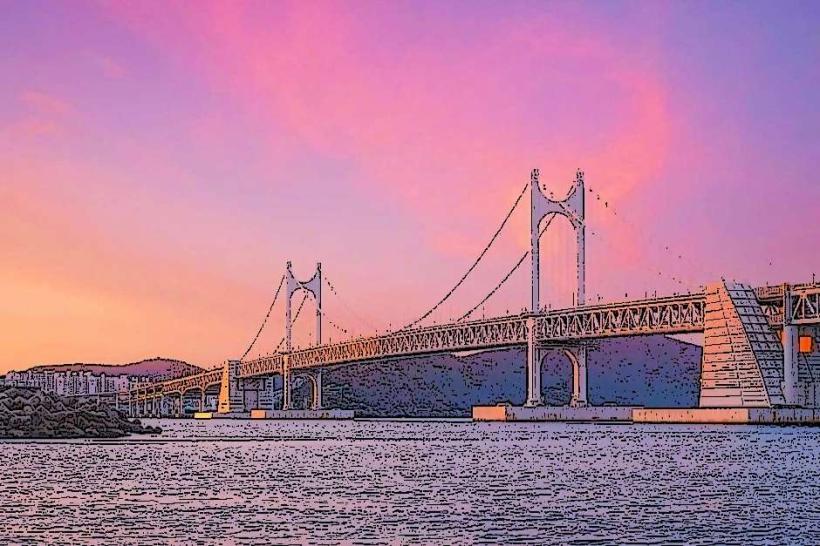
- Gwangalli Beach (3.5km Southwest)