Information
Landmark: Hala Sultan TekkeCity: Larnaca
Country: Cyprus
Continent: Europe
Hala Sultan Tekke, Larnaca, Cyprus, Europe
The Hala Sultan Tekke is a significant mosque and shrine complex situated on the western bank of the Larnaca-salt-lake_larnaca" class="underline">Larnaca Salt Lake, southwest of Larnaca, Cyprus. It serves as a pilgrimage site for Muslims and is dedicated to Umm Haram, a companion of Prophet Muhammad.
Visual Characteristics
The complex features a main mosque building constructed from light-colored limestone, characterized by a large central dome and a single minaret. The minaret is slender and cylindrical, topped with a conical cap. Surrounding the mosque are several ancillary buildings, including a mausoleum, a cemetery, and living quarters for dervishes, all built in a similar Ottoman architectural style. The grounds are landscaped with palm trees, cypress trees, and various flowering plants, providing shade and a structured garden environment.
Location & Access Logistics
The Hala Sultan Tekke is located approximately 5 kilometers southwest of Larnaca city center. Access is primarily via the B4 road, which runs along the western edge of the Larnaca Salt Lake. A dedicated parking area is available directly adjacent to the complex, accommodating both cars and tour buses. Public transport is available via local bus services; bus line 425, which connects Larnaca city center with Larnaca International Airport, has a stop within walking distance of the Tekke.
Historical & Ecological Origin
The site's historical significance dates back to the 7th century AD, marking the alleged burial place of Umm Haram, the wet nurse of Prophet Muhammad, who is believed to have died here during an Arab raid of Cyprus. The current mosque and complex were largely constructed in the 18th century, with the main mosque building completed in 1816 by the Ottoman governor of Cyprus, Seyyid Mehmed Emin Efendi. The surrounding Larnaca Salt Lake is a natural hypersaline lake system, forming part of a protected Ramsar site due to its ecological importance as a migratory bird habitat.
Key Highlights & Activities
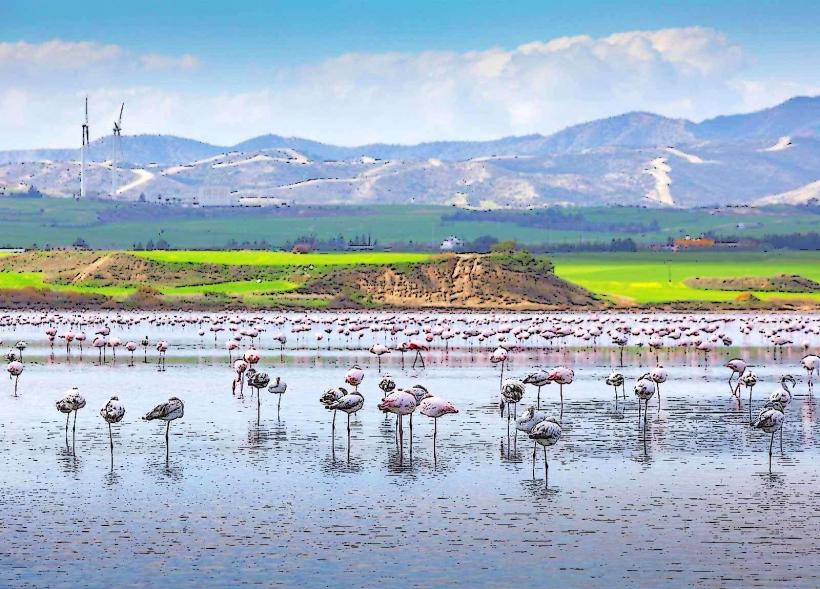
Visitors can enter the mosque for prayer or observation, provided appropriate dress is worn. The tomb of Umm Haram, located within the mausoleum, is a central point of interest. Walking paths around the complex allow for exploration of the gardens and the adjacent salt lake. During winter months (November to March), the lake attracts large flocks of migratory birds, including flamingos, offering opportunities for birdwatching.
Infrastructure & Amenities
Restroom facilities are available on-site. The complex grounds offer natural shade from numerous trees. Cell phone signal (4G/5G) is generally strong throughout the area. A small souvenir shop and a cafe are located near the entrance, offering refreshments and local items. Drinking water fountains are also present.
Best Time to Visit
The best time to visit for comfortable weather is during the spring (April-May) or autumn (September-October) when temperatures are moderate. For photography, early morning or late afternoon light provides optimal conditions, particularly for capturing reflections on the salt lake. To observe flamingos, the winter months (November-March) are ideal when the lake is filled with water.
Facts & Legends
A prominent legend associated with the Tekke states that Umm Haram died after falling from her mule during a military expedition and that her tomb is marked by three large stones, one of which is said to be suspended in mid-air. While the stones are indeed present, their levitation is not observable. The site is considered the third most important holy place for Muslims after Mecca and Medina.
Nearby Landmarks
- Larnaca Salt Lake: 0.1km West
- Larnaca International Airport (LCA): 3km Southeast
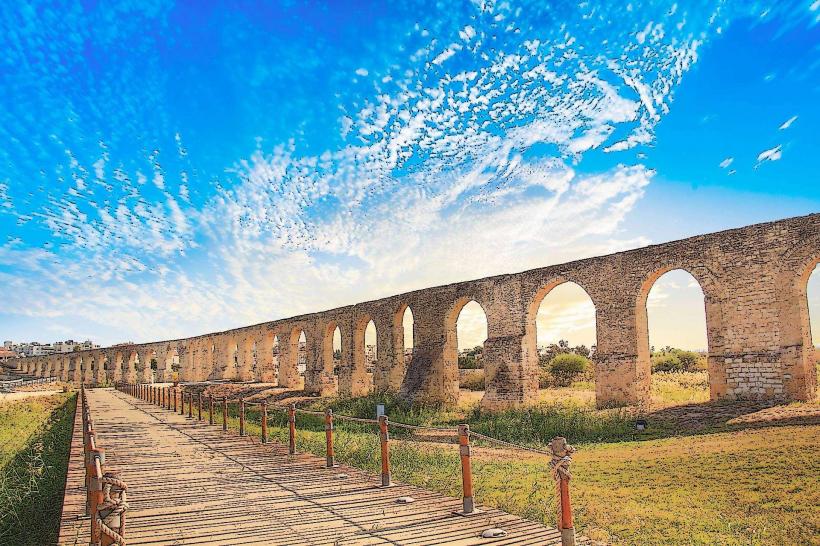
- Kamares Aqueduct: 4km Northeast
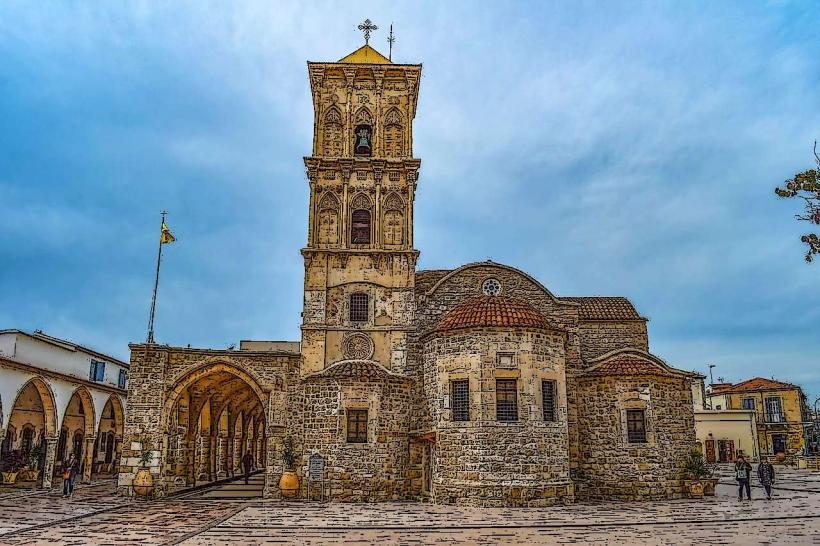
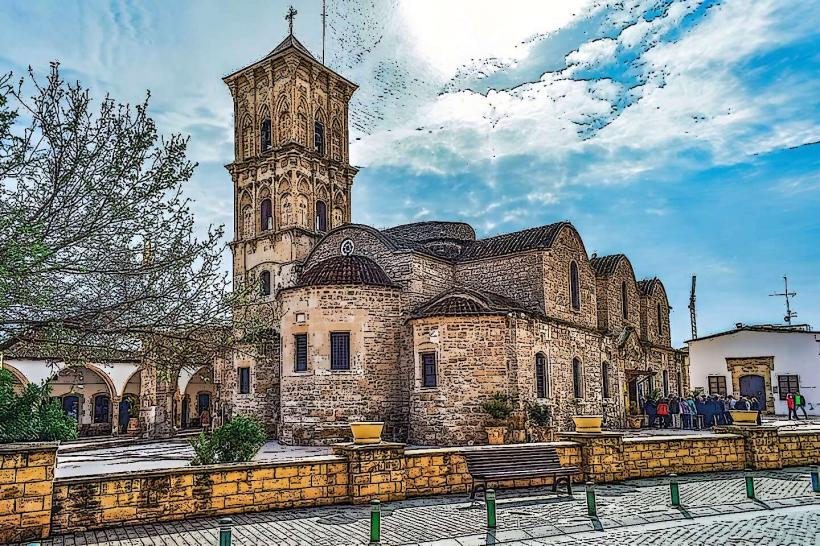
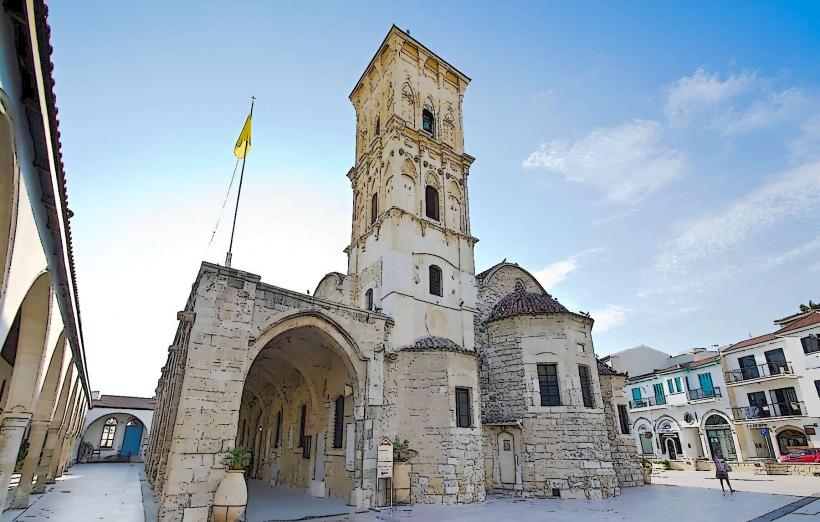
- Church of Saint Lazarus: 5.5km Northeast
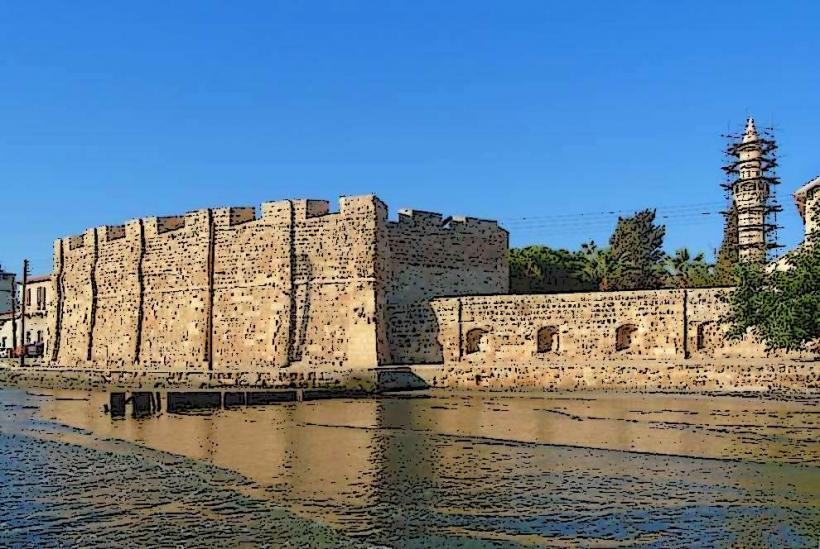
- Larnaca Medieval Castle: 6km Northeast