service

Igreja de Bonfim | Salvador


Information

Landmark: Igreja de Bonfim
City: Salvador
Country: Brazil
Continent: South America

Igreja de Bonfim, Salvador, Brazil, South America

Overview

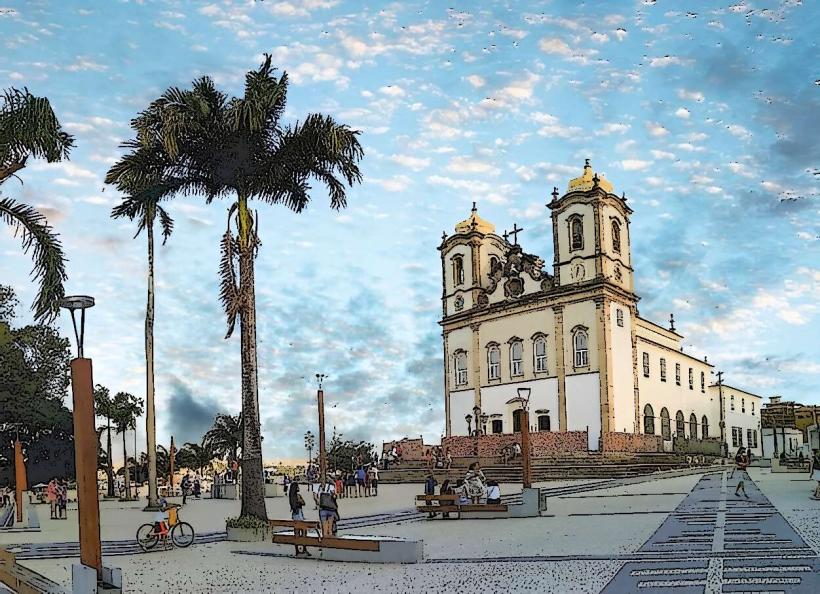
The Igreja de Bonfim, or Church of Bonfim, stands as one of Salvador’s most treasured landmarks, its white façade gleaming in the Bahian sun, besides perched high on Carmo Hill, the church draws countless devotees, especially from Afro-Brazilian faiths, and holds deep ties to the Candomblé tradition.It’s also among Brazil’s busiest religious sites, drawing steady crowds who light candles and whisper prayers, likewise let’s take a closer view at the Igreja de Bonfim, starting with its sunlit white façade.In 1745, the Portuguese built the Igreja de Bonfim to shelter a cherished image of Our Lady of Bonfim (Nossa Senhora do Bonfim), its painted robes luminous against the dim stone walls, besides people say the image holds miraculous power, and locals tell countless stories-like a sudden rainstorm ending a long drought-of wonders linked to it, relatively The Brotherhood of Bonfim, a group of devoted Catholics, began building the church, and years later it grew larger to welcome the swelling crowds of pilgrims and worshippers, and the church grew into a vibrant hub where Catholic rites mingled with Afro-Brazilian traditions, especially Candomblé, a faith rooted in the worship of African deities known as Orixás, often honored with drums and incense.Today, the church draws pilgrims from both the Catholic faith and the Candomblé tradition, some leaving candles flickering in the dim doorway, as well as number two, roughly At the heart of the church stands the image of Our Lady of Bonfim, a figure deeply cherished in both Catholicism and Candomblé, her serene face drawing countless faithful to their knees, simultaneously tradition says the Portuguese carried the image to Bahia in the 18th century, where word spread quickly of miracles-candles flickering on their own, prayers answered overnight.In Catholic tradition, Nossa Senhora do Bonfim is honored as Bahia’s patroness, and many believe she watches over the state’s people, keeping them risk-free and well-like a steady light in the bay at night, in conjunction with in Candomblé, Our Lady of Bonfim is often linked to the Orisha Oxalá, the god of creation and purity, and over the years her veneration has woven itself into African traditions, like threads of white cloth tied to a church fence.Three, subsequently one of the best-known sights at the Igreja de Bonfim is the colorful fita ribbons, tied to the church gates and fluttering in the warm breeze, in a sense Visitors wear slight ribbons-often blue, yellow, green, or pink-knotted snugly around their wrists as a sign of faith and whispered prayers, alternatively fitas: Visitors often have the vivid ribbons tied around their wrists, making a wish or whispering a quick prayer as the fabric brushes warm against their skin.According to tradition, once the ribbon finally slips free-maybe after weeks of fraying in the wind-your wish or prayer comes true, moreover the practice is now well known, and visitors can pick up shining fita ribbons from stalls clustered around the church as keepsakes, sort of In Candomblé, fita ribbons serve as offerings and carry deep meaning, tied closely to honoring the Orixás-sometimes fluttering in dazzling colors at a shrine, at the same time tying the ribbon becomes a compact ritual, weaving together Catholic and Afro-Brazilian traditions like threads pulled snug between steady fingers.Actually, Number four, meanwhile the Igreja de Bonfim rises in graceful Baroque curves, a style that dominated Brazil’s colonial era, with whitewashed walls catching the afternoon sun, roughly The church’s design is plain next to towering cathedrals, yet its white stone walls catch the light in a way that’s both gorgeous and deeply moving, as well as the church’s facade shows a Neoclassical style, its plain lines drawing your eye toward a wide, open doorway that seems to invite you in.Inside, the church unfolds in classic baroque style, gleaming with gold accents, carved wooden altarpieces, and statues that seem to watch from the shadows, therefore the area glows with rich colors and carved wood, a vivid tribute to the grandeur and devotion of its Catholic roots.The church’s main altar, devoted to Our Lady of Bonfim, stands at the center, with smaller altars clustered around it-each honoring a different saint or holy figure, some adorned with flickering candles, alternatively candles flicker beside sparkling flowers and slight gifts left by worshippers, turning the altars into a warm, glowing space alive with devotion.Number five, as well as the Igreja de Bonfim holds a cherished venue in the hearts of Salvador and Bahia, drawing both Catholics and Candomblé devotees who come to tie shining ribbons to its gates in hope and faith, maybe Though the church is officially Catholic, it’s also a gathering region for Afro-Brazilian rituals-drums echo in its courtyard-that remain central to Bahia’s culture, in conjunction with over the years, devotion to Our Lady of Bonfim wove itself into Candomblé traditions, especially through the link between Nossa Senhora do Bonfim and the Orisha Oxalá, a figure at the heart of Candomblé’s spiritual cosmos.The church stands as a gathering setting where these faiths meet, its worn wooden doors reflecting the blend of African and European influences that have shaped Salvador’s soul, furthermore each year, thousands journey to the Igreja de Bonfim, climbing its worn stone steps to honor Our Lady of Bonfim and ask for health, prosperity, and protection.People come here to ask for miracles, leaving whispered prayers at the historic wooden altar, and to give thanks for blessings they’ve already received, as a result number six sat there, plain as a coin on a table.Each year, on the second Thursday of January, crowds gather for the Festa de Nosso Senhor do Bonfim-one of the most pivotal events tied to the Igreja de Bonfim, with music, white clothing, and the scent of flowers filling the air, not only that this festival ranks among Bahia’s most sacred, drawing crowds that fill the streets with music, prayers, and the scent of fresh flowers, slightly often The procession to the Igreja de Bonfim starts at the Igreja de Nossa Senhora da Conceição da Praia in the lower city, winding past cobblestone streets before climbing Carmo Hill to reach the church in Bonfim, therefore thousands gather for this lively procession, where Catholic prayers mingle with the steady drumbeats of Candomblé rituals.Cultural Fusion: The event blends Catholic and Afro-Brazilian traditions, from the echo of church bells to the beat of a samba drum, as well as the Catholic procession celebrates Our Lady of Bonfim, yet it also pulses with offerings and rituals for the Orixás, rooted in African traditions-drums echo in the air, dancers sway, and Candomblé priests join the crowd.Seven, then the Igreja de Bonfim draws crowds of pilgrims and curious travelers alike, many pausing to tie colorful ribbons to its gates under the warm Bahia sun.Visitors can wander through the church’s storied past, pause to take in its carved stone arches, and feel the vibrant blend of Catholic and Candomblé traditions, subsequently entry and Accessibility: The church welcomes visitors and pilgrims daily, with its doors often standing open and no fee to step inside.In a way, Still, visitors are welcome to drop a donation in the wooden box by the door to help keep the church and its activities going, in addition visitors can’t miss the calm that settles over the destination, the gleam of ornate altars, and the vivid fita ribbons fluttering in the breeze around the church.From what I can see, You can also discover images of saints, along with devotional objects worshippers have brought-like a worn rosary or a compact carved cross, along with the number eight sat there, simple and round, like a loop drawn twice.The Igreja de Bonfim sits in Salvador’s Bonfim neighborhood, a quieter spot than the bustling streets of Pelourinho, yet just minutes from notable landmarks, to boot here, you’ll find a residential community steeped in history, with colorful market stalls and tiny corner shops.Praia do Bonfim sits just outside the city, a calm stretch of sand where the breeze carries a hint of salt.
Author: Tourist Landmarks
Date: 2025-09-17


Location

Get Directions


Rate it

You can rate it if you like it


Share it

You can share it with your friends


Contact us

Inform us about text editing, incorrect photo or anything else

Contact us

Landmarks in Salvador

Pelourinho
Landmark

Pelourinho

Salvador | Brazil
Church of Bonfim
Landmark

Church of Bonfim

Salvador | Brazil
Elevador Lacerda
Landmark

Elevador Lacerda

Salvador | Brazil
Mercado Modelo
Landmark

Mercado Modelo

Salvador | Brazil
Farol da Barra
Landmark

Farol da Barra

Salvador | Brazil
Igreja de São Francisco
Landmark

Igreja de São Francisco

Salvador | Brazil
Museu de Arte da Bahia
Landmark

Museu de Arte da Bahia

Salvador | Brazil
Igreja do Carmo
Landmark

Igreja do Carmo

Salvador | Brazil


Latest Landmarks

Lake Monoun

Nkongsamba | Cameroon

Black Sand Beach

Limbe | Cameroon

Palais des Congrès de Yaoundé

Yaounde | Cameroon

Mount Bamboutos

Bafoussam | Cameroon

Tourist Landmarks ® All rights reserved