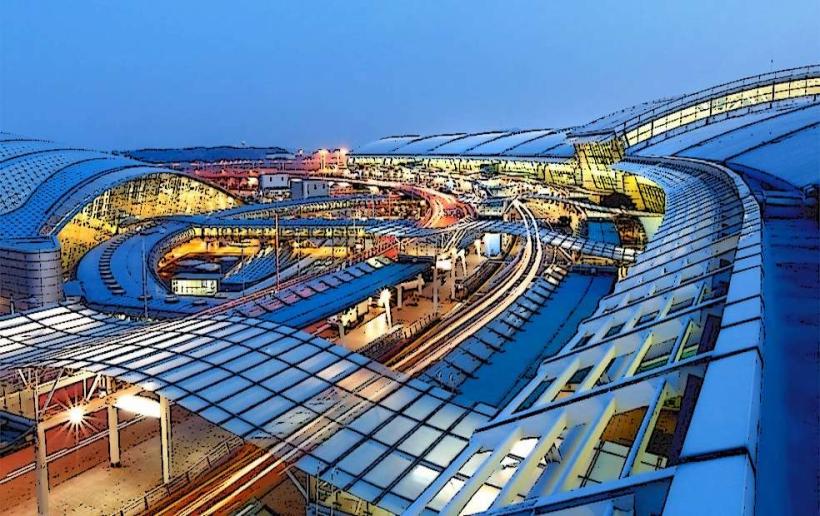
Information
Landmark: Incheon ChinatownCity: Incheon
Country: South Korea
Continent: Asia
Incheon Chinatown, Incheon, South Korea, Asia
The Dunhuang Grottoes are a collection of Buddhist cave temples located in Dunhuang, Gansu Province, China.
Visual Characteristics
The grottoes are carved into a cliff face of sandstone. The facades of the caves vary in design, with some featuring wooden porticoes and multi-tiered roofs. The interiors contain thousands of Buddhist murals and sculptures. The murals are executed in mineral pigments, displaying a range of colors including ochre, cinnabar, malachite green, and lapis lazuli blue. Sculptures are primarily made of clay and plaster, depicting Buddhas, bodhisattvas, and various celestial beings.
Location & Access Logistics
The Dunhuang Grottoes are situated approximately 25 kilometers southeast of Dunhuang city center. Access is via the S314 provincial road. Private vehicles and taxis can reach the site. Public transport options include local buses departing from Dunhuang city, typically Route 3 or 13, which stop at the grottoes' entrance. Parking is available at the visitor center.
Historical & Ecological Origin
Construction of the grottoes began in the 4th century CE, during the Northern Liang dynasty, and continued over a period of approximately 1,000 years, with significant contributions from subsequent dynasties including the Northern Wei, Sui, Tang, and Song. The site was established as a monastic complex and a place for Buddhist pilgrimage along the Silk Road. The caves are excavated into the Danxia landform, characterized by its layered red sandstone.
Key Highlights & Activities
Exploration of the Mogao Caves, the largest and most significant section of the grottoes. Viewing of the preserved murals and sculptures within designated caves. Guided tours are available, focusing on specific historical periods and artistic styles. Photography is restricted in most cave interiors.
Infrastructure & Amenities
Restrooms are available at the visitor center and near the cave entrances. Shaded areas are provided at the visitor center and along pathways. Cell phone signal (4G/5G) is generally available. Food vendors and small restaurants are located at the visitor center complex.
Best Time to Visit
The best time of day for viewing the murals is generally mid-morning or late afternoon when natural light conditions are most favorable for discerning the colors and details. The most suitable months for visiting are April to May and September to October, avoiding the extreme heat of summer and the cold of winter. No tide considerations apply.
Facts & Legends
The Library Cave (Cave 17) within the Dunhuang Grottoes contained a vast collection of over 50,000 religious and secular documents, discovered in 1900. Many of these manuscripts were later dispersed to institutions worldwide. A specific tip for visitors is to pre-book tickets, especially during peak season, as entry to certain caves is limited.
Nearby Landmarks
- Crescent Lake (Yueyaquan): 15km Northwest
- Mingsha Mountain (Singing Sand Mountain): 15km Northwest
- Dunhuang Museum: 22km Northwest
- Yangguan Pass: 70km Southwest