Information
Landmark: Johnstown CastleCity: Wexford
Country: Ireland
Continent: Europe
Johnstown Castle, Wexford, Ireland, Europe
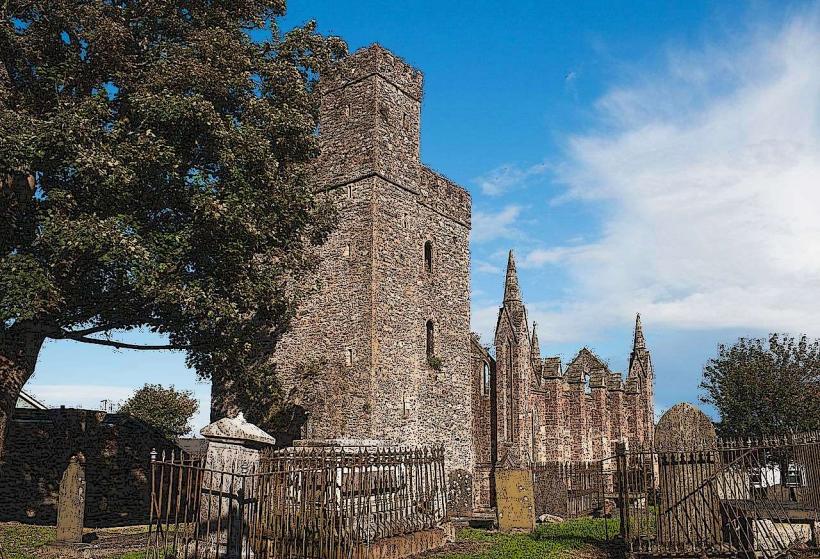
Johnstown Castle is a 19th-century Gothic Revival castle located on a 120-hectare estate in County Wexford. It serves as a significant cultural and agricultural heritage site, housing the Irish Agricultural Museum.
Visual Characteristics
The castle is constructed from local granite and limestone, featuring a dramatic grey facade.
Architecture: Characterized by multiple circular and square towers, crenellated battlements, and Gothic-style windows. It includes a unique 86-meter-long servants' tunnel.
Gardens: Designed in the mid-19th century by Daniel Robertson. Features three ornamental lakes, sunken gardens, a walled garden, and a collection of over 200 species of trees and shrubs.
Lakes: Populated by diverse waterfowl and noted for the "Gothic" stone statues and bridges along the perimeters.
Location & Access Logistics
Address: Johnstown, Murntown, Co. Wexford, Ireland.
Position: Approximately 6 km southwest of Wexford Town.
Transit: Primarily accessible by private vehicle via the N25 or R733. No frequent direct public transport from Wexford Town.
Parking: Extensive on-site parking available for visitors.
Accessibility: The gardens, museum, and lower floors of the castle are accessible. The servants' tunnel and certain upper sections of the castle involve narrow stairs and uneven surfaces.
Historical Origin
12th Century: Originally a tower house built by the Esmonde family following the Anglo-Norman invasion.
1692: Acquired by the Grogan family, who held the estate for over 250 years.
1840s: The current Gothic Revival structure was completed, incorporating parts of the older castle.
1945: Maurice Victor Lakin gifted the estate to the Irish nation. It became a center for agricultural research (Teagasc).
2019: The castle interior was opened to the public following extensive restoration.
Key Highlights & Activities
Castle Tours: Guided tours provide access to the restored Victorian rooms and the underground servants' tunnel.
Irish Agricultural Museum: Located in the former farm buildings; contains over 19 exhibitions detailing rural life, including a large collection of vintage tractors and farm machinery.
The Lake Walks: Extensive woodland paths circumnavigating the ornamental lakes.
Peacock Population: A resident population of peacocks is a permanent feature of the formal gardens.
Infrastructure & Amenities
Visitor Centre: Contains a café, retail shop, and ticketing desk.
Sanitation: Modern public restrooms located in the visitor center and near the museum.
Connectivity: 4G signal is generally stable across the estate.
Operating Hours: Open daily 09:00–16:30 (seasonal variations apply to last entry).
Facts & Technical Details
A verified technical detail: The castle is situated on the grounds of the Teagasc Environment Research Centre, which conducts national soil and environmental monitoring. The servants' tunnel was specifically designed to allow staff to move between the kitchens and the main house without being seen by guests or the family.
Nearby Landmarks
Wexford Town – 6 km Northeast
Irish National Heritage Park – 8 km North
Rosslare Strand – 15 km Southeast
Kilmore Quay – 18 km South