Information
Landmark: La Virgen de la Piedra SanctuaryCity: Esteli
Country: Nicaragua
Continent: North America
La Virgen de la Piedra Sanctuary, Esteli, Nicaragua, North America
La Virgen de la Piedra Sanctuary is a religious site located in Estelí, Nicaragua. It is situated on a prominent rock formation.
Visual Characteristics
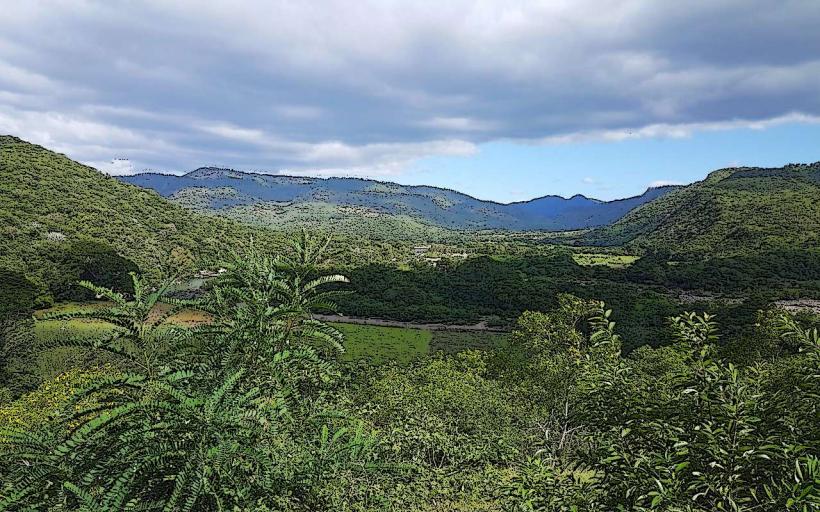
The sanctuary features a statue of the Virgin Mary carved directly into a large, grey volcanic rock face. The rock formation itself is irregular, with visible strata. The statue is approximately 5 meters in height. The surrounding vegetation is dry scrub and sparse trees, typical of a semi-arid climate.
Location & Access Logistics
The sanctuary is located 7 kilometers west of Estelí's city center. Access is via Carretera Panamericana (CA-1) heading west, then turning south onto a well-maintained dirt road marked with signage for "Santuario La Virgen de la Piedra." The dirt road is approximately 1 kilometer long. Parking is available on a gravel lot adjacent to the base of the rock formation. No public transport directly serves the sanctuary; local taxis or private vehicles are required.
Historical & Ecological Origin
The statue was carved in 1945 by local artisan Luis Manuel García. The rock formation is composed of andesite, a volcanic rock, and is part of the Nicaraguan volcanic chain, though currently dormant. The site was chosen for its visibility and natural prominence.
Key Highlights & Activities
Visitors can observe the carved statue of the Virgin Mary. A small, paved path leads to the base of the rock for closer viewing. Religious services are occasionally held at the site. Photography of the statue and the surrounding landscape is permitted.
Infrastructure & Amenities
Basic amenities include a small, covered waiting area at the base of the rock. There are no restrooms or food vendors directly at the sanctuary. Cell phone signal (3G/4G) is generally available but can be intermittent.
Best Time to Visit
The best time of day for photography is late afternoon, approximately 3:00 PM to 5:00 PM, when the sun illuminates the rock face. The dry season, from November to April, offers the most favorable weather conditions with minimal rainfall. There are no tidal considerations.
Facts & Legends
Local legend states that the rock formation itself is a petrified giant who was transformed into stone as punishment for his pride. It is also said that prayers offered at the sanctuary are particularly potent due to the site's natural energy.
Nearby Landmarks
- Estelí Cathedral (7km East)
- Parque Central de Estelí (7km East)
- Museo de Paleontología de Estelí (6.5km East)
- Cerro Quiabú (12km Northeast)