Information
Landmark: Ludas LakeCity: Subotica
Country: Serbia
Continent: Europe
Ludas Lake, Subotica, Serbia, Europe
Ludas Lake is a shallow freshwater lake and a Special Nature Reserve located approximately 12 kilometers southeast of Subotica, Serbia. It is recognized internationally as a Ramsar site due to its significant wetland ecosystem.
Visual Characteristics
The lake is characterized by its shallow depth, averaging 1 meter, and extensive reed beds that dominate its perimeter. Open water sections exhibit a brownish-green hue, influenced by sediment and aquatic vegetation. The surrounding landscape consists of agricultural fields, steppe grasslands, and scattered forest patches.
Location & Access Logistics
Ludas Lake is situated 12 kilometers southeast of Subotica city center. Access is primarily via regional road 100, connecting Subotica to the village of Ludas. Limited parking is available near designated visitor points and observation towers. Public transport options are restricted; local bus lines serve nearby villages, requiring a walk or taxi transfer to the lake's specific entry points.
Historical & Ecological Origin
Ludas Lake is a relict of the ancient Pannonian Sea, formed through geological processes involving tectonic shifts and subsequent sedimentation over millennia. Ecologically, it is classified as a steppe lake, characterized by its specific hydrological regime and high biodiversity, particularly its role as a critical habitat for migratory bird species.
Key Highlights & Activities
Birdwatching is a primary activity, with designated observation points available for viewing over 200 recorded bird species. Marked educational trails facilitate nature walks through the reserve's diverse habitats. Photography of wildlife and landscapes is possible from established viewpoints. Regulated fishing is permitted in specific zones with appropriate permits.
Infrastructure & Amenities
Basic restroom facilities are available at the main visitor center, which operates seasonally. Shade is provided by scattered trees and observation structures. Cell phone signal (4G/5G) is generally available across the reserve. Food vendors are not present directly at the lake; the nearest options are in the village of Ludas, approximately 2 kilometers away.
Best Time to Visit
The optimal period for visiting Ludas Lake is during spring (April-May) and autumn (September-October) for observing migratory bird populations. Early morning or late afternoon hours offer the best lighting conditions for photography and increased bird activity. The lake's shallow nature means water levels are generally consistent, without significant high/low tide requirements.
Facts & Legends
Ludas Lake holds the distinction of being one of Serbia's first Ramsar sites, designated in 1977, underscoring its international importance for wetland conservation. A local tip for visitors is to bring binoculars, as many bird species are shy and best observed from a distance.
Nearby Landmarks
- Palic Lake: 7km North-West
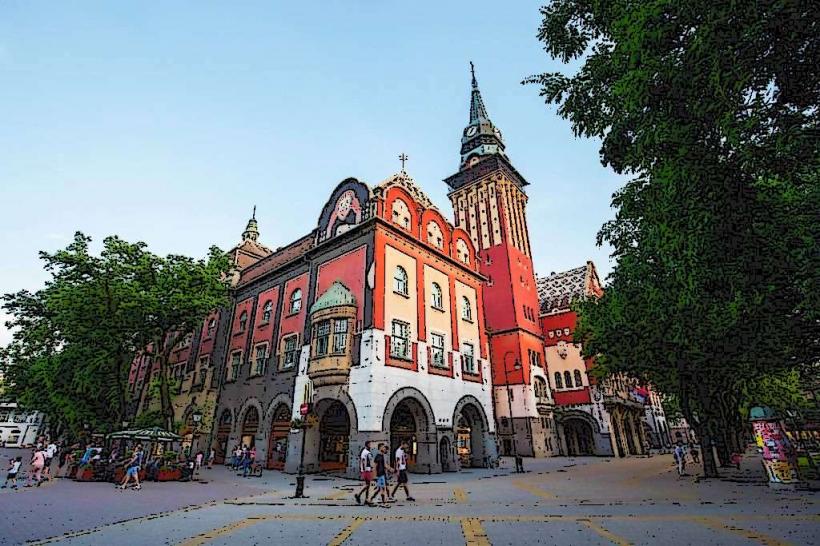
- Subotica City Hall: 12km North-West
- Kelebija Stud Farm: 20km North-West
- Zobnatica Stud Farm: 25km West