Information
Landmark: Luong Son PassCity: Hoa Binh
Country: Vietnam
Continent: Asia
Luong Son Pass, Hoa Binh, Vietnam, Asia
Luong Son Pass is a mountain pass located in Hoa Binh Province, Vietnam. It serves as a significant transportation route connecting the plains to the mountainous regions.
Visual Characteristics
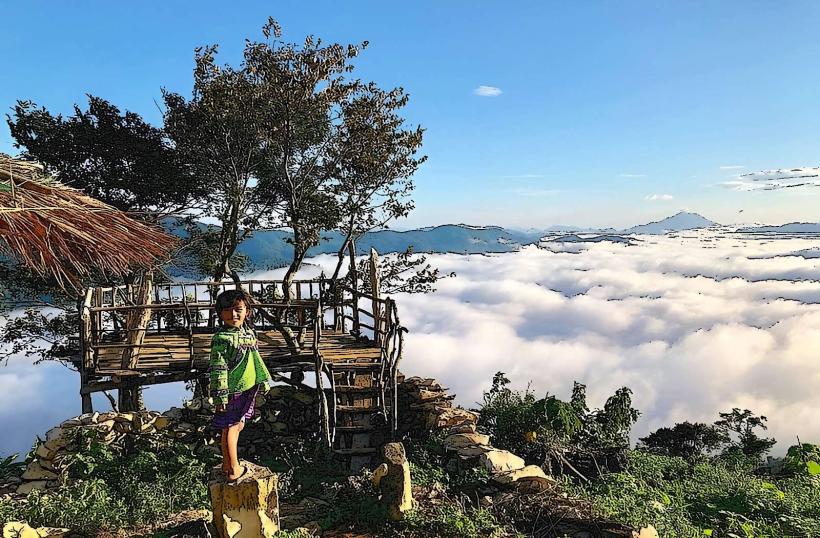
The pass is characterized by steep, verdant slopes covered in dense tropical vegetation. The road surface is primarily asphalt, with occasional sections of gravel or compacted earth on the shoulders. Rock outcroppings are visible along the higher elevations. The elevation varies, with the highest point reaching approximately 400 meters above sea level.
Location & Access Logistics
Luong Son Pass is situated approximately 30 kilometers west of Hoa Binh City center. Access is via National Highway 6 (QL6). The road is a two-lane highway. Parking is limited to designated pull-offs along the roadside, which can be narrow. Public transport options are primarily inter-provincial buses that traverse QL6; specific local bus routes do not directly service the pass itself.
Historical & Ecological Origin
The pass's origin is geological, formed by erosion over millennia through the limestone karst topography characteristic of the region. Its development as a transportation route began in the early 20th century, with significant upgrades occurring during the French colonial period and subsequent periods of national development to facilitate trade and military movement.
Key Highlights & Activities
The primary activity is transit. Designated viewpoints offer opportunities for observation of the surrounding landscape. Motorcyclists and drivers utilize the pass for its challenging curves and elevation changes. Hiking is possible on unofficial trails branching off the main road, but these are not maintained or marked.
Infrastructure & Amenities
Restrooms are not available directly on the pass. Shade is provided by the natural tree canopy. Cell phone signal (4G/5G) is intermittent and generally weak. There are no food vendors or established amenities directly on the pass; services are found in the towns at either end of the pass.
Best Time to Visit
For photography, early morning or late afternoon provides angled light on the slopes. The dry season, from November to April, offers clearer visibility and less risk of road hazards due to rain. During the rainy season (May to October), increased rainfall can lead to landslides and reduced road conditions.
Facts & Legends
Local folklore suggests that the pass was once a strategic defensive point, with stories of ancient battles fought along its inclines. A specific point of interest for some is a large, unusually shaped rock formation visible from the western approach, which is said to resemble a sleeping dragon.
Nearby Landmarks
- Hoa Binh Lake (10km East)
- Thung Nai (15km South-East)
- Mai Chau Valley (40km West)
- Pu Luong Nature Reserve (60km North-West)