Information
Landmark: National Museum and Art GalleryCity: Port Moresby
Country: Papua New Guinea
Continent: Australia
National Museum and Art Gallery, Port Moresby, Papua New Guinea, Australia
The National Museum and Art Gallery is a cultural institution located in Port Moresby, the capital city of Papua New Guinea.
It houses a significant collection of artifacts and artworks representing the diverse cultural heritage of the nation.
Visual Characteristics
The museum building is a single-story structure constructed primarily from concrete and corrugated iron roofing. Its exterior is painted in neutral tones, with a prominent entrance featuring a wide, covered walkway. The interior exhibition spaces are designed with high ceilings and are illuminated by a combination of natural light from windows and artificial lighting. Display cases are predominantly glass and wood.
Location & Access Logistics
The National Museum and Art Gallery is situated at the intersection of Waigani Drive and Lawes Road in the Waigani district of Port Moresby. It is approximately 10 kilometers north of the city center. Access by private vehicle is straightforward, with a dedicated parking lot available on-site. Public transport options include PMV (Public Motor Vehicle) buses that service the Waigani route; passengers should disembark at the museum stop. The nearest major bus terminal is located in the Boroko area, approximately 3km South-West.
Historical & Ecological Origin
The National Museum and Art Gallery was established in 1970. Its original purpose was to collect, preserve, and exhibit the cultural heritage of Papua New Guinea. The building itself was constructed in the early 1970s, designed to house the growing collection of ethnographic and artistic materials. The site is located on relatively flat terrain within the urban sprawl of Port Moresby.
Key Highlights & Activities
Visitors can view exhibits on traditional PNG art, including carvings, masks, and pottery. The museum displays include artifacts related to tribal customs, warfare, and daily life. There are also sections dedicated to natural history and the country's biodiversity. Photography is permitted in most public areas, but specific restrictions may apply to certain artifacts.
Infrastructure & Amenities
Restrooms are available within the museum. Limited shaded areas are provided by the covered entrance walkway. Cell phone signal (4G) is generally reliable within the museum premises. There are no on-site food vendors, but small shops and cafes are located in the nearby Waigani commercial area.
Best Time to Visit
The museum is open daily from 9:00 AM to 4:00 PM. The best time of day for visiting is generally during the morning or late afternoon to avoid the peak heat of midday. The weather in Port Moresby is consistently warm and humid year-round, with a distinct wet season from November to April and a dry season from May to October. No specific tide requirements are applicable.
Facts & Legends
A notable artifact housed at the museum is the "Sepik River Crocodile Canoe," a large, intricately carved wooden canoe representing a significant cultural item from the Sepik River region. Local lore suggests that certain ancestral spirits are believed to reside within some of the older artifacts, influencing the well-being of the community.
Nearby Landmarks
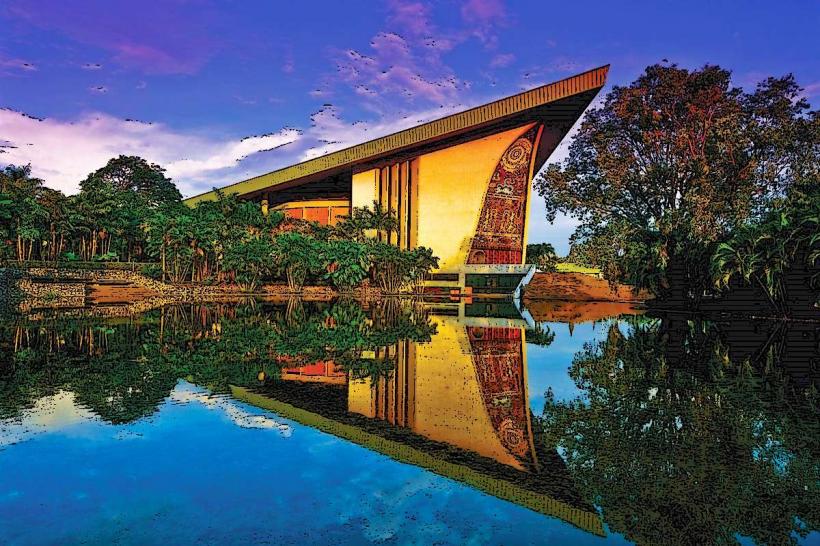
- Parliament House (0.8km North-West)
- University of Papua New Guinea (1.2km West)
- National Court House (1.5km South-West)
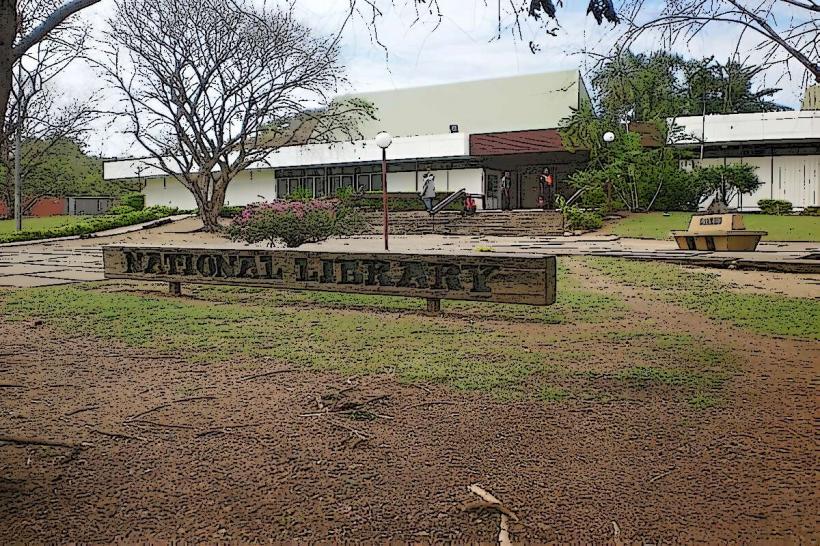
- National Library of Papua New Guinea (1.8km South-West)
- Sir John Guise Stadium (2.5km South)