Information
Landmark: National Museum of U.S. Air ForceCity: Dayton
Country: USA Ohio
Continent: North America
National Museum of U.S. Air Force, Dayton, USA Ohio, North America
The National Museum of the U.S. Air Force is the world's largest and oldest military aviation museum, located at Wright-Patterson Air Force Base in Dayton, Ohio.
It houses a collection of over 360 aircraft and missiles, representing the history of American air power.
Visual Characteristics
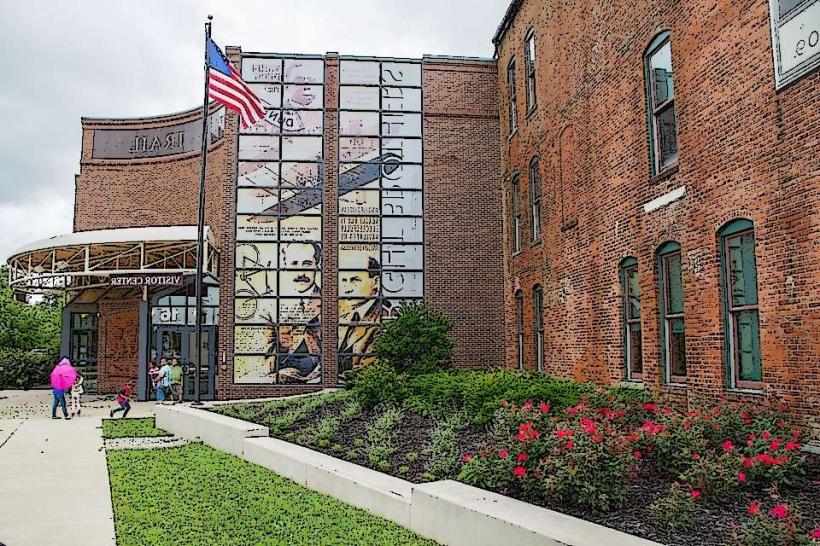
The museum complex consists of multiple large hangars and exhibit halls constructed from steel and concrete. The exterior is functional, designed for aircraft storage and display. Inside, exhibits are organized chronologically and thematically, featuring aircraft ranging from early biplanes to modern jet fighters and experimental craft. The display areas are expansive, with high ceilings to accommodate large aircraft. Lighting is primarily artificial, supplemented by natural light from large windows in some sections.
Location & Access Logistics
The museum is situated on Wright-Patterson Air Force Base, approximately 10 miles northeast of downtown Dayton, Ohio. Access is via National Road (US-40) or I-675. Visitors should use the Gate 12A entrance off Springfield Street. Ample free parking is available in designated lots adjacent to the museum buildings. Public transportation options are limited; the Greater Dayton Regional Transit Authority (RTA) bus route 17 serves the area, with stops near the base perimeter, requiring a walk to the museum entrance.
Historical & Ecological Origin
The museum's origins trace back to 1923 as the U.S. Army Air Service Engineering School's collection of aircraft. It officially became the Air Force Museum in 1954. Its purpose is to preserve and display the history of the U.S. Air Force and its predecessors. The site itself is part of Wright-Patterson Air Force Base, which was established through the consolidation of Wright Field and Patterson Field, named in honor of the Wright brothers and Lt. Frank S. Patterson.
Key Highlights & Activities
Visitors can explore exhibits covering World War I, World War II, the Korean War, the Vietnam War, and the Cold War. Specific aircraft on display include the Wright Flyer III, a B-29 Superfortress "Bockscar," a SR-71 Blackbird, and the presidential aircraft. Interactive exhibits are available in the STEM Education Center. The museum offers free admission and guided tours on a scheduled basis.
Infrastructure & Amenities
Restrooms are located throughout the museum complex. Several areas offer indoor seating and limited shade. Cell phone signal (4G/5G) is generally available within the museum buildings. Food service is provided by a cafe located within the main building, offering light meals and snacks. Vending machines are also available.
Best Time to Visit
The museum is open daily from 9:00 AM to 5:00 PM, with extended hours during the summer months. Weekday mornings are typically less crowded. For optimal lighting on specific aircraft, consider visiting during daylight hours when natural light might supplement interior illumination. There are no tide-dependent activities.
Facts & Legends
The museum houses the only surviving B-29 Superfortress that dropped an atomic bomb, the "Bockscar," which was used in the bombing of Nagasaki. A lesser-known fact is that the museum's collection includes over 300,000 artifacts, with only a fraction on public display at any given time.
Nearby Landmarks
- National Museum of the U.S. Air Force - Wright Field (0.1km West)
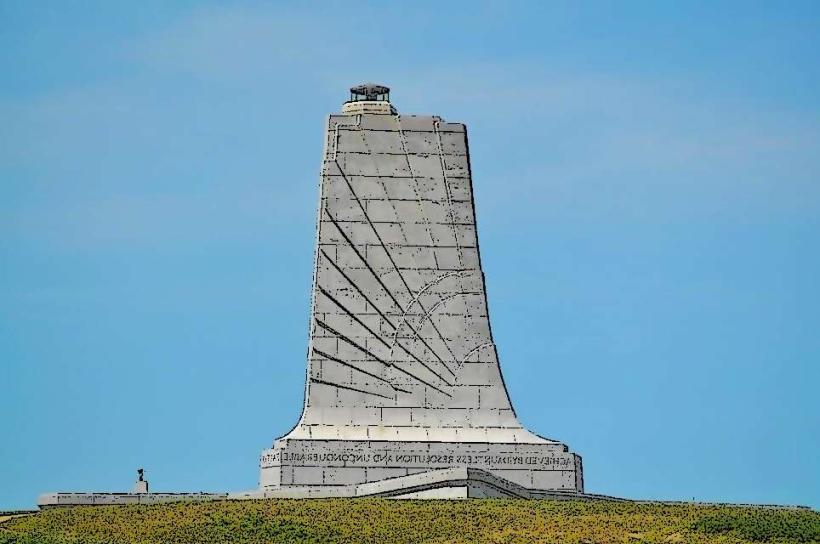
- Wright Brothers Hill (1.5km Southwest)
- Huffman Prairie Flying Field (2.0km Southeast)
- Air Force Institute of Technology (0.5km West)
- National Composite Center (3.0km North)