Information
Landmark: Nicolae Simache Clock MuseumCity: Ploiesti
Country: Romania
Continent: Europe
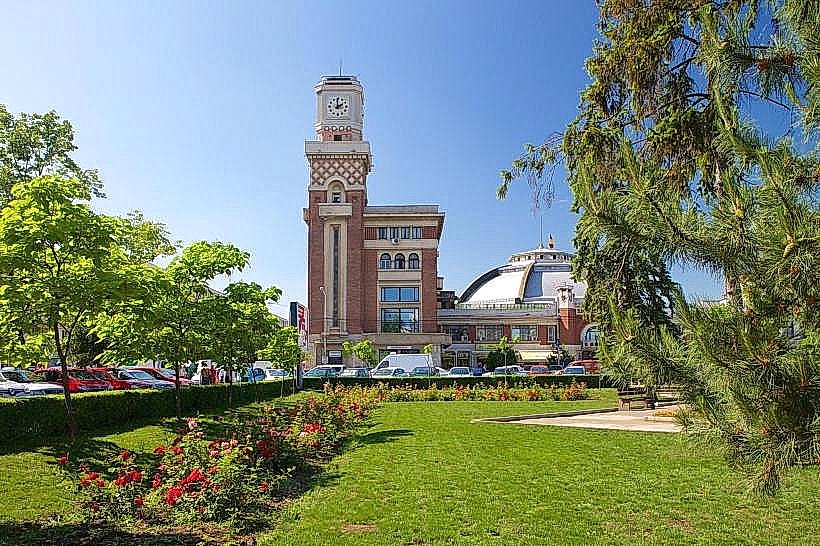
Nicolae Simache Clock Museum, Ploiesti, Romania, Europe
The Nicolae Simache Clock Museum (Muzeul Ceasului) in Ploiești is the only institution of its kind in Romania and South-Eastern Europe. It is housed in the restored 19th-century villa of politician Luca Elefterescu.
Visual Characteristics
The museum is located in a Neoclassical building with refined architectural details. The interior displays over 4,000 pieces arranged chronologically. The collection features ornate pendulums, astronomical clocks, pocket watches, and musical boxes. Many items are decorated with enamel, gold, and precious stones, representing various artistic periods from the Renaissance to the modern era.
Location & Access Logistics
The site is located at Strada Nicolae Simache 1. It is situated approximately 0.6 km south of the city center (Saint John the Baptist Cathedral).
Public Transport: Accessible via trolleybus lines 44 and 202 or bus lines 1 and 30, stopping at the "Jurnalist Gabi Dobre" or "Muzica" stations.
Parking: Limited street parking is available on Nicolae Simache street and surrounding side roads.
Historical & Ecological Origin
The museum was founded in 1963 by Professor Nicolae Simache. The building itself dates back to the late 1800s and was a social hub for the local elite during the "oil boom" of Ploiești. It underwent a major restoration between 2013 and 2016 to preserve the structure and modernize the climate control systems essential for protecting the delicate mechanical components of the exhibits.
Key Highlights & Activities
Famous Ownership: The collection includes watches that belonged to prominent figures such as King Carol I, Tsar Alexander II of Russia, Mihai Eminescu, and General Alexandru Averescu.
Unique Pieces: Highlights include the "silent" clock, the "mystery" clock with invisible gears, and the oldest piece in the collection-a table clock from 1562 made by Benedict Furstenfelder.
Automata: A section dedicated to musical boxes and automated clockwork figures that perform movements at specific intervals.
Infrastructure & Amenities
The museum requires an entry fee, with additional charges for photography. Guided tours are available in Romanian and often English. The building is equipped with specialized lighting and humidity sensors. 5G cellular coverage is consistent in the area.
Best Time to Visit
The museum is typically open Tuesday through Sunday (09:00–17:00) and closed on Mondays. Morning visits are recommended to avoid school groups. The lighting inside the galleries is designed to highlight the intricate gold and silver work of the watches, making it a high-fidelity experience throughout the day.
Facts & Legends
A local point of interest is the "Death Clock," an exhibit featuring a mechanical representation of Father Time. Legend states that some of the musical clocks in the collection were used to transmit coded messages during wartime, though most historians categorize these as functional luxury items rather than espionage tools.
Nearby Landmarks
Art Museum of Ploiești: 0.4 km North
Saint John the Baptist Cathedral: 0.6 km North
Museum of Biology: 0.7 km Northwest
Halele Centrale (Central Market): 0.9 km North