Information
Landmark: Old Wine PressCity: Borgo Maggiore
Country: San Marino
Continent: Europe
Old Wine Press, Borgo Maggiore, San Marino, Europe
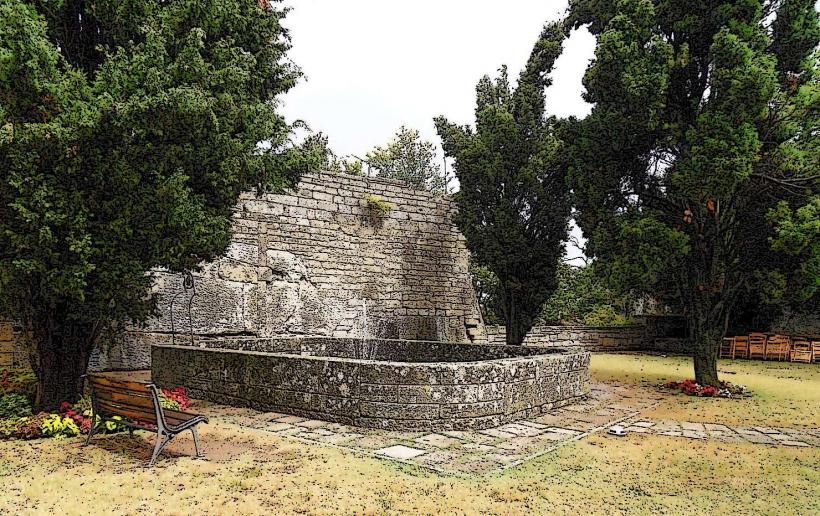
The Old Wine Press (Vecchia Torchio) in San Marino is a historic site that highlights the country’s rich winemaking tradition. It offers a fascinating insight into how wine was traditionally produced in the region using older, manual methods. The Old Wine Press is one of the many historical landmarks that tell the story of San Marino's agricultural heritage, particularly in relation to viticulture, which has played an important role in the country for centuries.
Key Features of the Old Wine Press:
1. Historical Context:
- The Old Wine Press is part of San Marino’s long winemaking history, which dates back to the Middle Ages. The region's climate and terrain, particularly around Mount Titano, are ideal for grape cultivation, making wine production an essential part of the local economy and culture.
- Traditional wine presses like the one on display were used for centuries to process freshly harvested grapes into wine. These presses represent the early methods of manual labor involved in winemaking, before the advent of more modern, industrialized techniques.
2. The Wine Press Mechanism:
- The Old Wine Press consists of a large wooden structure with a pressing mechanism designed to extract juice from grapes. The traditional wine press uses wooden beams and screws or hydraulic pressure to crush the grapes and extract the juice.
- The structure is typically made of sturdy oak wood, with a large barrel or vat to collect the juice. A large screw or beam would press the grapes, often with a considerable amount of force, to ensure that as much juice as possible was extracted.
- After the crushing process, the grape juice would be collected, fermented, and eventually turned into wine, which was often stored in large wooden barrels for aging.
3. Winemaking Process:
- The Old Wine Press showcases the process of manual winemaking, which involved several steps:
- Harvesting: Grapes were harvested by hand during the fall.
- Crushing: Grapes were placed into the press and crushed to extract the juice.
- Fermentation: The juice was then left to ferment in large barrels or vats.
- Storage: After fermentation, the wine was stored and aged in wooden barrels before being bottled.
- This traditional winemaking method was labor-intensive, and the old wine presses were essential for production in rural areas of San Marino.
4. Cultural and Economic Importance:
- Wine production has historically been an important part of San Marino's economy, providing not just a local product but also an export that could be sold to neighboring regions.
- The Old Wine Press is a reminder of the agricultural practices that sustained many local families in the past. It reflects the pride in local agriculture and the enduring significance of wine to the culture of San Marino.
5. Preservation and Visitor Experience:
- The Old Wine Press is typically well-preserved and serves as an educational site for tourists who are interested in learning about traditional winemaking techniques. Some local wineries and historical societies maintain these presses as part of San Marino's cultural heritage, and it may be included in guided tours of the area.
- Visitors can see the structure up close, learn about the winemaking process, and gain a deeper understanding of the country’s historical connection to wine. In some cases, the Old Wine Press may even be used during festivals or special events, where traditional winemaking demonstrations are conducted.
6. Connection to Modern Winemaking:
- While the Old Wine Press is no longer in use for modern wine production, it still plays an important role in the cultural identity of San Marino. Today, winemaking in the region uses more advanced methods and technologies, but the Old Wine Press serves as a tangible link to the past.
- Modern wineries in San Marino, which still produce high-quality wines such as Sammarinese red and white wines, often look to these historical traditions for inspiration and pride in maintaining the winemaking heritage.
7. Tourism and Education:
- The Old Wine Press is a popular destination for tourists who want to learn about the traditional methods of wine production. It may be part of a larger historical or agricultural tour of the region, often accompanied by visits to nearby vineyards.
- Some visitors also have the opportunity to sample local wines, gaining a taste of San Marino’s wine culture and understanding how the wine has evolved from traditional methods like those seen at the Old Wine Press to contemporary winemaking techniques.
8. Location:
- The Old Wine Press is typically located in a scenic, rural part of San Marino, often near vineyards or agricultural estates. The exact location may vary, but it is usually positioned in a place where visitors can enjoy a peaceful, picturesque setting while learning about the winemaking history of the area.
In Summary:
The Old Wine Press in San Marino is a fascinating historical landmark that offers insight into the traditional winemaking practices of the region. It represents a significant part of the country’s agricultural and economic history, showcasing how wine was produced by hand for centuries. Today, it serves as an educational and cultural site, allowing visitors to appreciate the craftsmanship involved in wine production and its connection to San Marino’s rural heritage. Whether as part of a larger tour or as a standalone visit, the Old Wine Press provides a deeper understanding of the country’s agricultural legacy and its enduring role in the world of winemaking.