Information
Landmark: Omeriye MosqueCity: Nicosia
Country: Cyprus
Continent: Europe
Omeriye Mosque, Nicosia, Cyprus, Europe
The Omeriye Mosque is a former Augustinian church converted into a mosque, situated within the walled city of Nicosia, Cyprus.
Visual Characteristics
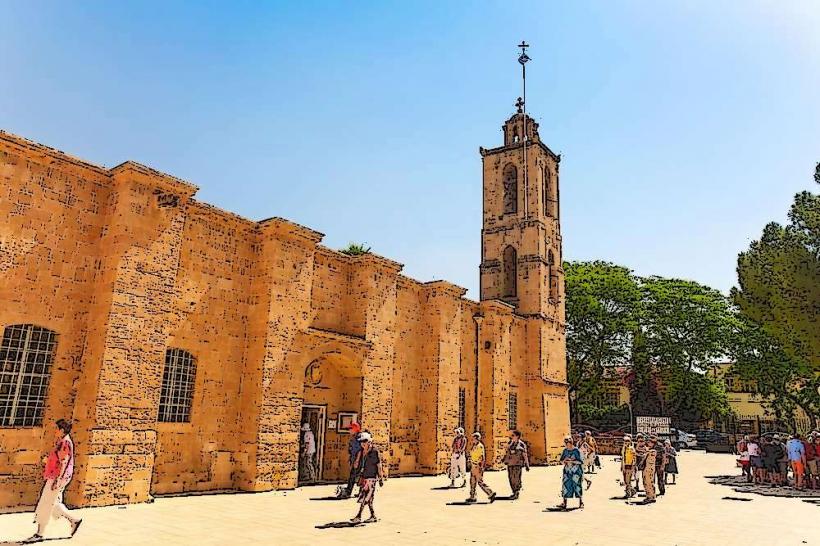
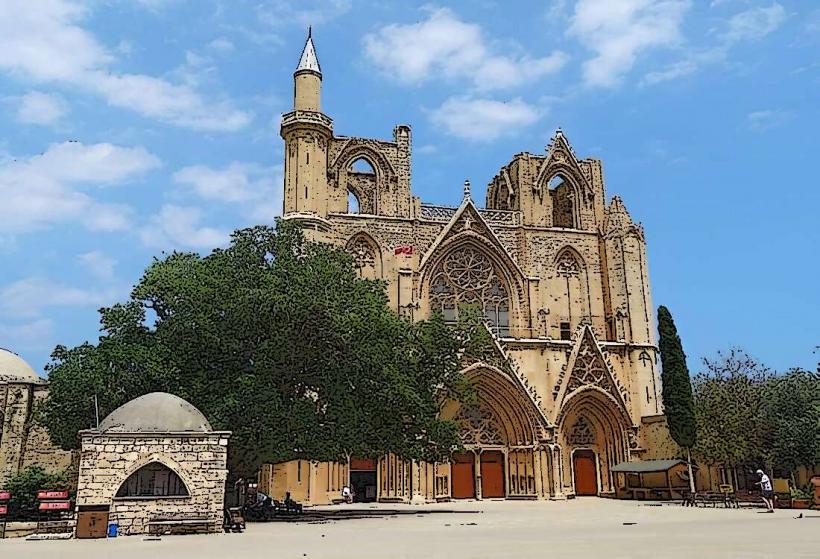
The structure is primarily constructed from yellow-brown sandstone blocks, characteristic of medieval Cypriot architecture. It exhibits a Gothic architectural style, featuring pointed arches and ribbed vaults within its interior. The building has a rectangular nave with a single aisle. A tall, slender minaret, also constructed of stone, rises from the northwest corner of the building, contrasting with the original church's design. The exterior walls are largely unadorned, reflecting its medieval origins.
Location & Access Logistics
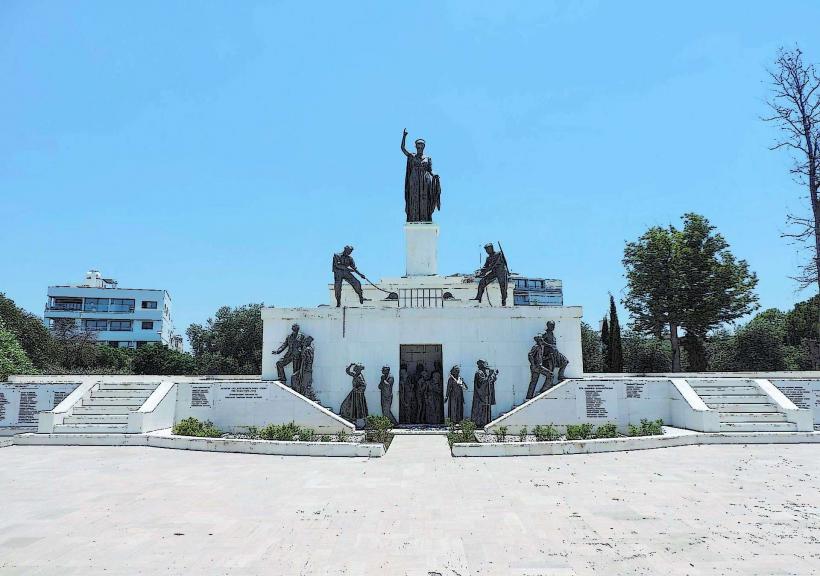
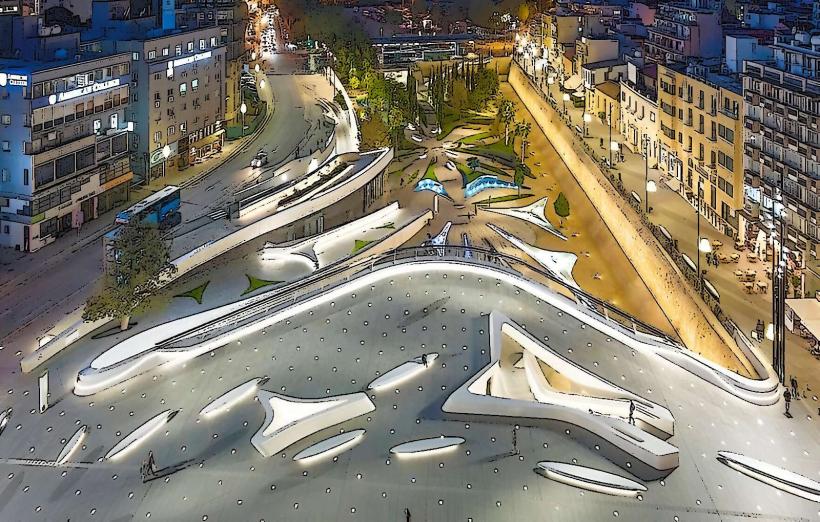
The Omeriye Mosque is located on Trikoupi Street in the heart of the old walled city of Nicosia, approximately 0.8km southeast of the city center's Eleftheria Square. Access to the mosque within the pedestrian-friendly old city is primarily on foot. For vehicular access, parking is available at designated municipal parking lots outside the city walls, such as the one near Paphos Gate (approximately 0.7km west) or Famagusta Gate (approximately 0.5km east). Public transport bus lines, such as routes 158 and 160, serve stops just outside the walled city, requiring a short walk into the old town.
Historical & Ecological Origin
The building was originally constructed as the Church of St. Mary of the Augustinians in the 14th century, specifically around 1350. It served as a Roman Catholic monastery church. Following the Ottoman conquest of Nicosia in 1570, the church was converted into a mosque by Lala Mustafa Pasha in 1571, becoming one of the first mosques established in the city after the conquest. Its original purpose was a place of Christian worship, later repurposed for Islamic prayer.
Key Highlights & Activities
Visitors can observe the architectural blend of Gothic Christian and Ottoman Islamic elements. The mosque is an active place of worship, and visitors may observe daily prayers from designated areas outside the main prayer hall. Photography of the exterior is permitted. Entry to the interior is generally allowed outside of prayer times, provided appropriate modest dress is observed.
Infrastructure & Amenities
Restroom facilities are available on-site. The interior of the mosque provides shade from direct sunlight. Cell phone signal (4G/5G) is generally strong within the area. Numerous small cafes and traditional food vendors are located within a 100-meter radius in the surrounding old city streets.
Best Time to Visit
The best time to visit for architectural observation and photography is during the morning hours (9:00 AM - 11:00 AM) when the eastern light illuminates the facade. To avoid prayer times, it is advisable to visit between 10:00 AM and 12:00 PM or after 2:00 PM. The months of April, May, October, and November offer the most temperate weather conditions for exploring the old city.
Facts & Legends
A local legend states that the mosque's minaret was built on the exact spot where the Ottoman commander Lala Mustafa Pasha's horse first stepped inside the conquered city. Historically, the mosque is notable for retaining much of its original Gothic structure, with the minaret being the primary Ottoman addition, making it a significant example of architectural adaptation rather than complete reconstruction.
Nearby Landmarks
- Buyuk Han: 0.4km North
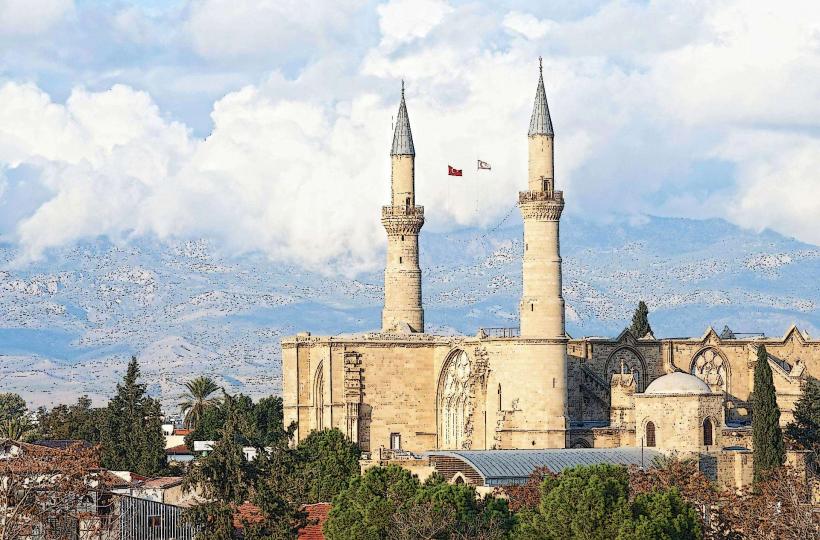
- Selimiye Mosque (St. Sophia Cathedral): 0.6km North
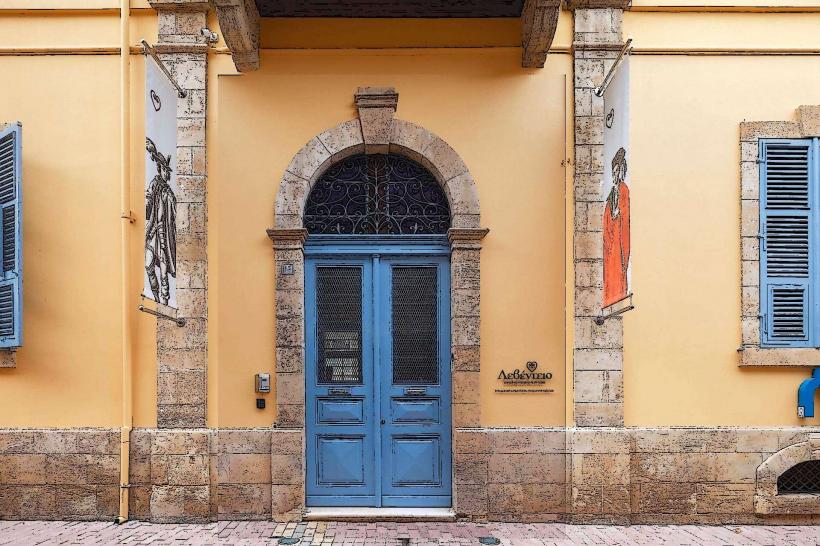
- Leventis Municipal Museum of Nicosia: 0.3km West
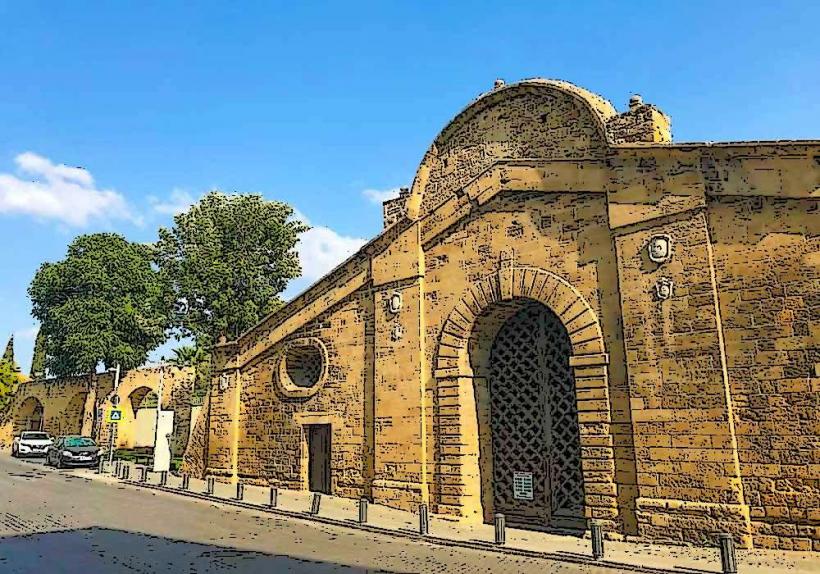
- Famagusta Gate: 0.5km East
- Chrysaliniotissa Church: 0.3km Northeast