Information
Landmark: Ounasjoki RiverCity: Rovaniemi
Country: Finland
Continent: Europe
Ounasjoki River, Rovaniemi, Finland, Europe
The Ounasjoki River is a significant natural waterway flowing through the city of Rovaniemi, Finland, before merging with the Kemijoki River.
Visual Characteristics
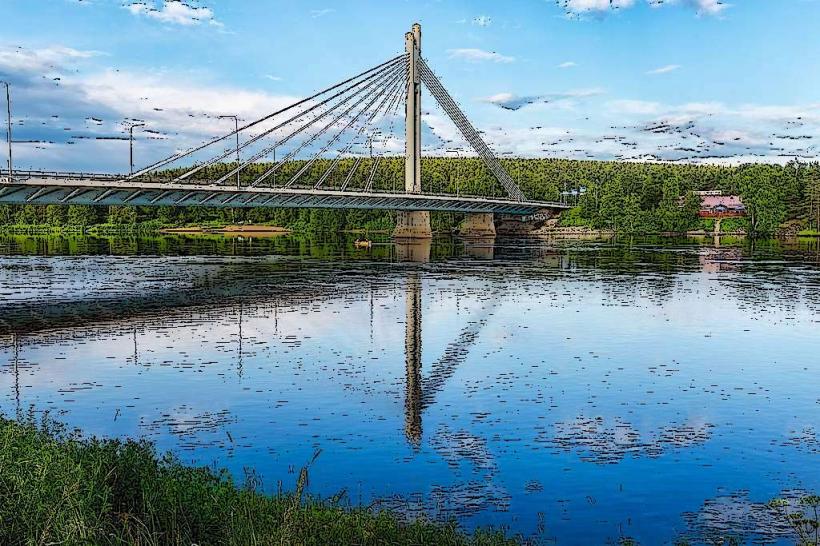
The river typically exhibits clear to brownish-tinted water, influenced by peatlands in its upper reaches. Its width varies, ranging from approximately 100 to 300 meters within the Rovaniemi urban area. The riverbanks are predominantly lined with boreal forest, primarily pine and spruce, interspersed with some urban parkland and residential areas. The current is generally moderate, and the riverbed consists of sand, gravel, and some rocky sections.
Location & Access Logistics
The Ounasjoki River flows directly through Rovaniemi. Access points are numerous along its banks, particularly within the city center. The main road running parallel to the river on its western side is Ounasjoentie, while the eastern side is accessible via roads like Jätkänkynttilän silta and local streets. The river is immediately adjacent to the Rovaniemi city center. Public transport in Rovaniemi, including local bus lines, provides access to various points along the river. Parking is available in designated city parking areas near the riverbanks, such as those adjacent to the Jätkänkynttilä Bridge.
Historical & Ecological Origin
The Ounasjoki River is a natural river system, originating in the fells of Enontekiö and Kittilä in Finnish Lapland. Its geological formation is primarily a result of glacial meltwaters and erosion following the last ice age, carving its path through the bedrock and moraine deposits. Ecologically, it is classified as a boreal river ecosystem, supporting diverse fish populations including Atlantic salmon, grayling, and brown trout, and serving as a habitat for various bird species and riparian flora.
Key Highlights & Activities
Fishing is a primary activity, particularly for salmon and grayling, with specific permits required. Kayaking and canoeing are popular during the ice-free months. Designated areas along the riverbanks allow for swimming. Extensive walking and cycling paths run along both sides of the river, offering recreational routes. In winter, sections of the frozen river are used for ice fishing and cross-country skiing.
Infrastructure & Amenities
Restrooms are available in public parks and commercial establishments located near the riverbanks within Rovaniemi city. Shade is provided by the abundant trees lining the river. Cell phone signal (4G/5G) is generally strong throughout the Rovaniemi area, including along the river. Food vendors and restaurants are readily available in the Rovaniemi city center, which borders the river.
Best Time to Visit
For water activities like kayaking and fishing, the best time is from June to August when the river is ice-free and temperatures are mild. Autumn, particularly September, offers vibrant fall foliage along the banks. Winter, from December to March, is ideal for ice fishing and snow-related activities on the frozen river. For photography, early morning or late evening provides soft, golden light, especially during the summer's midnight sun period.
Facts & Legends
The Ounasjoki River is the longest tributary of the Kemijoki River, Finland's longest river. Historically, it was crucial for timber floating, a practice that ceased in the late 20th century. A local legend tells of a giant fish, the "Ounasjoki Lohi," said to inhabit the deepest pools, bringing good fortune to those who glimpse it.
Nearby Landmarks
- Rovaniemi City Center: 0.1km East
- Arktikum Science Centre and Museum: 1.5km North-East
- Jätkänkynttilä Bridge: 0.5km South
- Pilke Science Centre: 1.6km North-East
- Lordi's Square: 0.3km East