Information
Landmark: Palazzo del CapitaniatoCity: Padua
Country: Italy
Continent: Europe
Palazzo del Capitaniato, Padua, Italy, Europe
Palazzo del Capitaniato (often referred to interchangeably with Palazzo del Capitanio) is a historic palace in Padua that served as the residence of the Venetian military governors (Capitani). It is famous for housing the city's iconic Astronomical Clock Tower.
Visual Characteristics
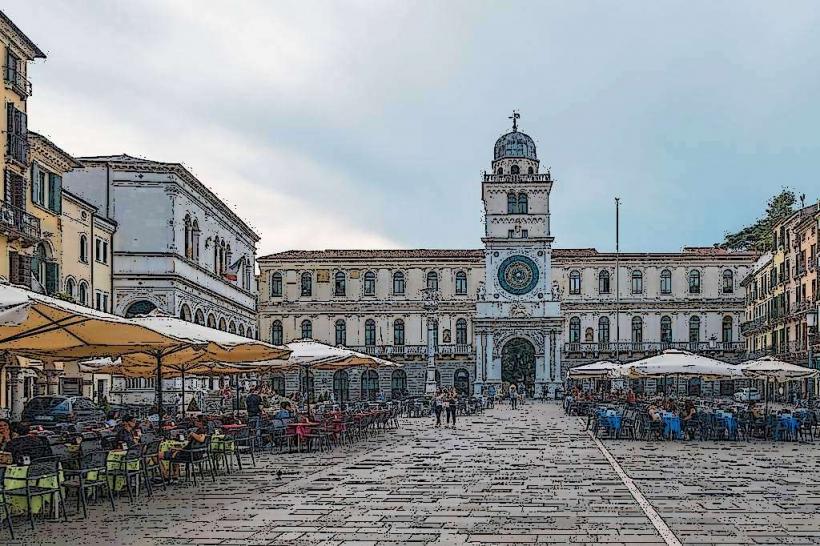
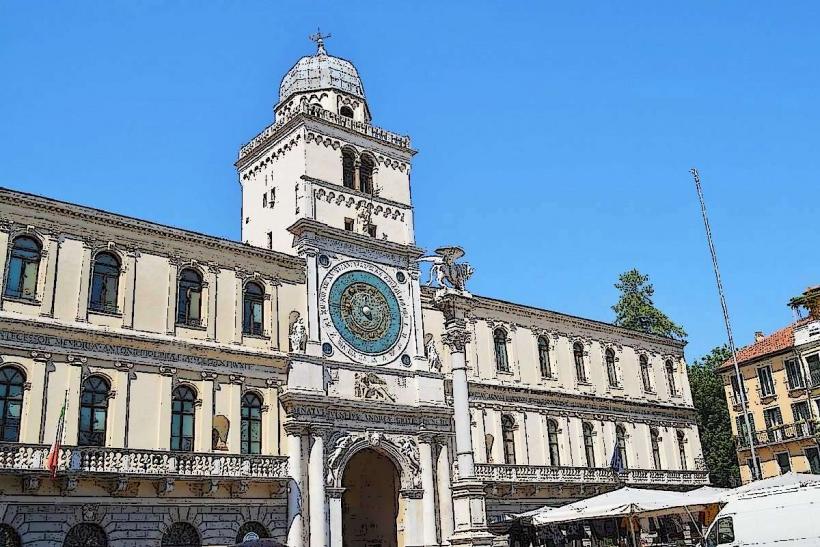
The palace is a long, imposing building that forms the western boundary of Piazza dei Signori. Its most prominent feature is the Torre dell’Orologio (Clock Tower), which sits above a white Istrian stone triumphal arch designed in the 16th century. The facade is characterized by a mix of medieval brickwork and Renaissance classical elements, including the Lion of Saint Mark, a symbol of Venetian authority.
Location & Access Logistics
Address: Piazza Capitaniato, 3, 35139 Padova.
Access: The building spans between Piazza dei Signori and Piazza Capitaniato.
Metro/Tram: Closest stop is Ponti Romani (Blue Tram line).
Entry: Much of the building is now used by the University of Padua (Department of Philosophy, Sociology, Education, and Applied Psychology). While you can walk through the central arch for free, specific areas like the Sala dei Giganti (Hall of Giants) and the Clock Tower require tickets or guided tours.
Mobility: The courtyards and ground-level passages are accessible; the tower and upper halls involve stairs.
Historical & Engineering Origin
The palace was built over the ruins of the 14th-century Reggia Carrarese (the palace of the Da Carrara family). When Venice took control of Padua in 1405, they repurposed the site for their governor.
Engineering Note: The Astronomical Clock is the architectural and technical highlight. The current mechanism dates to 1437, based on the 1344 designs of Jacopo Dondi. It is one of the oldest working astronomical clocks in the world. It tracks 24 hours, the phases of the moon, the day of the month, and the position of the sun in the zodiac.
Key Highlights
Sala dei Giganti (Hall of Giants): A massive ceremonial hall located within the complex, famous for its colossal 16th-century frescoes depicting famous historical figures and Roman emperors. It is frequently used for university events and concerts.
The Triumphal Arch: Designed by Giovanni Maria Falconetto in 1532, this Doric-style arch served as a grand entrance to the administrative courtyards.
Corte Capitaniato: The internal courtyard, which was once part of the Carraresi Palace complex and now provides a quiet, scholarly atmosphere for university students.
Infrastructure & Amenities
As a university hub, the area has excellent 5G coverage and is surrounded by student-friendly cafes and bookstores. The Piazza dei Signori side is more tourist-oriented with upscale cafes, while the Piazza Capitaniato side is quieter and more academic.
Best Time to Visit
Guided Tours: The Clock Tower is typically open for small-group guided tours (often run by volunteers) on specific mornings (Wednesday, Friday, Saturday). Booking is usually mandatory.
Daily: Walk through the arch at any time to see the transition between the medieval and Renaissance city layers.
Nearby Landmarks
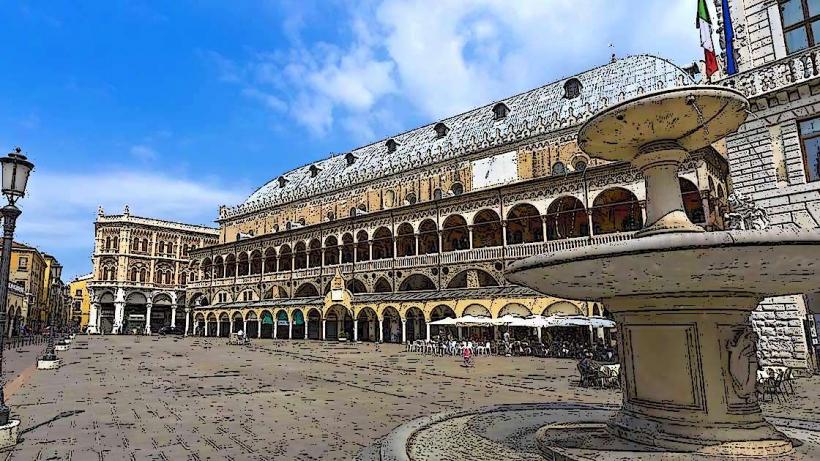
Palazzo della Ragione: 0.1 km East.
Piazza dei Signori: 0.01 km (Directly in front).
Duomo di Padova (Cathedral): 0.15 km West.
Palazzo Bo (University HQ): 0.4 km East.