service

Pythagoreion | Samos


Information

Landmark: Pythagoreion
City: Samos
Country: Greece
Continent: Europe

Pythagoreion, Samos, Greece, Europe

Overview

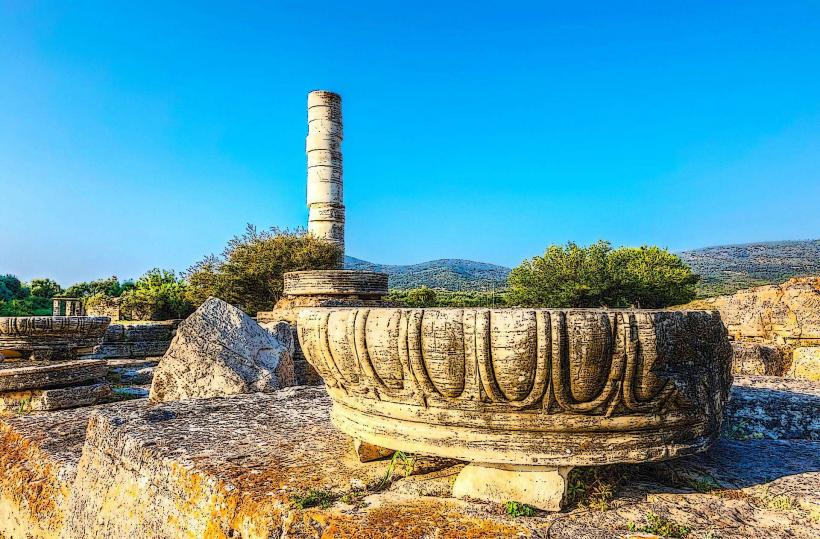
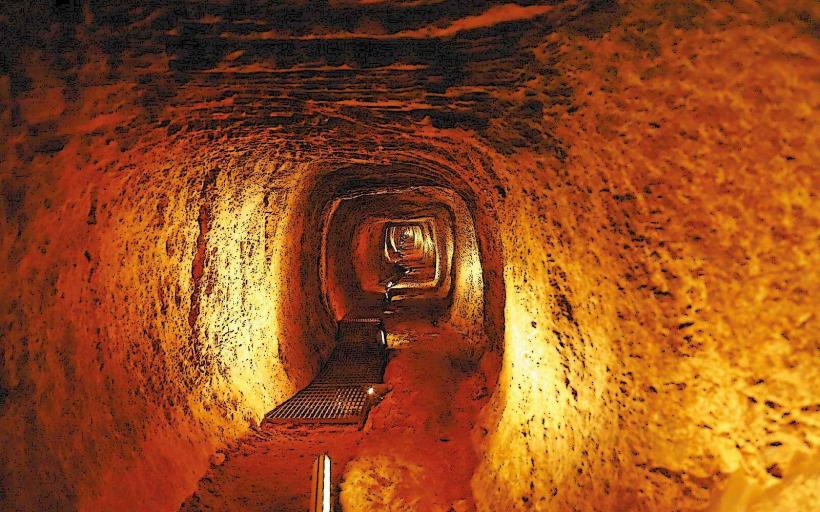
Pythagoreion, the ancient city known for its weathered stone streets, is an archaeological site on the Greek island of Samos, what’s more this site holds deep historical and cultural significance, largely because it’s tied to the ancient Greek thinker Pythagoras-renowned for the Pythagorean Theorem and his lasting mark on math, philosophy, and science, much like the crisp geometry of a triangle etched in stone.Believe it or not, Pythagoreion honors Pythagoras and stands as one of the ancient world’s key hubs, a bustling port that helped shape the course of Greek civilization, then first.Pythagoreion sits along the sunny southern coast of Samos Island, right next to the modern village of Pythagoreio, named in honor of the ancient philosopher, at the same time the spot sits about 13 kilometers from Vathy, the island’s capital, where fishing boats bob in the harbor, a little Perched near the shore, the archaeological site looks out over the glittering Aegean and the rolling hills beyond, as a result you can get to Pythagoreion from Samos Town by car, taxi, or bus, or take a stroll or bike ride along the coast where the sea breeze carries the scent of salt.It’s one of the island’s top tourist spots, with clear signs leading the way-even a glowing arrow painted on a stone wall points you there, meanwhile step two’s all about mixing short bursts of thought with longer, flowing sentences for a rhythm that feels alive.The ancient city of Pythagoreion-also called Samos, or at times Samo-thrived in the Classical Period, especially in the 6th century BCE, when its busy stone streets echoed with debates on philosophy, science, and mathematics, in conjunction with founded as a Greek polis, the city soon earned a name for its sharp minds and vibrant arts-philosophers debated in shaded courtyards while poets filled the air with their verses.Pythagoras - the philosopher born around 570 BCE - once walked the sunlit streets of Samos, what’s more between 570 and 495 BCE, he stood out as a key figure tied to this ancient site, his name still echoing in its weathered stones.He’s best remembered for shaping mathematics-most famously the Pythagorean Theorem-and for founding the Pythagorean school, where students explored how numbers, music, and the natural world fit together like notes in a perfectly tuned lyre, besides political Influence: Pythagoreion wasn’t just a center for vast ideas-it also held real sway in politics, where decisions could stir the marketplace like a sudden gust off the harbor.It appears, Pythagoras’ followers ran the city, enforcing laws shaped by his teachings-rules that called for shared living and a life devoted to moral and intellectual growth, much like neighbors eating at the same long wooden table each night, equally important three.The ancient city of Pythagoreion sprawls across a wide stretch of land, where you can still perceive the stone city walls, weathered gates, rows of antique houses, and the outlines of grand public buildings, to boot the city’s layout began as a neat grid, a hallmark of ancient Greek design-straight streets running like lines on parchment.Just beyond Pythagoreion’s edge stood the Temple of Hera, a area of deep devotion and one of the city’s most revered sites, equally important the temple honored Hera, queen of the gods, and stood as one of the ancient world’s great religious centers, its marble columns gleaming in the sun.You can still spot the temple’s foundation and scattered stones today at the Heraion sanctuary, equally important one of Pythagoreion’s highlights is its ancient theatre, a stone-ringed arena that once held thousands of spectators.The theatre hosted plays and community meetings, becoming a lively heart of the city’s cultural and social scene, where voices echoed beneath its high arched ceiling, consequently visitors flock to detect the theatre’s crumbling stone arches, a preserved ruin that draws crowds year-round.In ancient Pythagoreion, few works rival the Aqueduct of Eupalinus-known also as the Eupalinos Tunnel-a remarkable feat of engineering carved straight through solid rock, furthermore built in the 6th century BCE, this ancient tunnel carried fresh mountain water straight into the heart of Pythagoreion.Many regard it as one of ancient engineering’s finest feats, built entirely by hand-workers chipping away from opposite ends until their tools met in the dim center, moreover still in use today, the tunnel stretches roughly 1,030 meters, a dim stone passage that stands as a testament to the skill of ancient Greek engineers.In Pythagoreion, one standout building was the gymnasium-a lively hub where male citizens gathered to learn, debate, and train under the warm island sun, also the gymnasium hosted not only wrestling and footraces but also lively debates and lessons, reflecting its deep connection to Pythagoras’s philosophy and the teachings his followers passed on.Number four, while artifacts and discoveries-inscriptions etched into stone and statues worn smooth by centuries-have been unearthed at the site, many honoring the gods, celebrated heroes, and political leaders of the era, somewhat Mind you, These artifacts shed light on the beliefs and customs of Pythagoreion’s people, offering a glimpse into their daily routines-like market bargaining over fresh olives-and revealing how the city was governed, at the same time pottery and figurines turned up in abundance at the site, from simple clay bowls to finely carved figures, many dating back to the Archaic and Classical periods of ancient Greece.These artifacts reveal the era’s artistic style and capture slices of daily life-like the worn handles on a market basket-showing how the city’s people lived and worked, subsequently five.In 1992, UNESCO named Pythagoreion and the Heraion of Samos a World Heritage Site, honoring their extraordinary role in revealing the richness of ancient Greek civilization-stone columns still rise there against the radiant Aegean sky, subsequently the site is famed for its archaeological, historical, and cultural importance, especially in shaping philosophy, science, and the design of bustling city streets in ancient Greece.Today, Pythagoreion draws visitors eager to explore its Greek history and ancient ruins, where sun-warmed stones still echo with the past, as a result the Pythagoreion Archaeological Museum sits on the site, displaying treasures unearthed here-pottery with faded paint, carved inscriptions, and weathered stone sculptures.At the museum, you can dive into the city’s rich past and explore Pythagoras’s philosophy, from his geometric diagrams to his ideas about harmony, moreover number six.Though there’s little proof Pythagoras personally shaped the city’s design, his ideas-and those of his followers-wove into the very fabric of Pythagoreion’s lively intellectual scene, like chalk lines drawn across a scholar’s tablet, in addition pythagoras is best known for the Pythagorean Theorem, the geometric rule that ties together the lengths of a right triangle’s sides-think of it as the neat equation behind a carpenter’s perfectly square corner.Pythagorean philosophy revolved around harmony and the idea that numbers shaped the cosmos-like seeing music in the spacing of the stars, equally important pythagorean School: Rooted in the bustling city, the Pythagorean school shaped the course of mathematics, music, and philosophy.Its ideas shaped the work of later Greek minds-Plato sketching visions in the Academy, Aristotle sharpening arguments by lamplight-and they’re still studied and admired today, after that seven.In the end, Pythagoreion draws you in, offering a vivid glimpse into the bustling intellectual and cultural core of the ancient world, where worn marble steps still echo with history.
Author: Tourist Landmarks
Date: 2025-10-07


Location

Get Directions


Rate it

You can rate it if you like it


Share it

You can share it with your friends


Contact us

Inform us about text editing, incorrect photo or anything else

Contact us

Landmarks in Samos

Heraion of Samos
Landmark

Heraion of Samos

Samos | Greece
Archaeological Museum of Samos
Landmark
Tunnel of Eupalinos
Landmark

Tunnel of Eupalinos

Samos | Greece


Latest Landmarks

Savute Channel

Kasane | Botswana

Peleng Dam

Lobatse | Botswana

Bryan’s House Heritage Gallery

Bandar Seri Begawan | Brunei

Motloutse River

Francistown | Botswana

Letlhakane Diamond Mine

Letlhakane | Botswana

Tourist Landmarks ® All rights reserved