Information
Landmark: Sanguinetti House Museum and GardensCity: Yuma
Country: USA Arizona
Continent: North America
Sanguinetti House Museum and Gardens, Yuma, USA Arizona, North America
The Arizona Historical Society’s presence in Yuma is primarily embodied by the Sanguinetti House Museum and Gardens, a significant cultural and historical landmark that offers an immersive glimpse into the region’s past. This site serves as a regional museum managed under the Arizona Historical Society’s network, dedicated to preserving and interpreting the unique history of Yuma and the Lower Colorado River Valley.
History and Background
The Sanguinetti House itself is a historic adobe residence built in the late 19th century. It was the home of E.F. Sanguinetti, an influential local merchant often referred to as the “Merchant Prince of Yuma.” The house stands as a testament to the early commercial and social development of Yuma during a period when the town was a critical crossing and supply point along the Colorado River, especially significant during westward expansion and settlement.
The museum’s structure reflects classic adobe architecture, characteristic of the Southwestern United States, with thick walls made from sun-dried bricks, providing insulation suited to the desert climate. The house has been carefully preserved and restored to maintain its historical integrity and authenticity.
Museum Exhibits and Collections
The Sanguinetti House Museum is designed to educate visitors about the broader history of Yuma and the surrounding region through carefully curated exhibits and period rooms:
Mountain Men and Early Trappers Exhibit: This section highlights the early 19th-century era when trappers and explorers roamed the Colorado River region. It delves into their interactions with Native American tribes and the harsh realities of frontier life.
Fort Yuma Exhibit: Fort Yuma was a pivotal military installation established near the Colorado River crossing. The exhibit covers its foundation, military importance during the Indian Wars, and its role in protecting settlers and travelers.
Timeline Room: This room presents a chronological display that traces the development of Yuma from its establishment in the mid-1800s through the early 20th century. It provides context on the settlement patterns, economic growth, and cultural changes over time.
Period Rooms: Two main rooms in the house are furnished to represent domestic life in different historical periods:
The South Room depicts middle-class family life circa the 1870s, showcasing period furniture, household items, and décor.
The North Room offers a look into the lifestyle around 1900 to 1915, illustrating changes in social customs and technological advancements in home life.
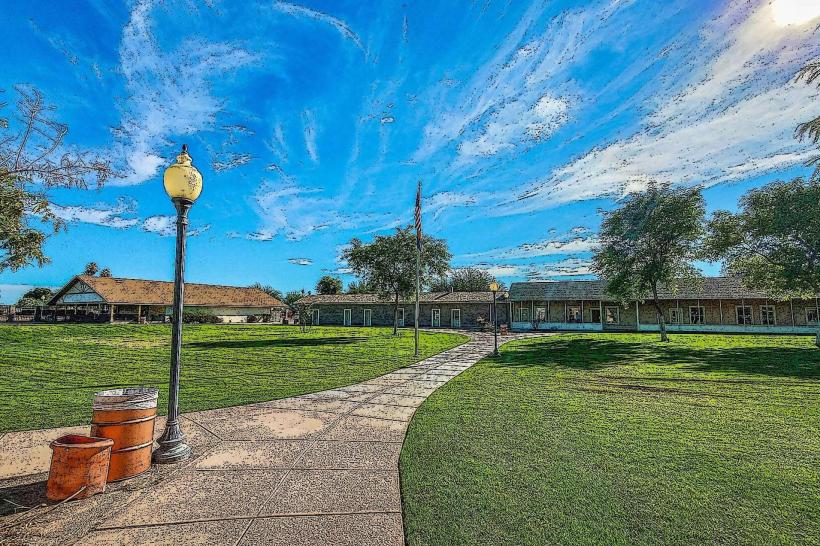
Gardens and Aviaries: Surrounding the house are beautifully maintained gardens filled with native and exotic plants, creating a tranquil environment. The gardens also contain aviaries that house exotic birds, adding to the museum’s charm and providing a natural setting that complements the historical experience.
Educational and Cultural Role
The museum serves as an educational hub for the community and visitors, offering interpretive programs, guided tours, and special events focused on local history, archaeology, and heritage preservation. It acts as a resource for researchers and history enthusiasts interested in the cultural evolution of Yuma and the broader Colorado River region.
Visitor Experience and Amenities
Location: The Sanguinetti House is situated at 240 South Madison Avenue in downtown Yuma, making it easily accessible and close to other key historical sites like the Yuma Territorial Prison State Historic Park and Yuma Crossing State Historic Park.
Visiting Hours: The museum is open from Wednesday through Saturday, 10:00 AM to 3:00 PM, allowing for a relaxed visit with enough time to explore the house and gardens thoroughly.
Admission Fees: Reasonably priced to encourage local and tourist visitation, the fees are set at $6 for adults, $5 for seniors and students (ages 12–18), and free for children under 12. The museum also offers free admission on the first Saturday of every month, promoting wider community engagement.
Facilities: On-site amenities include the Garden Café, which offers visitors a charming spot to relax and enjoy refreshments amid the lush surroundings. The peaceful garden setting enhances the overall experience, making it not just a museum visit but a pleasant outing.
Importance to Yuma and Arizona
The Arizona Historical Society’s stewardship of the Sanguinetti House Museum and Gardens plays a critical role in preserving Yuma’s heritage, bridging the past with the present. The museum encapsulates key themes in Arizona’s history-westward expansion, trade, military strategy, and cultural exchange with Indigenous peoples-through an accessible, tangible medium.
This site not only serves as a repository for artifacts and stories but also as a center for cultural tourism, helping sustain local identity and contributing to Yuma’s appeal as a historical destination.
Summary
The Arizona Historical Society in Yuma, through the Sanguinetti House Museum and Gardens, offers an in-depth, authentic exploration of the area’s historical landscape. From its early frontier days to the growth of a thriving community along the Colorado River, visitors gain a comprehensive understanding of the social, economic, and cultural dynamics that shaped this part of Arizona. The museum’s combination of historic architecture, well-curated exhibits, educational programming, and beautiful gardens makes it a key landmark for both locals and tourists seeking to connect with Yuma’s rich past.