Information
Landmark: Scotchman PeakCity: Coeur dAlene
Country: USA Idaho
Continent: North America
Scotchman Peak, Coeur dAlene, USA Idaho, North America
Scotchman Peak is a prominent mountain located in the Selkirk Mountains of northern Idaho, USA, near the city of Coeur d'Alene.
Visual Characteristics
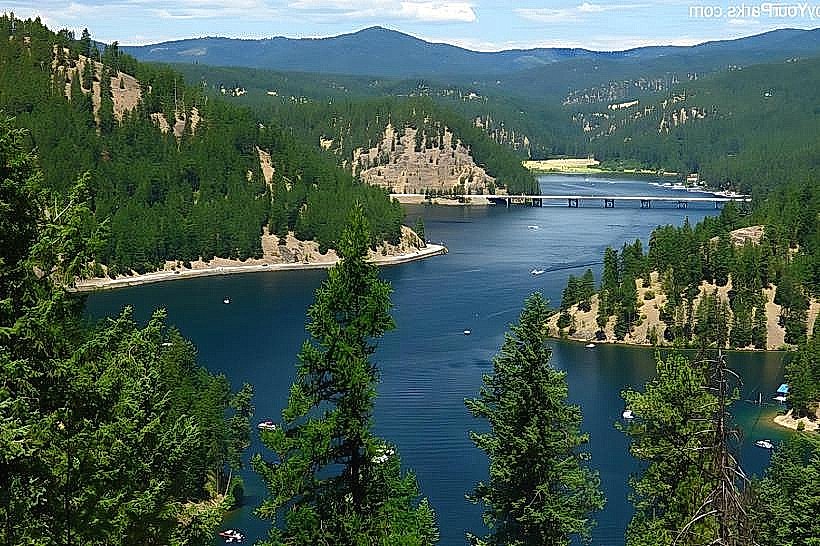
Scotchman Peak reaches an elevation of 7,007 feet (2,136 meters). The mountain is characterized by steep, rocky slopes, particularly on its western face. Its summit area is composed of granite and metamorphic rock, with sparse alpine vegetation at higher elevations. Lower slopes are covered in dense coniferous forest, primarily Douglas fir, western hemlock, and western red cedar.
Location & Access Logistics
The trailhead for Scotchman Peak is located approximately 35 miles (56 km) northeast of Coeur d'Alene. Access is via Forest Service Road 207 (also known as the Scotchman Peak Road), which is a gravel road. The turnoff for FSR 207 is located off Highway 200 near the town of Clark Fork, Idaho. The road is typically open from late May or June through October, depending on snow conditions. Parking is available at the designated trailhead, which can accommodate approximately 20 vehicles. There are no public transport options directly to the trailhead.
Historical & Ecological Origin
Scotchman Peak is part of the Selkirk Mountains, which were formed by tectonic uplift and glaciation. The bedrock is primarily Precambrian metamorphic rock, including schists and quartzites, with some granite intrusions. Ecologically, the area represents a transition zone between the inland temperate rainforest and drier montane ecosystems. The dense forests support a diverse range of wildlife, including deer, elk, black bears, and mountain goats.
Key Highlights & Activities
The primary activity is hiking the Scotchman Peak Trail (Trail #75). This is a strenuous 8.4-mile (13.5 km) roundtrip hike with approximately 3,800 feet (1,158 meters) of elevation gain. The trail leads to the summit, offering panoramic views of Lake Pend Oreille, the surrounding Selkirk Mountains, and parts of Montana. Wildlife viewing, particularly mountain goats near the summit, is common. The trail is best suited for experienced hikers.
Infrastructure & Amenities
The trailhead has a small parking area and an information kiosk. There are no restrooms or potable water sources at the trailhead or along the trail. Cell phone signal is unreliable to non-existent for most of the hike. No food vendors are located near the trailhead.
Best Time to Visit
The hiking season for Scotchman Peak typically runs from July through September. Early July may still have lingering snow patches at higher elevations. The best time of day for photography from the summit is generally mid-morning or late afternoon to avoid harsh midday light. Clear weather is essential for summit views.
Facts & Legends
A notable feature of Scotchman Peak is the presence of a large population of mountain goats that have become accustomed to hikers. Visitors are advised to maintain a safe distance and not feed the animals. The peak is named after a prospector known as "Scotchman," who was rumored to have prospected in the area in the late 19th century.
Nearby Landmarks
- Lake Pend Oreille (0.5km West)
- Clark Fork River (3km Southwest)
- Schweitzer Mountain Resort (15km Southwest)
- Cabinet Mountains Wilderness (20km East)
- Kootenai National Forest (Adjacent)