Information
Landmark: Singapore City HallCity: Central Region
Country: Singapore
Continent: Asia
Singapore City Hall, Central Region, Singapore, Asia
Overview
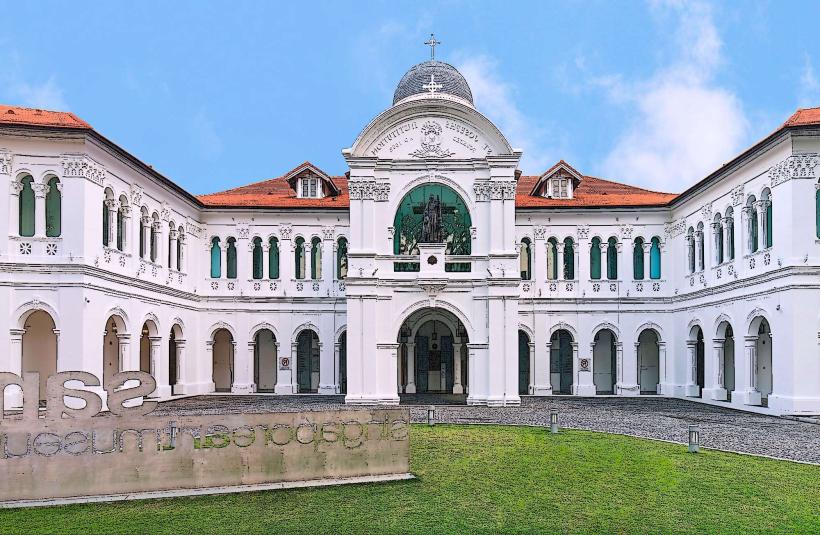
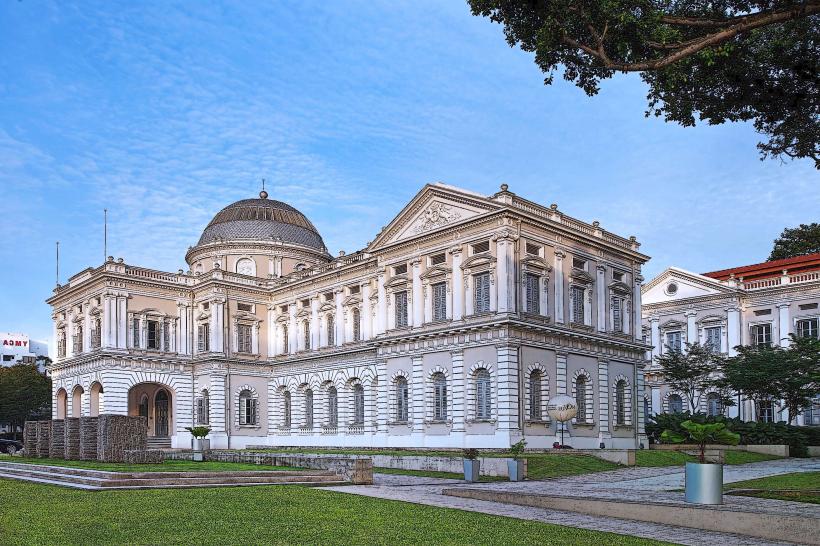
As it happens, In Singapore’s Civic District, City Hall stands as a historic landmark, its pale stone façade catching the midday sun, on top of that this area carries deep historical and cultural weight, valued for its political role and its striking stonework.I think, Today, it’s part of the National Gallery Singapore, yet its roots stretch back to colonial days, carrying the story of Singapore’s rise into a vibrant, modern city-state, at the same time number one, for the most part City Hall went up in the early 20th century, back when the British still ruled the city and its clock tower cast a long shadow over the square, as well as completed in 1929, it became the British colonial government’s administrative hub in Singapore, where clerks once shuffled papers under languid-turning ceiling fans.Believe it or not, The building showcases elegant neo-classical design, crafted by the British firm Keys & Dowdeswell, with tall white columns catching the morning light, likewise they built the structure to project the colonial administration’s power and authority, its stone façade rising like a stern face above the square.Architectural Style: City Hall showcases a grand neoclassical design, with towering columns, a central dome gleaming in the sun, and a perfectly symmetrical façade, along with with its columns and arches, the building echoed classical design, a deliberate show of the British drive to impose colonial power and order on Singapore during their rule.When it first opened, City Hall held the offices of the Municipal Commission and Singapore’s Supreme Court, where papers rustled and voices echoed through its tall, tiled halls, also over the years, it hosted countless crucial moments-among them, tense political meetings where the air smelled faintly of ink and paper-shaping Singapore’s path to independence.Somehow, Number two, on top of that city Hall stood at the heart of Singapore’s story, especially in the tense years before independence, when its steps echoed with speeches that shaped the nation’s future.To be honest, On September 16, 1963, as flags snapped in the warm breeze, Singapore joined the Federation of Malaysia-a moment that marked the most significant chapter in City Hall’s history and the end of British rule, besides they sealed the Malaysia Agreement at City Hall that day, the scratch of pens marking a moment that would change history.Just so you know, In 1945, during Japan’s grip on Singapore, another pivotal moment unfolded-the surrender, marked by the heavy silence of a city holding its breath, at the same time on September 12, 1945, inside City Hall’s echoing chamber, the Japanese formally surrendered to the Allied Forces, bringing World War II in Singapore to an end.Lord Louis Mountbatten, the final British colonial Governor of India, led the ceremony before a crowd of uniformed military officials, in turn with the surrender, Singapore returned to British rule, ending three harsh years under Japanese occupation from 1942 to 1945.Not surprisingly, In 1959, Singapore gained self-government, and at City Hall, Lee Kuan Yew-its first Prime Minister-stood before the crowd to deliver the speech that marked the nation’s fresh chapter, subsequently in 1965, not long after tensions rose, Singapore broke away from Malaysia and chose to stand on its own as an independent republic.Three, meanwhile in the late 20th century, when the aged City Hall no longer served its original role, workers stripped away years of wear, polished its stone floors, and transformed it into the National Gallery, a site dedicated to culture and heritage.Believe it or not, It’s now housed in the National Gallery Singapore, a major institution that celebrates the art and culture of Singapore and Southeast Asia, from bold contemporary pieces to centuries-antique paintings, not only that the National Gallery Singapore now occupies the joined halls of the historic Supreme Court and City Hall, offering visitors a chance to wander past vivid canvases from Singapore, Malaysia, Indonesia, and the wider Southeast Asian region.City Hall’s grand antique façade was painstakingly restored, its carved stone arches left untouched, while inside, sleek lighting and open walls were added to suit its recent life as a gallery, what’s more by housing art galleries and preserving its heritage, City Hall now links Singapore’s history to its vibrant cultural present, where timeworn marble floors meet bold, modern canvases.Number four, and city Hall’s design, with its tall white columns and wide arched windows, stands as a lasting reminder of colonial influence.A massive dome crowns the building, while tall columns rise like sentinels at its front, on top of that broad staircases sweep upward to the main halls.The building’s wide chambers and echoing halls-like the Rotunda-host art shows, lectures, and other public gatherings, furthermore the Rotunda is one of City Hall’s most striking features-a broad, echoing dome that once sheltered the building’s courtroom.These days, it hosts exhibitions and events, from quiet art displays to lively weekend fairs, consequently neo-Classical touches shine in the City Hall’s grand façade, with tall Corinthian columns, stone balustrades, and friezes carved in crisp detail, all meant to project the British colonial government’s authority and power.Number five stood alone, crisp and murky against the white page, furthermore at City Hall, part of the National Gallery Singapore, you can wander beneath its soaring columns while taking in the exhibitions, occasionally The National Gallery holds one of the largest troves of Southeast Asian art, offering a vivid glimpse into Singapore’s artistic and cultural history, from delicate ink paintings to bold modern sculptures, therefore the National Gallery showcases permanent collections and rotating exhibitions featuring Southeast Asian art, Singapore’s history, and modern works, many displayed in the City Hall wing where sunlight spills across polished floors.Visitors can take guided tours of the National Gallery Singapore, wandering through City Hall and the grand Supreme Court, where polished marble floors echo underfoot, consequently the museum also hosts a range of educational programs and lively events, from kids’ art workshops to evening talks that draw a curious crowd.Number six sat alone, a miniature black mark in the corner of the page, furthermore in conclusion, City Hall stands as one of Singapore’s architectural and historical treasures, its white columns and grand facade reflecting both the city’s colonial roots and its hard-won independence.Now part of the National Gallery Singapore, the building lets visitors admire its sweeping columns and feel the weight of its role in the nation’s history, consequently whether you’re drawn to Singapore’s military history, its stately colonial arches, or the vivid colors of Southeast Asian art, City Hall is a landmark that ties the nation’s past to the energy of its present., somewhat
Author: Tourist Landmarks
Date: 2025-09-16