Information
Landmark: Solomon TowerCity: Visegrad
Country: Hungary
Continent: Europe
Solomon Tower, Visegrad, Hungary, Europe
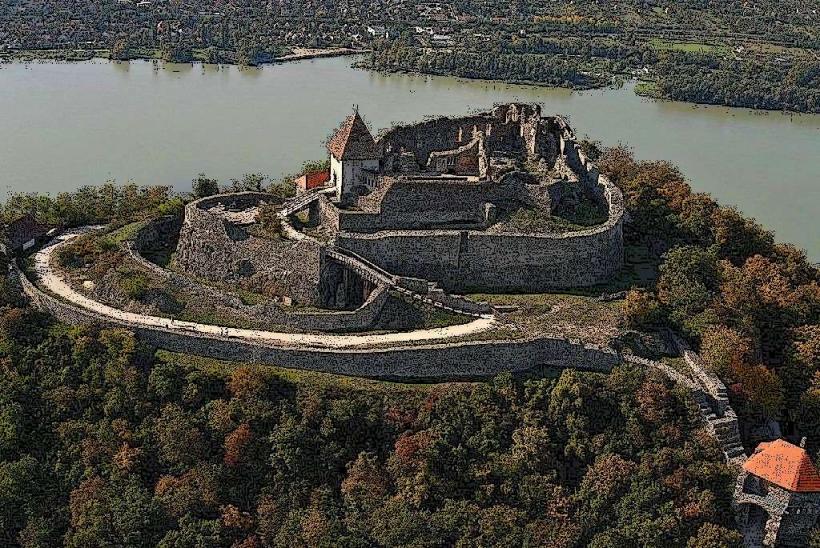
Solomon Tower (Salamon-torony) is a massive, 13th-century hexagonal keep that forms the centerpiece of the Lower Castle (Alsóvár) in Visegrád, Hungary. It is one of the largest and best-preserved Romanesque/Gothic residential towers in Central Europe.
Visual Characteristics
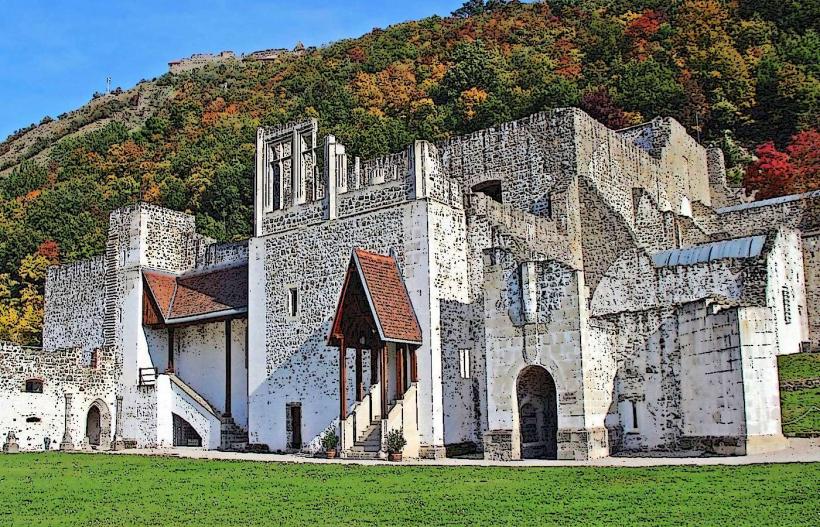
The tower is a six-story stone structure with walls reaching a thickness of up to 8 meters at the base. It features a distinctive hexagonal footprint and is capped by a wooden roof structure reconstructed in the 20th century. The exterior is characterized by narrow loop-holes for defense and larger arched windows on the upper residential floors. The interior contains vast vaulted halls and a central spiral staircase.
Location & Access Logistics
The site is located at 2025 Visegrád, Salamon-torony utca.
By Car: Situated on the lower slopes of the Castle Hill, directly above the main Road 11. Limited parking is available on the roadside near the entrance.
By Public Transport: The "Visegrád, Salamon-torony" bus stop is a 5-minute uphill walk from the tower.
By Foot: It is a 10-minute walk from the Royal Palace in the town center and is connected to the Upper Citadel by a steep hiking trail (~20–25 minutes).
Historical Origin
The tower was constructed between 1250 and 1258 as part of the unified defense system built by King Béla IV after the Mongol invasion. It served as a fortification to control the commercial traffic on the Danube and as a royal residence. Its name is a historical misnomer; King Solomon of Hungary was actually imprisoned in a previous, nearby tower on Sibrik Hill in the 11th century, not this specific 13th-century structure.
Key Highlights & Activities
The Original Fountain of Hercules: The tower houses the original 15th-century Renaissance red marble fountain from the Royal Palace, which is a masterpiece of Hungarian Renaissance art.
Historical Exhibitions: The upper floors contain artifacts from the excavations of the Royal Palace and the Citadel, including medieval weapons and everyday objects.
Knightly Tournaments: During the summer season and the International Palace Games (July), the square in front of the tower serves as the arena for jousting, archery, and falconry demonstrations.
Panoramic Roof: The top level offers a close-up view of the Danube and a clear line of sight to the Citadel above.
Infrastructure & Amenities
The tower contains a small ticket office and basic restroom facilities. Due to its medieval design, the interior is accessed via steep, narrow stone stairs and is not wheelchair accessible. The stone interior remains cold even in summer, so appropriate clothing is recommended. 5G signal is strong outside the tower but may drop within the thick masonry.
Best Time to Visit
The tower is open seasonally, typically from May to September. During the off-season, the interior is usually closed to the general public except for pre-booked groups. Visiting during the International Palace Games provides the most immersive experience with live historical reenactments.
Facts & Legends
A local legend claims that the famous "Visegrád 11 o'clock bell" (commemorating the victory over the Ottomans) can be heard most clearly from the tower's battlements. Historically, the tower served as the treasury for the Hungarian Holy Crown before it was moved to the more secure Upper Citadel.
Nearby Landmarks
Royal Palace of Visegrád – 0.6 km South
Visegrád Citadel (Upper Castle) – 0.8 km South (uphill)
Sibrik Hill (Roman Camp) – 0.5 km North
Görgey House – 0.4 km West
Danube Ferry Terminal – 0.7 km Northwest