Information
Landmark: Visegrád Citadel CastleCity: Visegrad
Country: Hungary
Continent: Europe
Visegrád Citadel Castle, Visegrad, Hungary, Europe
The Visegrád Citadel (Fellegvár) is a 13th-century hilltop fortress situated 333 meters above the Danube Bend. It serves as a primary symbol of Hungarian medieval history and defensive architecture.
Visual Characteristics
The fortress is built on a triangular ground plan designed to adapt to the irregular volcanic peak of Várhegy (Castle Hill). It features massive stone walls with three corner towers and a central residential wing. The structure includes three concentric curtain-wall systems added progressively across three centuries. From its panoramic terraces, visitors have an unobstructed view of the Danube's "U" bend, the Pilis Mountains, and the town of Nagymaros on the opposite bank.
Location & Access Logistics
The site is located at 2025 Visegrád, Várhegy.
By Car: Accessible via the "Panoráma út" road. Paid parking is available at the castle base (~1,300 HUF for 2 hours).
By Public Transport: * Bus: Volánbusz 880/881 from Budapest Újpest-Városkapu station (approx. 75 min). A local shuttle bus runs from the ferry station to the Citadel on weekends/holidays (March–October).
Train + Ferry: Train from Budapest-Nyugati to Nagymaros-Visegrád, followed by a 5-minute ferry crossing to Visegrád.
By Foot: Several hiking trails lead to the top from the town center. The Blue (K) trail is a steep, 30–40 minute climb through the forest.
Historical Origin
The current Upper Castle was commissioned between 1246 and 1259 by King Béla IV and Queen Maria Laskarina following the Mongol invasion. It was part of a larger defensive network including the Lower Castle (Solomon Tower) and water bastions. In 1325, King Charles I made it the royal seat of Hungary. In 1335, it hosted the famous "Congress of Visegrád," a summit between the kings of Hungary, Poland, and Bohemia that established regional trade alliances.
Key Highlights & Activities
Hungarian Holy Crown Exhibition: Houses a high-fidelity replica of the crown and coronation regalia, which were guarded here for nearly two centuries (14th–16th century).
Panopticon: A waxwork exhibition recreating the 1335 royal summit and medieval court life.
Military History Exhibit: Displays of medieval weapons, armor, and war equipment used during various sieges.
Hunting Museum: Explores the history of royal hunting in the surrounding Pilis forests.
International Palace Games: A major historical festival held every July featuring jousting and falconry displays.
Infrastructure & Amenities
The Citadel contains several permanent indoor exhibitions, clean public restrooms, and a small gift shop. Food stalls and restaurants are located at the base of the hill near the parking area. The terrain involves many stairs and uneven stone surfaces; while some viewpoints are accessible, the interior museum rooms are not wheelchair-friendly. 5G cellular signal is strong on the outer terraces.
Best Time to Visit
Opening hours are typically 9:00 AM to 5:00 PM (varies seasonally; closed Dec 24–25). Visit at opening to avoid crowds and for optimal photography of the Danube Bend. The "Golden Hour" shortly before closing in autumn provides dramatic lighting across the stone ruins.
Facts & Legends
The castle is the source of the "Visegrád Group" (V4) name, referencing the 1335 summit that inspired modern regional cooperation between Hungary, Poland, Czechia, and Slovakia. A darker legend involves the theft of the Holy Crown in 1440 by a lady-in-waiting, Helene Kottanner, who smuggled it out under her clothing to ensure the coronation of the infant King Ladislaus V.
Nearby Landmarks
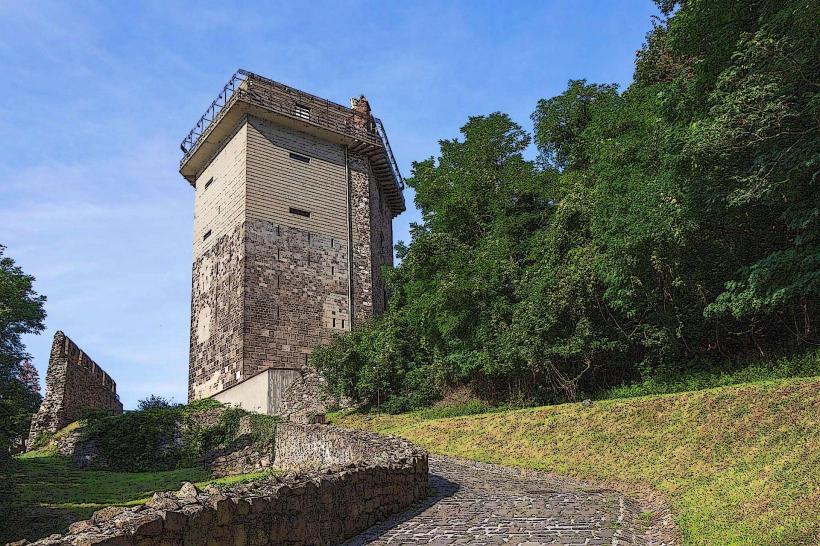
Lower Castle & Solomon Tower – 0.8 km North (mid-slope)
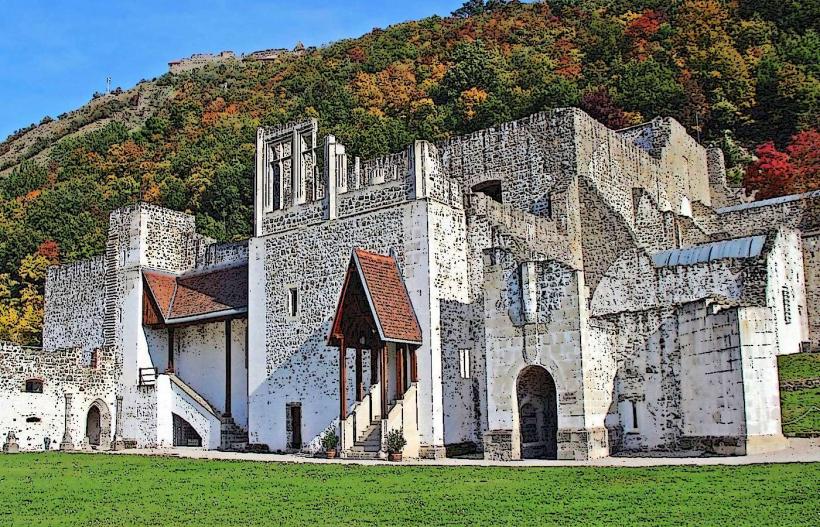
Royal Palace of Visegrád – 1.0 km Northwest (town center)
Great Villám Bobsleigh Track – 1.5 km East
Mogyoró-hegy Wildlife Park – 2.0 km Northeast
Sibrik Hill (Roman Castrum ruins) – 1.2 km North