service

Soyembika Tower | Kazan


Information

Landmark: Soyembika Tower
City: Kazan
Country: Russia
Continent: Europe

Soyembika Tower, Kazan, Russia, Europe

Overview

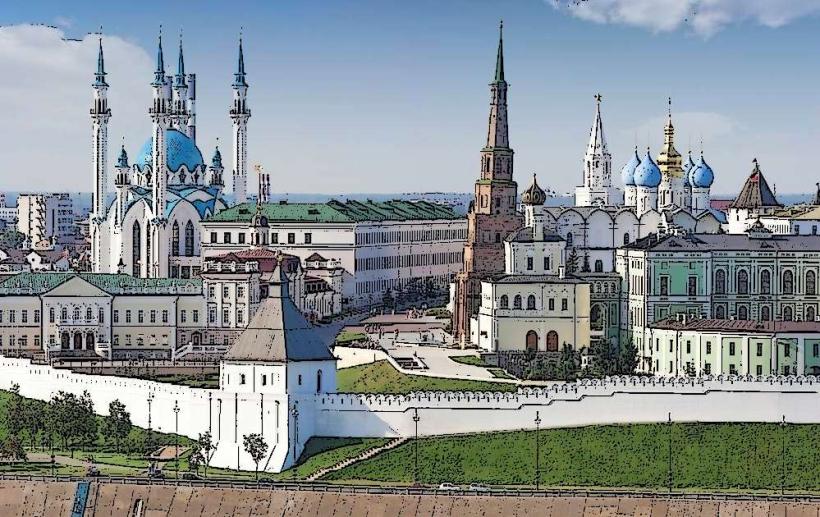
The Soyembika Tower, rising over Kazan’s skyline in Russia, stands as one of the city’s most recognizable landmarks and a proud symbol of Tatarstan’s capital, what’s more rising above the skyline, it’s a historic and architectural marvel that reflects the city’s rich past, weaving Tatar, Russian, and Islamic influences into its stone and arches.As far as I can tell, The Suyumbike Tower stands inside the Kazan Kremlin, a UNESCO World Heritage site, its red brick walls offering a vivid window into the region’s rich history and culture, what’s more first, sort of The Soyembika Tower stands inside the Kazan Kremlin, perched high on a hill with the wide Volga River gleaming far below, furthermore at the heart of Kazan stands the Kremlin, its stone walls steeped in history, and rising above them is the slender Soyembika Tower, one of its most striking landmarks, mildly The spot sits at 55.7987° north, 49.1069° east-think crisp air and the faint scent of pine, to boot height: The tower rises about 58 meters, or 190 feet-roughly the height of a 20-story building.The Soyembika Tower blends Islamic, Russian, and Persian design, standing as a striking symbol of Tatar heritage with its tiered brick walls rising toward the sky, meanwhile number two, in a sense The Soyembika Tower carries a rich, slightly mysterious past, tied to the legendary Tatar ruler Queen Soyembika-whose name still echoes in its weathered bricks, to boot historians still argue over the tower’s exact origins and purpose, yet one detail endures: it’s said to bear the name of Queen Soyembika, the last ruler of Kazan before Ivan the Terrible seized the city.Legend has it that after Kazan fell, Queen Soyembika was forced to wed Ivan the Terrible; some say she ended her life by leaping from the tower’s chilly stone heights, as well as still, the historical record doesn’t quite back up the tale, and it lingers in local folklore like the creak of an vintage wooden sign in the wind.No one knows the exact year the tower went up, but most agree it was built in the late 1500s, when Ivan the Terrible ruled and the air smelled of fresh-cut timber, what’s more some historians believe the Russian Tsar built it after the Kazan Khanate fell, a deliberate show of power-like planting his banner high where everyone could discover it.Some say the Khanate built the tower in its final days, a last stone monument from the Tatar rulers before their rule collapsed, equally important rising against the Kazan skyline, the Soyembika Tower tells the story of where Tatar and Russian traditions meet, its brick walls holding centuries of shared history.It has stood through pivotal moments in the region’s history, a silent witness to Kazan’s days as a proud, independent kingdom before its towers fell under the rule of the Russian Empire, simultaneously three.The Soyembika Tower stands out for its graceful design and its slight, unmistakable lean, like a tall figure caught mid-step, alternatively people often compare it to other leaning towers around the world, like the Leaning Tower of Pisa, though its tilt is gentler-more a subtle lean than a dramatic slant.The tower rises in multiple stories, each one edged with arches that grow slimmer and narrower as you behold up, like fine ribs tapering toward the sky, lending the whole structure a graceful, narrowing silhouette, moreover bell Tower: The tower’s peak was built to hold a great bronze bell that once rang out across the town, marking essential events and calling people to religious ceremonies.The bell tower still stands out, its dusky silhouette rising above the rest of the building, likewise the tower is famous for its gentle lean, a quirk likely caused by the ground sinking unevenly beneath it.Even with its lean, the structure holds firm, weathering centuries like stone warmed by the afternoon sun, therefore domed Roof: A rounded dome crowns the tower, its pale stone catching the light and giving the Kazan Kremlin skyline a shape you can’t mistake.Number four, to boot the Soyembika Tower stands as a key landmark in Kazan-not only for its striking architecture and rich history, but also as a proud emblem of the city’s cultural heritage, rising red-brick against the sky.You know, Tourists flock to the Soyembika Tower each year, drawn by its striking tilt and its venue among the Kazan Kremlin’s top sights, in turn the Kremlin, a UNESCO World Heritage site, holds the tower as one of its crown jewels-a landmark that rises above the red brick walls.I think, You can wander through the Kremlin, trace Kazan’s history in its stone walls, and take in sweeping views of the city from the tower’s windy perch, on top of that the tower stands as a proud symbol of Kazan, its image printed on vivid postcards, carved into souvenirs, and woven into the heart of the city’s identity.It weaves together Kazan’s Islamic, Tatar, and Russian past, standing as a vivid reminder of the city’s rich, many-layered heritage, alternatively cultural Events: The tower and the nearby Kremlin grounds often come alive with festivals, concerts, and educational exhibitions-music echoing off the heritage stone walls.The tower has woven itself into the city’s cultural life, hosting historical talks and performances-sometimes echoing with the sound of timeworn stories told under its stone arches, in turn soyembika Tower often features in educational programs, where visitors can explore the history of Kazan, the Tatar Khanate, and the Russian conquest-sometimes while standing in the shadow of its leaning brick walls.It’s key to grasping how the region’s culture and politics have shifted-like hearing the change in tone between an classical folk song and its modern remix, likewise five.When you tour the Kazan Kremlin, you’ll usually step inside the red-brick Soyembika Tower, a striking landmark that’s part of the complex itself, equally important you’ll find the tower inside the Kazan Kremlin, so it’s easy to pair a visit with nearby sights like the white-stone Annunciation Cathedral or the brightly domed Qol Sharif Mosque.Opening hours: The tower welcomes visitors all year, from crisp winter mornings to warm summer afternoons, meanwhile the Kremlin and its nearby historic landmarks usually welcome visitors from 10 a.m. Not surprisingly, to 6 p.m, though in the busy summer months you might catch the gates still open as the evening light spills across the cobblestones, and you might have to pay a slight entrance fee to visit the Kremlin, especially if you want to step inside certain halls or courtyards.You can usually visit Soyembika Tower with the same ticket that gets you into the Kremlin, no need to buy another, and on guided tours of the Kazan Kremlin, you’ll often step inside the slender, brick-red Soyembika Tower.These tours pull back the curtain on the tower’s history and the Kremlin’s importance, revealing stories etched into historic stone and echoed in quiet halls, not only that the best time to go is in spring or summer, when the air feels warm and clear, and you can view straight from the tower to the distant hills without a cloud or raindrop in the way.Number six sat on the list like a lone pebble in the sand, consequently fun fact: The Soyembika Tower may not draw crowds like Pisa’s leaning landmark, but its gentle tilt-just enough to catch the eye-gives it a charm all its own.To be honest, The tower leans because the foundation settled unevenly, yet it’s still solid-its marble blocks hold firm under the midday sun, after that people still argue over the tower’s exact name, the way you might over whether it’s “grey” or “gray.”Most people discern it as Soyembika Tower, but local tales whisper it might once have borne the name of another ruler-or even a holy figure whose story has faded like ancient paint on stone.Its identity still hinges on its link to Queen Soyembika, as if her presence lingers in the stones, along with the Soyembika Tower stands tall over Kazan, a lasting emblem of the city’s rich, intertwined cultures, its red bricks catching the evening sun, perhaps It’s long stood as a powerful emblem for the Tatar people and
Author: Tourist Landmarks
Date: 2025-09-21


Location

Get Directions


Rate it

You can rate it if you like it


Share it

You can share it with your friends


Contact us

Inform us about text editing, incorrect photo or anything else

Contact us

Landmarks in Kazan

Kazan Cathedral
Landmark

Kazan Cathedral

Kazan | Russia
Kazan Kremlin
Landmark

Kazan Kremlin

Kazan | Russia
Kul Sharif Mosque
Landmark

Kul Sharif Mosque

Kazan | Russia
Bauman Street
Landmark

Bauman Street

Kazan | Russia
Kazan Arena
Landmark

Kazan Arena

Kazan | Russia
Temple of All Religions
Landmark

Temple of All Religions

Kazan | Russia
Annunciation Cathedral
Landmark

Annunciation Cathedral

Kazan | Russia
Millennium Park
Landmark

Millennium Park

Kazan | Russia
Riviera Aquapark
Landmark

Riviera Aquapark

Kazan | Russia


Latest Landmarks

Motswiri Cultural Village

Maun | Botswana

Sultan Omar Ali Saifuddien Mosque

Bandar Seri Begawan | Brunei

Savute Channel

Kasane | Botswana

Itireleng Ward Kgotla

Lobatse | Botswana

Istana Nurul Iman

Bandar Seri Begawan | Brunei

Chobe Riverfront

Kasane | Botswana

Tourist Landmarks ® All rights reserved