Information
Landmark: Wavre Town HallCity: Wavre
Country: Belgium
Continent: Europe
Wavre Town Hall, Wavre, Belgium, Europe
Wavre Town Hall (Hôtel de Ville de Wavre) is the administrative center of the capital of the Walloon Brabant province. It is housed in the historic buildings of the former Carmelite Priory.
Visual Characteristics
The complex features a distinct Brabantine Baroque and Neoclassical style. The primary structure is a two-story brick building with white stone framing around the windows and doors. The most prominent feature is the cloister, which remains largely intact, and the central courtyard. The facade is topped with a triangular pediment, and a small, elegant bell tower sits atop the roofline, characteristic of 18th-century religious-turned-civilian architecture.
Location & Access Logistics
The Town Hall is located at Place de l'Hôtel de Ville 1, in the pedestrian-friendly center of Wavre.
By Train: Wavre station is approximately 0.4km away (5-minute walk).
By Car: Accessible via the E411 motorway (Exit 6).
Parking: The nearest parking is Parking des Fontaines or Parking l'Escaille.
Access: The administrative offices are accessible during weekday business hours, while the courtyard and cloister are often accessible to the public during the day.
Historical Origin
The site was originally a Carmelite monastery founded in 1652. The current buildings mostly date from the reconstruction in 1715–1725 following fires and urban damage. After the French Revolution, the monastery was suppressed, and the building was repurposed as the Town Hall in 1809. It served as a strategic point during the Battle of Wavre in 1815, the final clash of the Napoleonic Wars occurring simultaneously with the Battle of Waterloo.
Key Highlights & Activities
The Cloister: One of the best-preserved monastic cloisters in the region, often used for civic ceremonies and art exhibitions.
The Wedding Hall: Features historic portraits and refined woodwork.
The Maca Statue: Located near the entrance of the Town Hall, this bronze statue of a young boy climbing a wall is the symbol of the city's inhabitants (the "Macas"). It is a local tradition to rub the boy's buttocks for good luck.
Infrastructure & Amenities
The Town Hall houses municipal services, including the civil registry. Public restrooms are available for visitors within the building. 5G cellular coverage is excellent in the square. The surrounding Place de l'Hôtel de Ville is lined with cafes, bakeries, and banks.
Best Time to Visit
Photography: The courtyard is best photographed in the morning for soft, even light on the brickwork.
Events: The square in front of the Town Hall is the epicenter of the Jeu de Jean et Alice, a massive historical spectacle held every five years.
Market Day: Wednesday mornings bring a lively market to the adjacent streets, though it makes parking more difficult.
Facts & Legends
Napoleonic Scars: The building still bears the legacy of the 1815 battle; a cannonball was long embedded in the masonry of the nearby bridge (Pont du Christ), and the Town Hall served as a temporary infirmary for wounded soldiers.
The Maca: The name "Maca" is said to come from the sound of the large hydraulic hammers (macas) used in local ironworks during the Middle Ages.
Nearby Landmarks
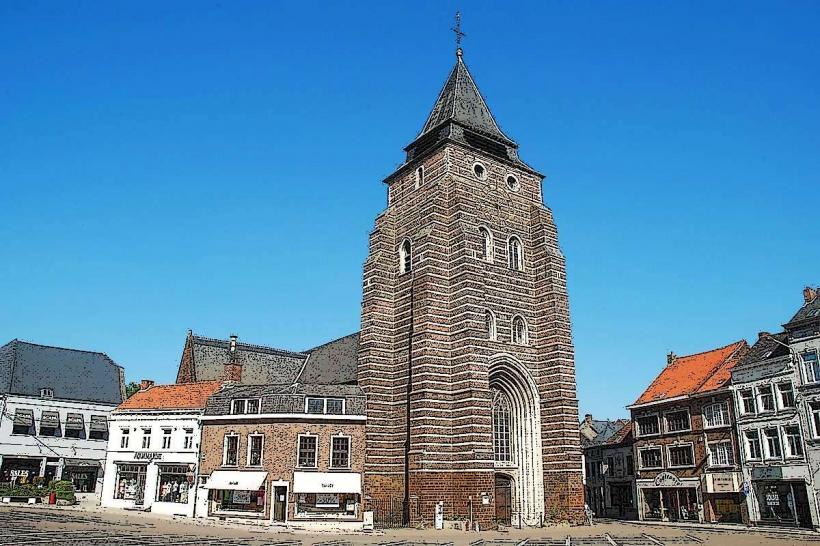
Church of St. John the Baptist: 0.2km North (Contains a 16th-century carillon)
La Dyle River: 0.1km East (Flows through the city center)
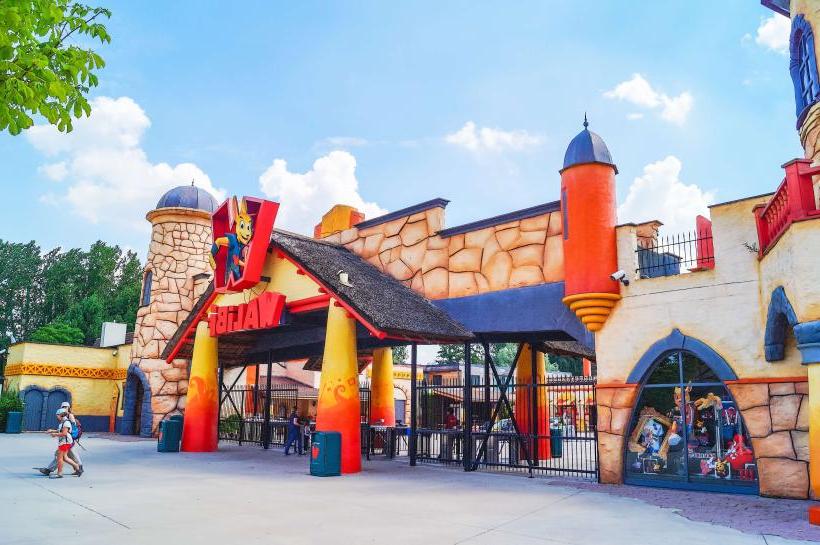
Walibi Belgium: 2.5km Southwest (Major theme park)
Aventure Parc: 2.0km South
The Maca Statue: 0.05km (Directly adjacent)