service

Žiča Monastery | Kraljevo


Information

Landmark: Žiča Monastery
City: Kraljevo
Country: Serbia
Continent: Europe

Žiča Monastery, Kraljevo, Serbia, Europe

Overview

The Žiča Monastery, known in Serbian as Manastir Žiča, stands as one of the most pivotal Serbian Orthodox sites, just outside Kraljevo in the heart of central Serbia, besides the monastery, dedicated to the Ascension of Christ, stands as a key landmark in the Serbian Orthodox Church’s past and in the wider story of medieval Serbia, its stone walls still carrying the echo of centuries-heritage prayers.In the early 1200s-around 1208-Serbia’s first king, Stefan the First-Crowned (Stefan Prvovenčani), laid the cornerstone of the Žiča Monastery, its red walls rising against the surrounding hills.Žiča Monastery, one of the oldest and most revered sites in the Serbian medieval kingdom, was built to house the archbishopric of the Serbian Orthodox Church and to serve as a hub for the kingdom’s religious, cultural, and political life-its red walls once echoed with chants that shaped the faith of a nation, to boot serbian kings were crowned here, starting with Stefan the First-Crowned, whose gilded crown caught the afternoon light.The monastery also marked a turning point for the Serbian Church, as it was at Žiča that it gained independence from the Byzantine Patriarchate, in turn the Ecumenical Patriarch of Constantinople formally granted this independence.Perched on a ridge with its bells echoing through the valley, the monastery held both strategic and spiritual weight, becoming a vital cultural and political hub of the medieval Serbian state, especially under the Nemanjić dynasty, therefore the Žiča Monastery is tied to the Serbian Middle Ages, a time when its art and architecture flourished, blending the clean lines of Romanesque with the ornate grace of Byzantine style; its church, a grand cross-shaped building crowned by a dome and anchored by a wide nave, still echoes the spiritual traditions of both East and West.The stone walls of the monastery are accented with deep red brick, giving it a glance all its own, in conjunction with inside, frescoes-painted in the early 1200s-cover the walls in soft, timeworn color.Honestly, These frescoes rank among the finest works of medieval Serbian art, showcasing the height of Byzantine-style religious painting, not only that their rich blues and warm golds bring intricate biblical scenes to life with astonishing detail.In the church’s narthex, vivid frescoes show Christ, the Virgin Mary, and the apostles, along with scenes from both the aged and modern Testaments-one panel glows with deep blues and gold leaf, consequently their style carries the elegance of Byzantine art yet keeps the warmth of Serbian tradition, to some extent Funny enough, Beyond the main church, the Žiča Monastery holds a bell tower, simple monastic cells, and a quiet cloister, all built to serve the rhythm of monastic life, what’s more the bell tower, added years after the original construction, rises sharply above the monastery’s rooftops.Inside the walls, a quiet courtyard offers shade beneath a single heritage oak, giving the monks a still region to reflect, and Žiča holds a unique spot in Serbian history-it’s where several kings once knelt to be crowned, to some extent The most famous of these ceremonies was when Stefan the First-Crowned became Serbia’s first king in 1217 at Žiča, where red-painted walls still catch the afternoon light, furthermore that moment marked the birth of the Serbian Kingdom as an independent state, with the monastery at its heart, serving as both its spiritual guide and political hub.Over the centuries, invasions and wars battered Žiča, forcing it to rise again from ruin more than once, therefore during the Ottoman occupation of Serbia, the monastery suffered damage and looting, then stood empty for years at a time.Yet it’s been brought back to life more than once, with major restorations in the 19th and 20th centuries, when fresh stone replaced crumbling walls, not only that today, Žiča Monastery is still home to a working monastic community, where monks rise early to pray in the quiet stone chapel, and it draws both pilgrims and tourists from far and wide.Žiča Monastery draws Orthodox pilgrims from far and wide, especially those honoring its setting in Serbia’s religious past, partially Still part of the Serbian Orthodox Church, it stands as a proud emblem of the nation’s medieval Christian heritage, besides listed on UNESCO’s tentative list and treasured as a cultural monument, it reflects the grandeur of the vintage Serbian state-its art, its faith, and its political reach.Within its red walls and faded frescoes lies a vivid record of Serbia’s medieval story and its ties to the Byzantine world, along with more than just stone and paint, Žiča remains both a masterpiece and a living heart of Orthodox spirituality.As the spot where Serbia’s first king was crowned, home to vivid frescoes that still glow with color, and the birthplace of the Serbian Orthodox Church, it stands among the nation’s most treasured religious sites, simultaneously today, Žiča still draws worshippers, pilgrims, and quiet seekers, its stone walls holding the echoes of Serbia’s medieval past.
Author: Tourist Landmarks
Date: 2025-09-02


Location

Get Directions


Rate it

You can rate it if you like it


Share it

You can share it with your friends


Contact us

Inform us about text editing, incorrect photo or anything else

Contact us

Landmarks in Kraljevo

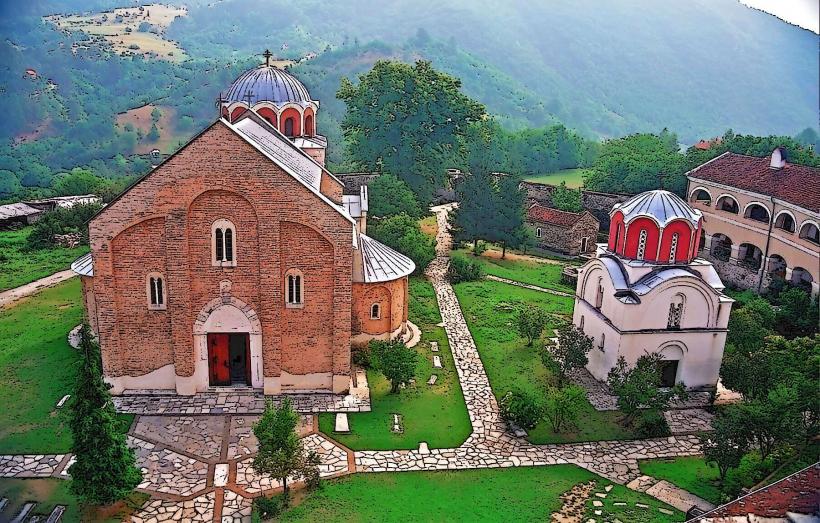
Studenica Monastery
Landmark

Studenica Monastery

Kraljevo | Serbia
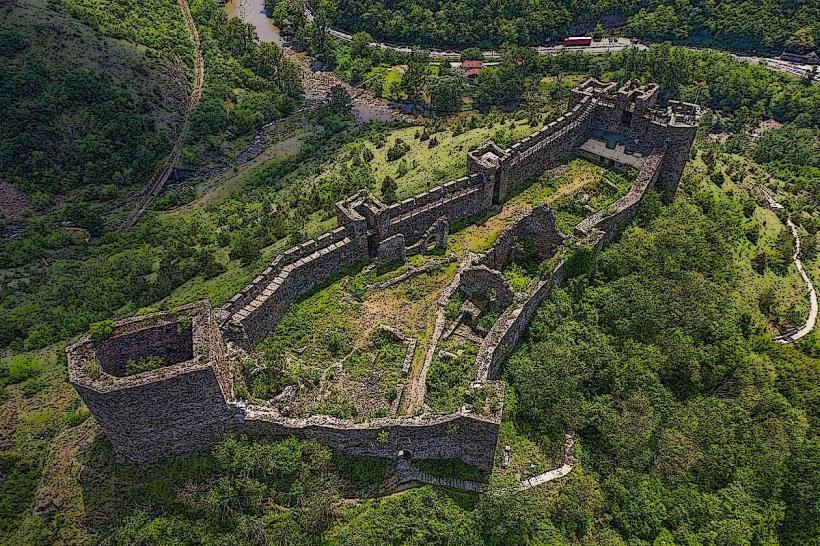
Maglič Fortress
Landmark

Maglič Fortress

Kraljevo | Serbia
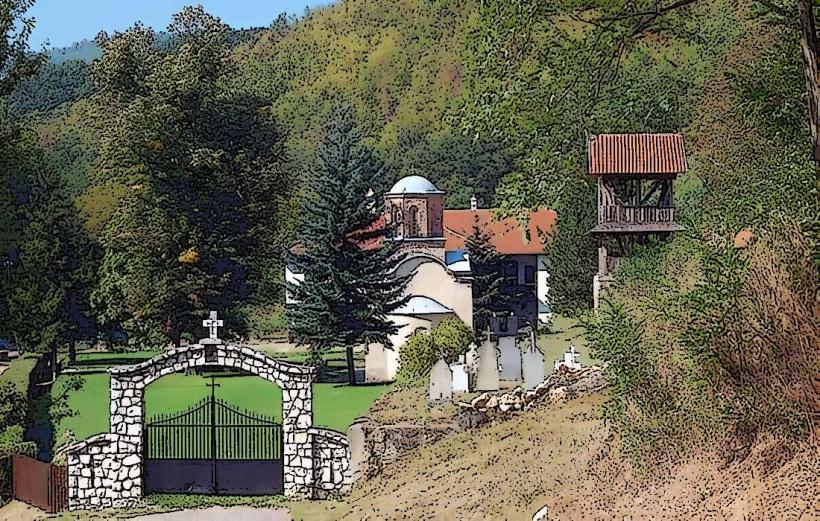
Jošanica Monastery
Landmark

Jošanica Monastery

Kraljevo | Serbia


Latest Landmarks

Tarrafal Concentration Camp

Tarrafal | Cabo Verde

Carnegie Library

Mindelo | Cabo Verde

Boa Morte Chapel

Assomada | Cabo Verde

Cova Galinha Hill

Praia | Cabo Verde

Praia City Hall

Praia | Cabo Verde

Tourist Landmarks ® All rights reserved