Information
City: AlaiorCountry: Balearic Islands
Continent: Europe
Alaior, Balearic Islands, Europe
Alaior is an inland town in central Menorca, established in 1304 by King James II of Mallorca. It is known as the island's center for industry and academia, as well as the gateway to the primary southern beach resorts.
Historical Timeline
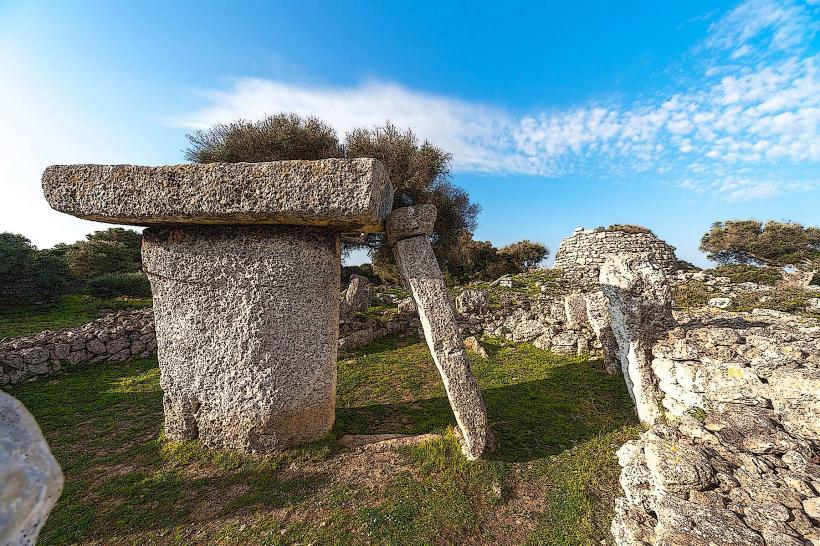
The area has been a focal point of human activity since the Bronze Age, evidenced by the high concentration of nearby Talaiotic sites. Following the Christian conquest of 1287, the town was structured around the Santa Eulària hill. In the 20th century, Alaior became the industrial heart of Menorca, specializing in footwear and dairy production, particularly the island’s distinctive cheese.
Demographics & Population
The population is approximately 9,600. It is the third-largest municipality in Menorca. The population is largely composed of local Menorcan families, with a growing student population due to the presence of the University of the Balearic Islands (UIB) extension. The economy is driven by the Queso de Mahón industry, jewelry manufacturing, and tourism.
Urban Layout & Key Districts
Dalt la Vila: The historic high quarter of the town, featuring steep, whitewashed streets.
Plaça de la Constitució: The central social hub and commercial core.
Son Bou: A major coastal district belonging to the municipality, home to Menorca's longest beach.
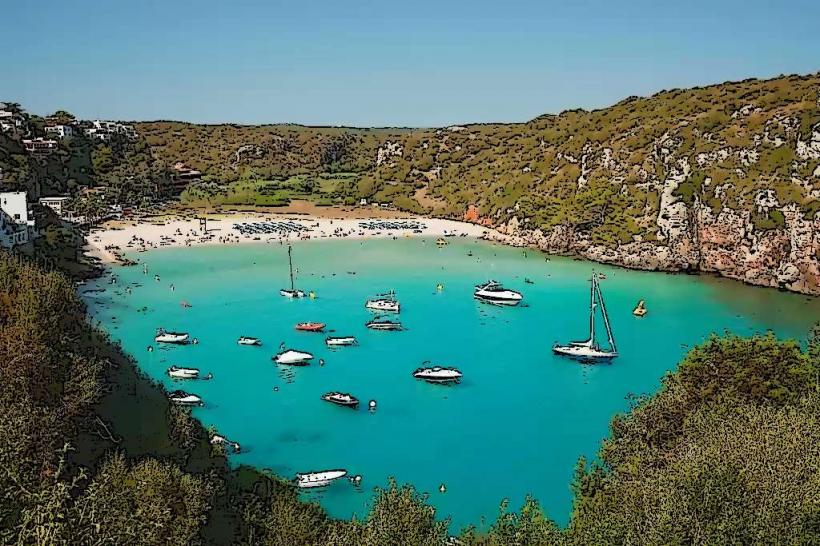
Cala en Porter: A residential and resort district to the south, famous for its limestone cliffs and caves.
Top Landmarks
Santa Eulària Church: A monumental 17th-century church built on a defensive site; it features a unique "Patio de la Luna" (Moon Courtyard).
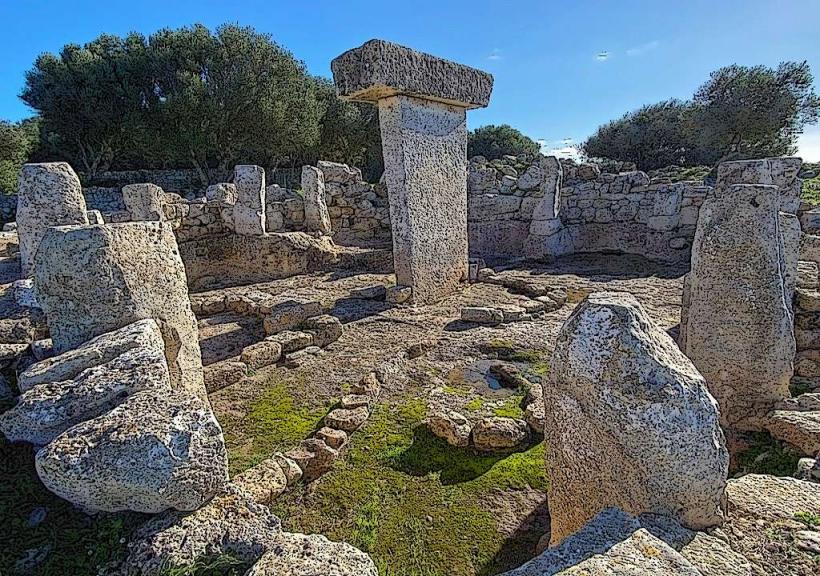
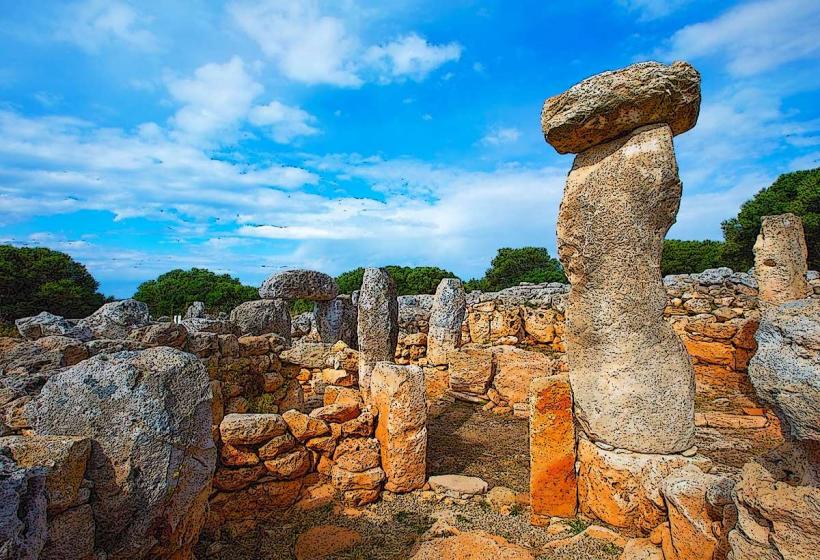
Torre d'en Galmés: One of the largest and most significant Talaiotic prehistoric villages in the Balearic Islands, located south of the town.
Convent of Sant Diego: A former Franciscan convent housing a cultural center and the town's administrative archives.
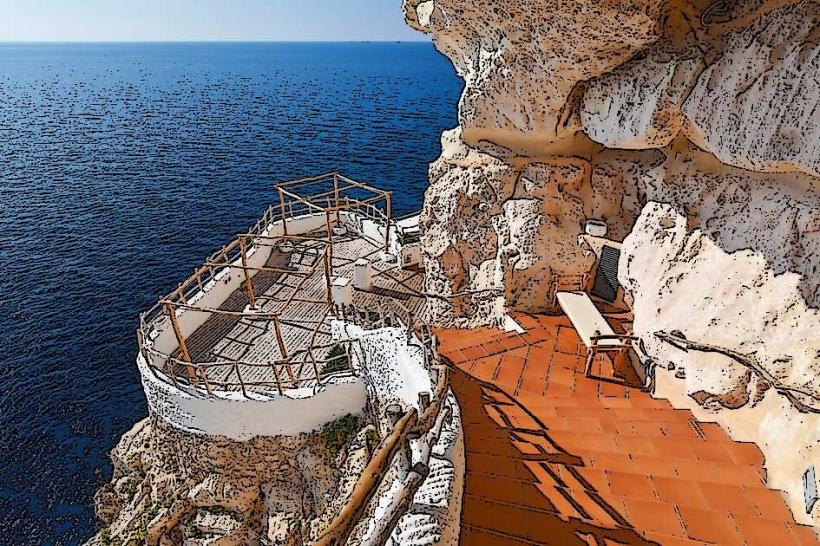
Cova d'en Xoroi: A world-famous bar and nightclub set into natural caves on a cliffside in Cala en Porter.
L'Argentina: A small zoo and leisure park located on the outskirts toward Mahón.
Transportation Network
Road: Situated directly on the Me-1 main road, halfway between Mahón (12 km) and Ciutadella (33 km).
Bus: TIB Line 1 provides frequent daily connections to Mahón and Ciutadella. Local shuttles connect the town to Son Bou and Cala en Porter.
Walking: The town center is characterized by high-gradient pedestrian streets; comfortable footwear is essential.
Safety & "Red Zones"
Driving: The historic center contains extremely narrow streets and sharp turns; visitors should use the large public parking areas at the town's entrance.
Hiking: The Camí de Cavalls sections near Son Bou are exposed with minimal shade; heat stroke is a risk in summer.
Cliff Edges: In Cala en Porter, safety barriers are present, but children should be closely supervised near the high viewpoints.
Digital & Financial Infrastructure
4G/5G coverage is excellent. The currency is the Euro (€). ATMs are concentrated around the main square. Contactless payment is the standard in all shops and dairy outlets.
Climate & Air Quality
Mediterranean climate. The town’s inland position makes it slightly warmer than the coast in summer and cooler in winter. Air quality is high due to the lack of heavy industrial pollutants and proximity to protected rural land.
Culture & Social Norms
Festes de Sant Llorenç: Held in August, featuring the traditional Menorcan horse "jaleo."
Cheese Production: Alaior is the primary production site for the Coinga dairy cooperative.
Cuisine: Specialized in Pastissets (flower-shaped biscuits) and Queso de Mahón-Menorca.
Local Cost Index (EUR)
1 Espresso: €1.50–€2.00
1 Standard Lunch: €14.00–€18.00
1 Entry to Torre d'en Galmés: €3.00
Nearby Day Trips
Son Bou: A 10-minute drive to the island’s 2.4 km sandy beach and Early Christian basilica ruins.
Monte Toro: The island's highest point, offering panoramic views, located 15 minutes west.
Facts & Legends
Legend says the "Cave of Xoroi" was named after a Turkish pirate who hid there for years after being shipwrecked. A geographic fact: Alaior has the highest density of Talaiotic monuments per square kilometer in Menorca. Historically, the town was the first on the island to industrialize footwear production, a trade that once supplied the Spanish military.