Information
City: Bar HarborCountry: USA Maine
Continent: North America
Bar Harbor, USA Maine, North America
Bar Harbor is the primary gateway to Acadia National Park and the dominant tourism hub on Mount Desert Island (MDI) in Hancock County. Situated on the Frenchman Bay, it transitioned from a Gilded Age retreat for the American elite into a premier global destination for outdoor recreation and maritime study.
Historical Timeline
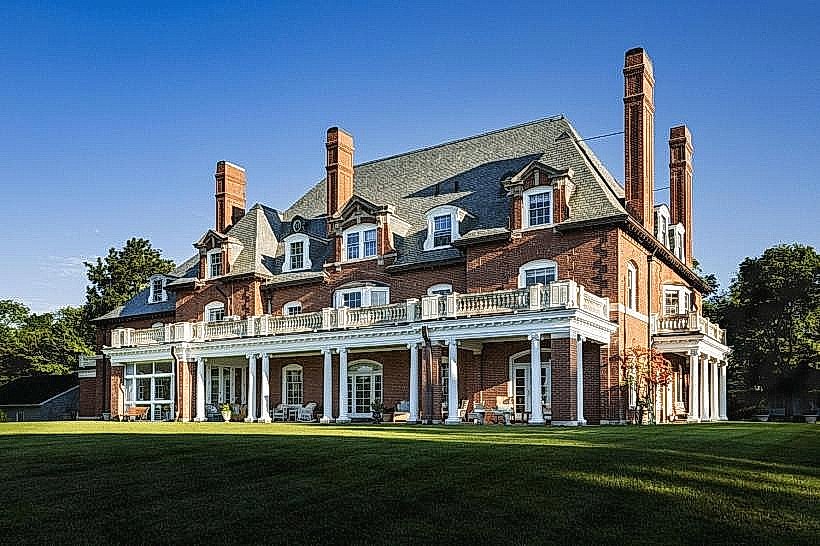
Originally the home of the Wabanaki people, the town was incorporated in 1796 as Eden. It became a world-renowned "summer colony" in the late 19th century, with massive "cottages" built by the Rockefellers, Fords, and Vanderbilts. In 1947, a catastrophic wildfire destroyed 17,000 acres and 67 palatial estates, permanently shifting the town’s economy from exclusive seasonal residency to high-volume public tourism.
Demographics & Population
The 2026 estimated year-round population is 5,210. The demographics are White (90.4%), Asian (2.8%), and Hispanic or Latino (2.1%). The median age is 47.3 years. During the summer peak, the effective population swells to over 100,000 including seasonal workers and tourists.
Urban Layout & Key Districts
Downtown (Main Street/Cottage Street): A high-density commercial district featuring upscale dining, T-shirt shops, and galleries.
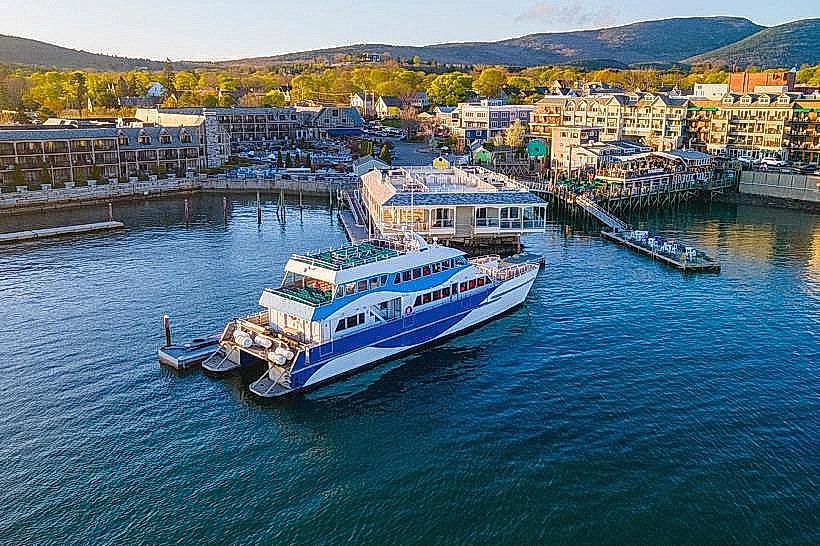
The Waterfront: Centered on West Street and the Town Pier; the hub for whale watching, lobster boat tours, and cruise ship tenders.
West Street Historic District: Contains the remaining 19th-century mansions that survived the 1947 fire.
Hulls Cove: Located north of the town center; houses the primary Visitor Center for Acadia National Park.
Top City Landmarks
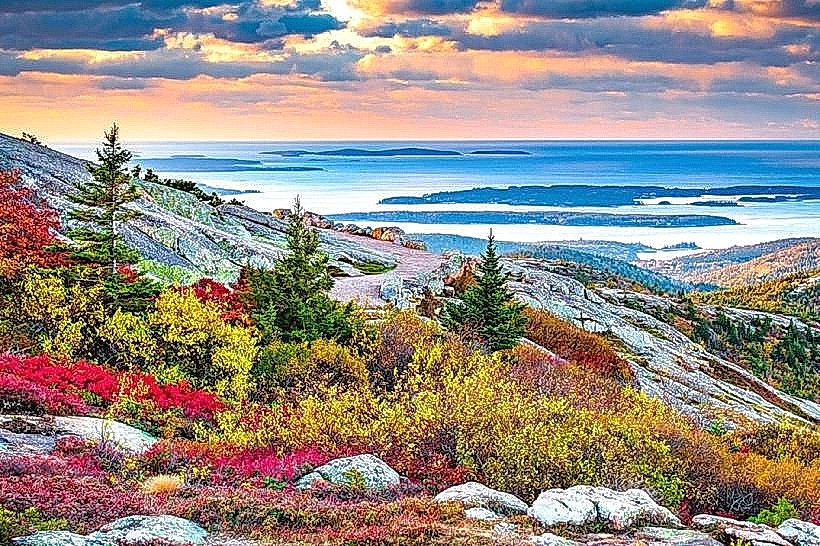
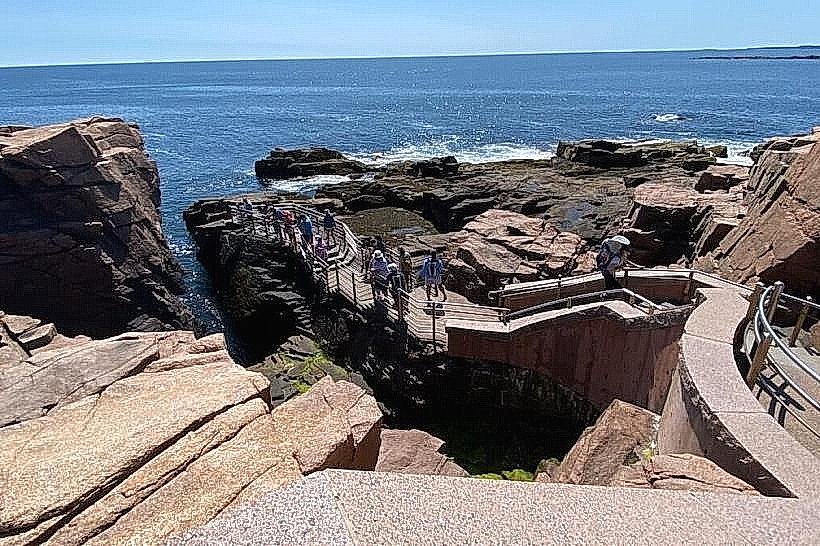
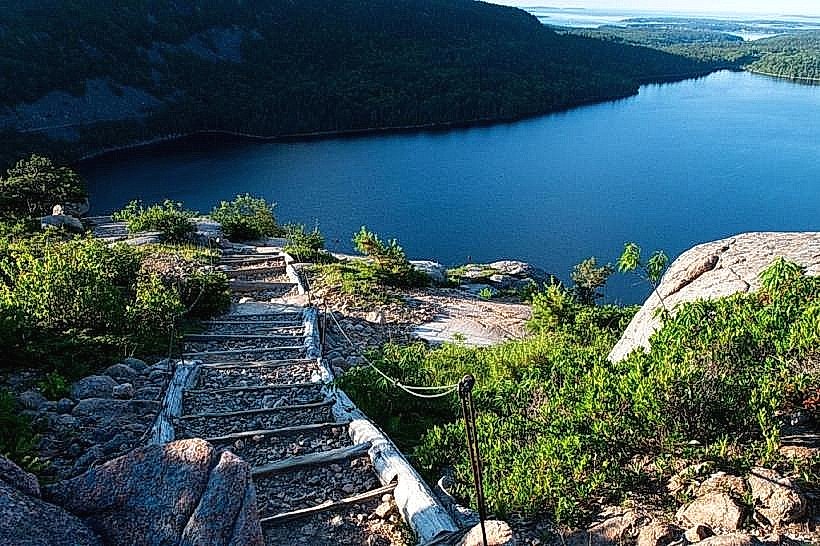
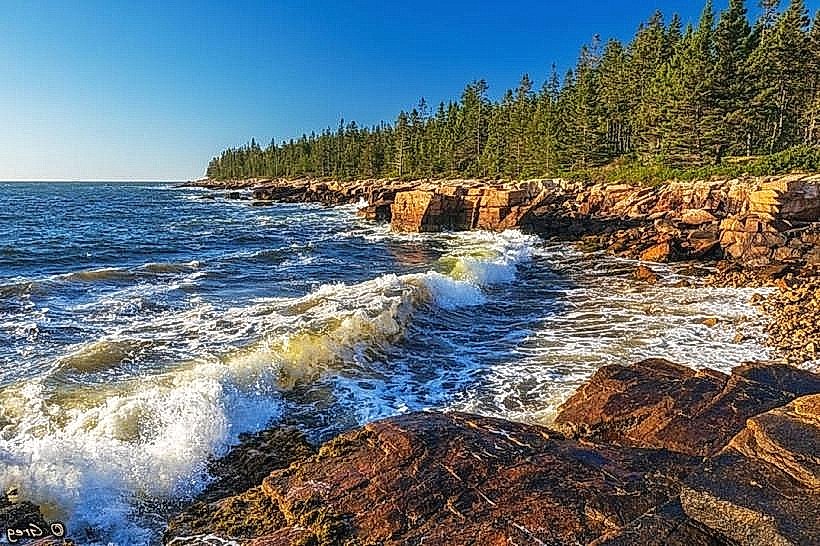
Acadia National Park: $47,000$ acres of mountains, ocean shoreline, and woodlands surrounding the town.
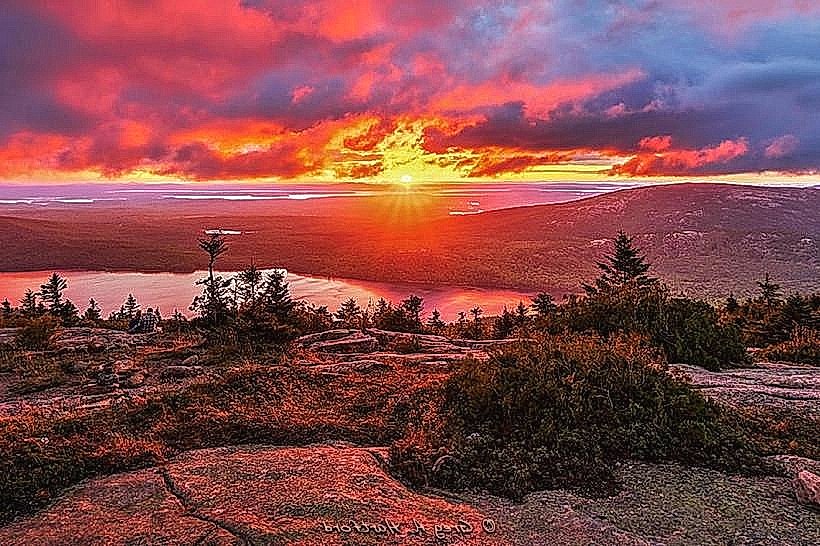
Cadillac Mountain: The highest point on the U.S. Atlantic coast ($466 \text{ m}$); famous for being the first place in the U.S. to see the sunrise during certain months.
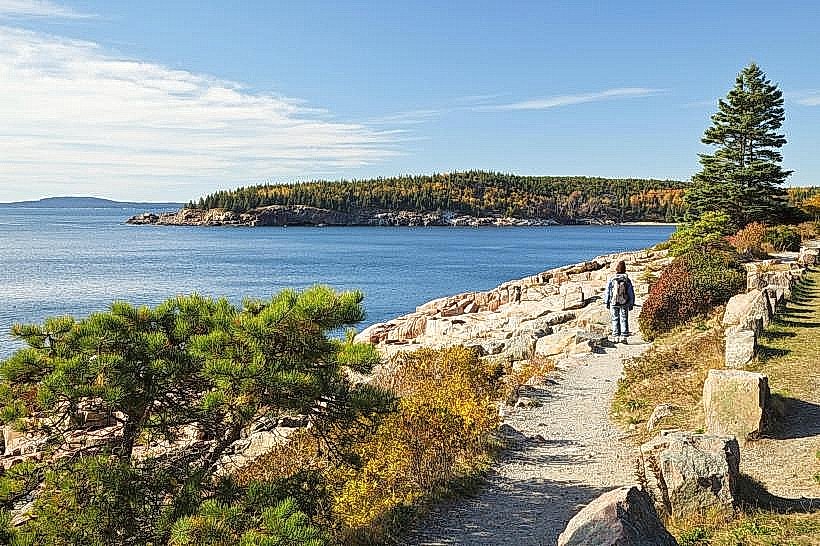
The Shore Path: A scenic walking trail dating back to 1880 that follows the bay from the Town Pier.
The Bar: A natural gravel land bridge revealed at low tide that allows pedestrians to walk to Bar Island.
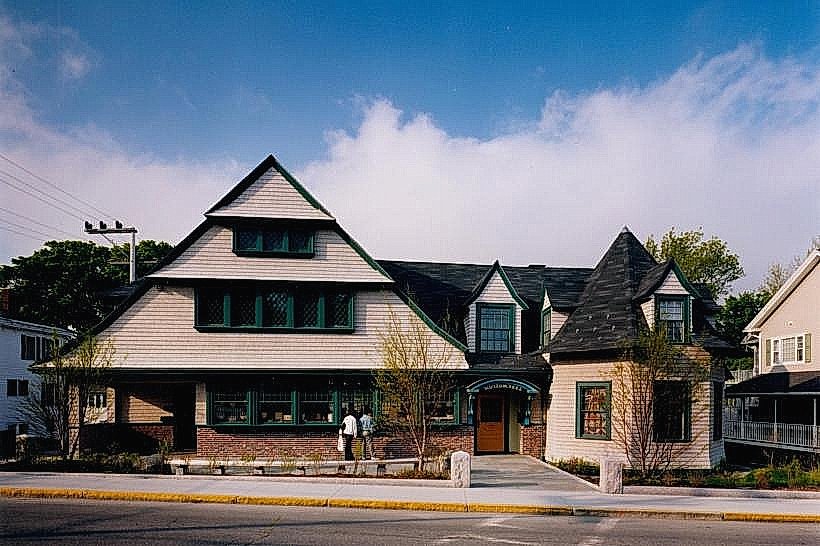
Abbe Museum: A Smithsonian-affiliated institution dedicated to the history and culture of the Wabanaki people.
College of the Atlantic: A private liberal arts college focused on human ecology, with a campus overlooking the bay.
Transportation Network
Bar Harbor is accessed via ME-3. The Island Explorer provides a high-frequency, fare-free propane bus system connecting the town with Acadia National Park and other MDI villages. The CAT high-speed ferry provides seasonal service to Yarmouth, Nova Scotia. Hancock County-Bar Harbor Airport (BHB) provides commercial service to Boston. Vehicle access to Cadillac Mountain now requires a timed reservation system during peak season.
Safety & Environmental Hazards
The safety level is high. Violent crime is rare.
Tide Hazards: Tourists frequently get stranded on Bar Island when the tide returns, requiring rescue.
Coastal Fog: Rapid onset of "pea soup" fog can make maritime and road navigation hazardous.
Cliff Safety: High-risk areas in Acadia (Beehive and Precipice trails) feature iron rungs and steep drops.
Digital & Financial Infrastructure
Infrastructure is robust but often strained by seasonal volume. Average internet speeds reach 1 Gbps via Spectrum and Fidius (fiber). High-density mobile coverage is available downtown, but "dead zones" are frequent within the National Forest. Card acceptance is 100%. Major institutions include Bar Harbor Bank & Trust and First National Bank.
Climate & Air Quality
The climate is humid continental with strong maritime influence.
Summers: Mild ($13^\circ\text{C}$ to $25^\circ\text{C}$).
Winters: Cold and snowy ($ -10^\circ\text{C}$ to $1^\circ\text{C}$), with many businesses closing seasonally.
Air Quality: "Excellent," though occasional hazy days occur due to long-range transport.
Culture & Social Norms
The culture is "Coastal Resort"-a blend of rugged Maine maritime identity and upscale seasonal tourism. Tipping of 20% is standard. The town is the center of the "Lobster Bake" culture. Dress code is "Outdoor Functional." Alcohol is sold in grocery stores; spirits are sold in licensed agency stores.
Accommodation Zones
Downtown: Stay here for historic inns and boutique hotels with full walkability.
West Street: Luxury waterfront resorts and hotels.
Route 3 (North): Mid-range motels and campgrounds catering to park visitors.
Local Cost Index
Espresso: $4.75
Lobster Dinner: $35.00 – $55.00 (Market dependent)
Median Home Value: $615,000
Nearby Day Trips
Schoodic Peninsula: 70 km (1 hour) – The only mainland section of Acadia, offering a quieter experience.
Southwest Harbor: 20 km (25 mins) – The "Quiet Side" of the island, known for boat building.
Jordan Pond House: 15 km (20 mins) – Famous for popovers and tea.
Facts & Legends
The town was originally named Eden, and many locals still refer to it as such. A local legend involves the "Ghost of the Criterion Theatre," a spirit reportedly haunting the 1932 art deco cinema. Historically, the city is unique for the Great Fire of 1947, which was so intense that it created its own weather system and was visible from the coast of Massachusetts.