Information
City: BielefeldCountry: Germany
Continent: Europe
Bielefeld, Germany, Europe
Bielefeld is a city in the state of North Rhine-Westphalia, situated along the Teutoburg Forest. It is a major industrial center for the food, textile, and machinery sectors, and serves as the economic hub of the Ostwestfalen-Lippe region.
Visual Characteristics
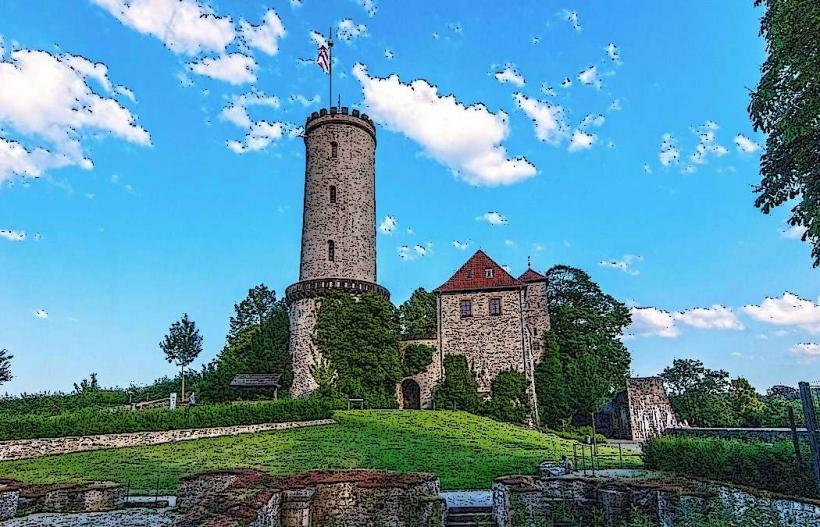
The urban landscape is defined by the Sparrenburg Castle, a 13th-century stone fortress situated on a ridge overlooking the center. The architecture is a mix of medieval masonry, industrial-era brick factories repurposed for cultural use, and modern institutional buildings. The city is bisected by the Teutoburg Forest, creating a high-density green corridor that runs through the urban area.
Location & Access Logistics
Bielefeld is located approximately 110 kilometers southwest of Hanover and 100 kilometers east of Dortmund. It is served by Bielefeld Hauptbahnhof, a primary stop on the ICE high-speed line between Berlin and Cologne. The moBiel transit network operates a four-line Stadtbahn (light rail) system that runs underground in the city center. Vehicle access is via the A2 and A33 motorways. Public parking is concentrated in underground lots at the Alter Markt and the primary shopping district.
Historical & Ecological Origin
Founded in 1214 by Count Hermann IV of Ravensberg, the city grew as a center for the linen trade, earning the nickname "Linen Weaver City." Geologically, it sits on the northern and southern slopes of the Teutoburg Forest, a range of sandstone and limestone hills. The city’s development was shaped by its textile industrialization in the 19th century, leading to the establishment of major firms like Dr. Oetker.
Key Highlights & Activities
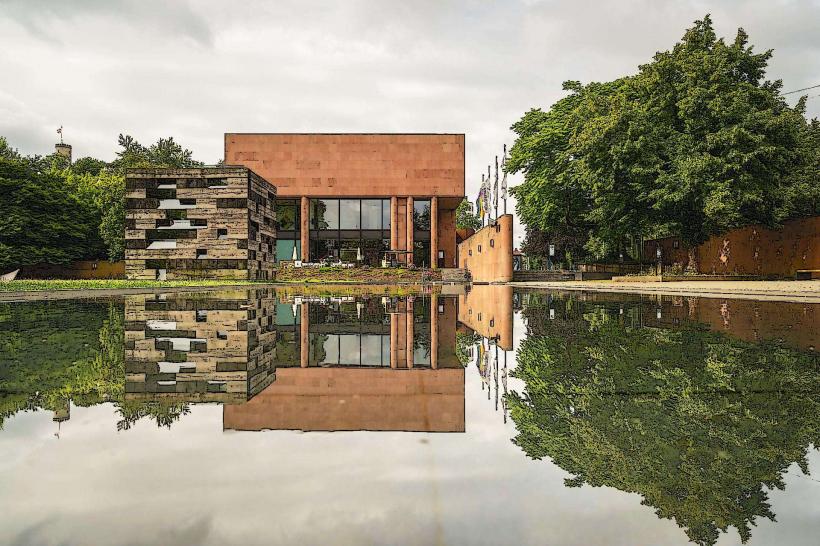
The Sparrenburg Castle is accessible for climbing its tower and exploring subterranean tunnels. The Kunsthalle Bielefeld is a major museum for modern and contemporary art housed in a red sandstone building designed by Philip Johnson. The Dr. Oetker Welt provides an interactive exhibition on the history of food production. For nature access, the "Hermannsweg" hiking trail runs across the city ridge, providing high-elevation views of the Westphalian Lowland.
Infrastructure & Amenities
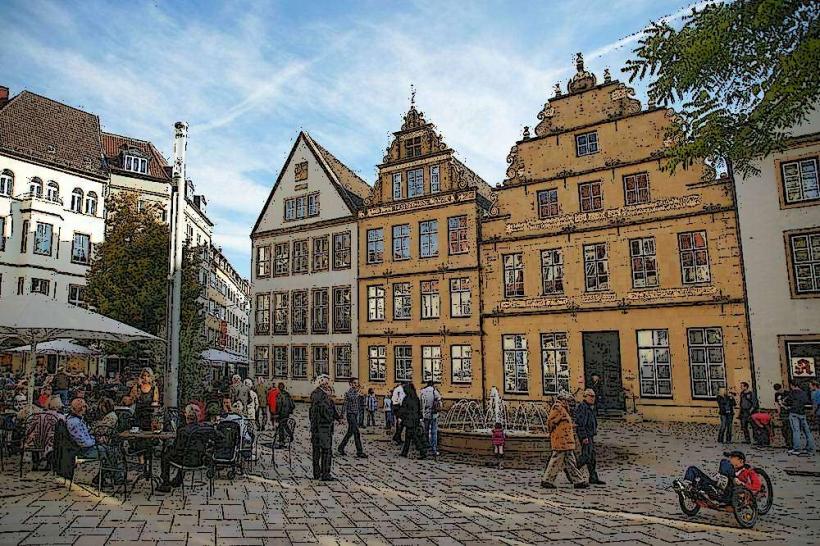
The city center is equipped with public restrooms near the Jahnplatz and the Old Market (Alter Markt). 5G cellular coverage is universal. The "meinSiggi" bike-sharing system is integrated into the municipal transit plan. Retail and dining are concentrated on the Bahnhofstraße and the Alter Markt, with high density of regional Westphalian gastronomy specializing in "Pumpernickel" and "Pfefferpotthast."
Best Time to Visit
The climate is temperate oceanic. May through September is optimal for hiking the Teutoburg Forest, with temperatures between 18°C and 24°C. The "Leinewebermarkt" in May is the primary urban festival. Photography of the Sparrenburg is best at sunset. Winters are cold and damp, featuring a traditional Christmas market centered on the Old Market.
Facts & Legends
Bielefeld is the subject of the "Bielefeld Conspiracy" (Bielefeld-Verschwörung), a 1994 internet satyre claiming the city does not exist; the city successfully offered a 1-million-euro prize in 2019 to anyone who could prove its non-existence (unclaimed). A local historical oddity: the city’s light rail system uses high-platform stations for its underground sections but switches to street-level for outer districts. Legend holds that the castle’s "spinning room" was where the linens of the Ravensberg counts were guarded by supernatural weavers.
Nearby Landmarks
Sparrenburg Castle: 0.8km South of center
Alter Markt: Central hub
Kunsthalle Bielefeld: 0.4km Southwest of Alter Markt
Dr. Oetker Welt: 1.5km South
Old Town Hall: 0.2km East of Alter Markt