Information
City: BordeauxCountry: France
Continent: Europe
Bordeaux, France, Europe
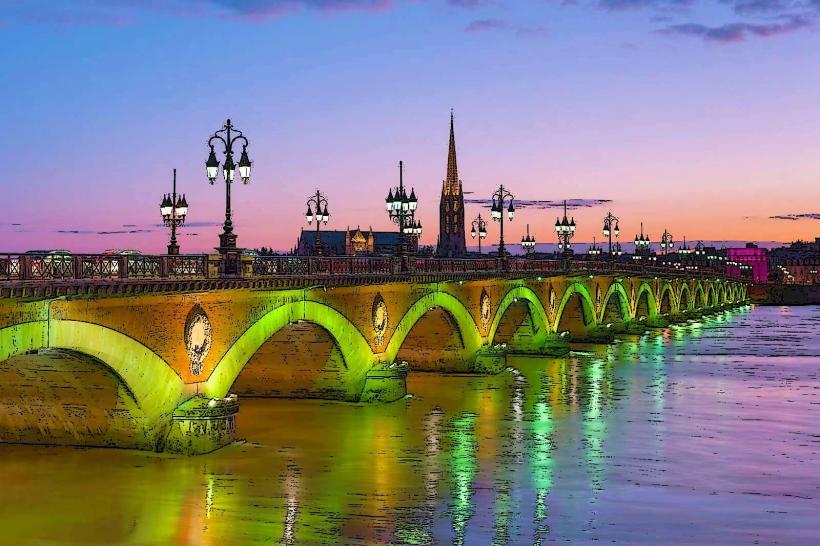
Bordeaux is a major port city in southwestern France and the capital of the Nouvelle-Aquitaine region. Historically known as the "Port of the Moon" due to the crescent-shaped curve of the Garonne River, it is a global epicenter for wine production and 18th-century neoclassical architecture.
Historical Timeline
Roman Foundation: Established as Burdigala, the city flourished as a trade center for lead and tin.
English Rule (1154–1453): Bordeaux was an English possession for 300 years following the marriage of Eleanor of Aquitaine to Henry II of England. This period initiated the massive wine trade with Britain.
Golden Age (18th Century): The city underwent a massive architectural transformation, adopting the uniform limestone facades that define its UNESCO-listed center today.
Urban Renewal (2000–2026): Projects like the "Euratlantique" regeneration and the "Grand Parc" social housing transformation have modernized the city's periphery. As of 2026, the city is heavily focused on carbon neutrality by 2050.
Urban Layout & Districts
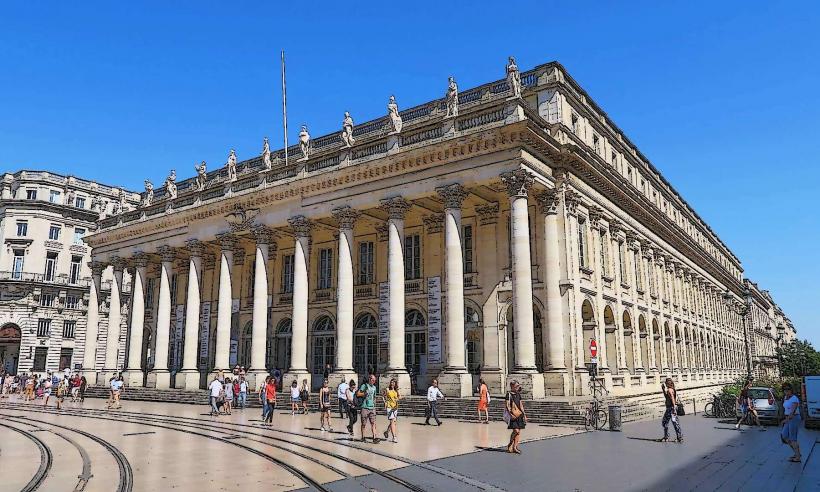
Triangle d’Or (Golden Triangle): The most prestigious district, containing high-end boutiques and the Grand Théâtre.
Chartrons: Formerly the hub for wine merchants, now a trendy neighborhood known for antiques and the Cité du Vin.
Saint-Michel & Saint-Pierre: The medieval heart, characterized by narrow streets and the Gothic Basilica of Saint-Michel.
La Bastide (Right Bank): A revitalized industrial area hosting the Darwin Ecosystem, a sustainable "city-within-a-city."
Euratlantique: A massive 2026-era business and residential hub surrounding the Saint-Jean railway station.
Top Landmarks
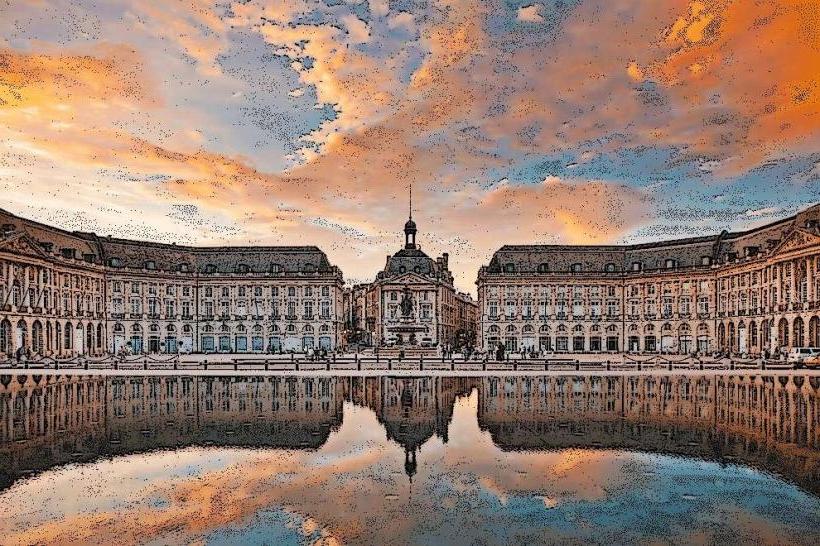
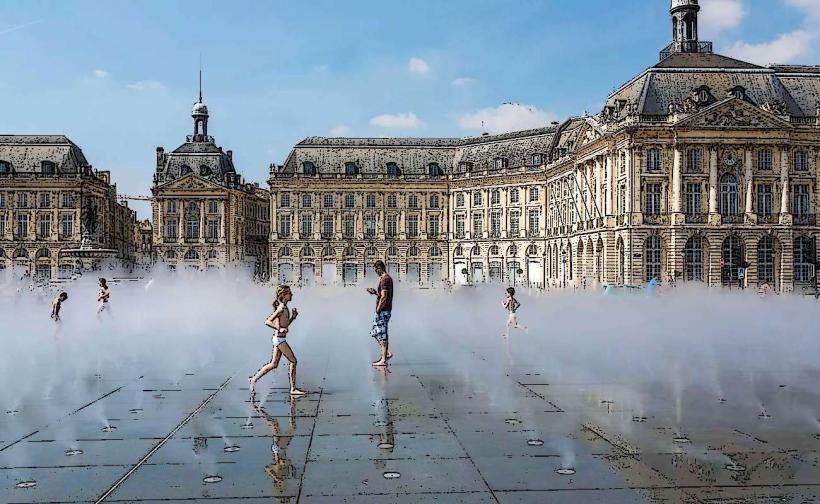
Place de la Bourse & Miroir d’Eau: A royal square facing the world's largest reflecting pool (3,450 square meters), which alternates between a mirror effect and a cooling mist.
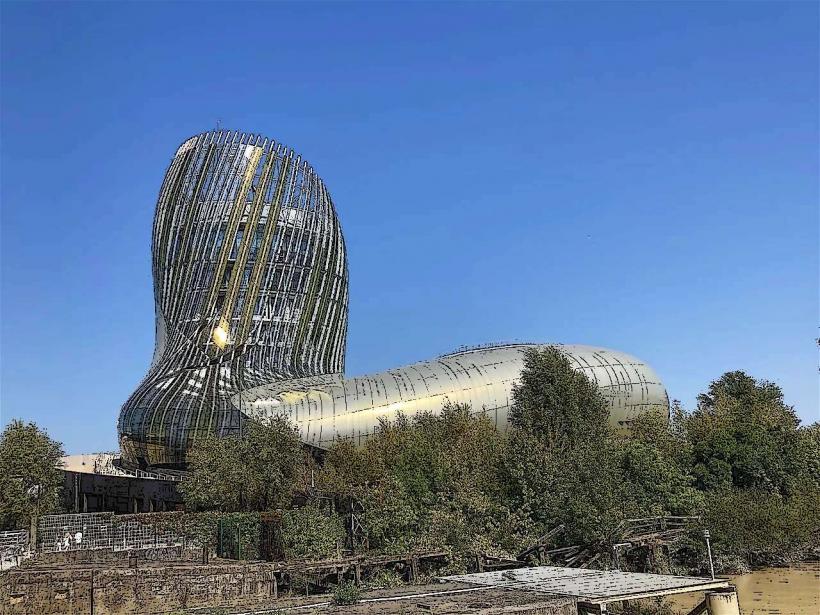
La Cité du Vin: A futuristic cultural center dedicated to the universal heritage of wine, featuring a 360-degree viewing deck.
Grand Théâtre: Built in 1780; one of the oldest wooden-frame opera houses in Europe.
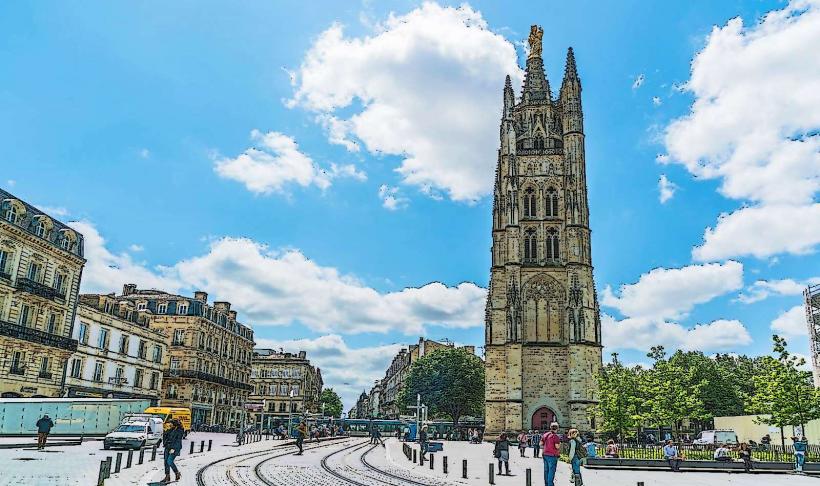
Cathédrale Saint-André & Tour Pey-Berland: A Gothic cathedral with a detached 15th-century bell tower providing panoramic views.
Bassins des Lumières: The world's largest digital art center, housed in a former World War II submarine base.
Place des Quinconces: The largest city square in Europe (12 hectares), featuring the Monument aux Girondins.
Transportation & Infrastructure (2026)
Tramway: The TBM network is undergoing modernization. In 2026, Lines E and F have been introduced to provide smoother connections between the Right Bank and the airport.
Rail: Bordeaux Saint-Jean is a major TGV hub, connecting to Paris in 2 hours.
Express Bus (BHNS): A new 23 km electric Express Bus line connecting Bordeaux to St. Aubin de Médoc is operational as of 2026.
Cycling: One of France's premier cycling cities; the "3rd Bicycle Plan" (2022-2026) has completed a vast network of express bicycle lanes.
Economy & Gastronomy
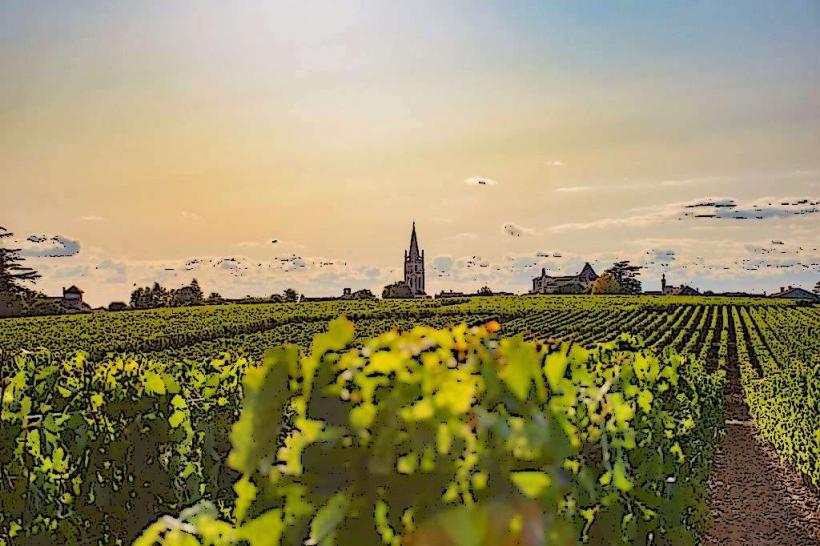
Wine Capital: The region features over 6,000 wineries and 53 appellations. Major PGI/PDO wines include Médoc, Pomerol, and Saint-Émilion.
Canelé: The signature local pastry-a caramelized cake with a soft custard heart, born from leftover egg yolks used in winemaking.
Dunes Blanches: Small choux pastries filled with light cream, originally from Cap-Ferret and now a Bordeaux icon.
Oysters: Sourced from the nearby Arcachon Bay, typically served with local white wine.
Local Cost Index (2026)
Espresso (at a café): €1.50 – €2.50
Single Transport Ticket: €1.80 – €2.10
Mid-range 3-Course Meal: €25.00 – €45.00
Baguette Tradition: €1.00 – €1.30
One-night Stay (Mid-range Hotel): €110.00 – €160.00
Facts & Legends
Legend says the Garonne River is haunted by a mermaid who once lived in its waters, and the Grand Théâtre is haunted by a famous opera singer who died on stage. A verified historical fact: The city name "Bordeaux" simply means "Beside the Waters" (Au bord de l'eau). Additionally, the vines that made Malbec and Carmenere famous in South America were originally cuttings taken from Bordeaux in the 19th century.