Information
City: CarmelCountry: USA Indiana
Continent: North America
Carmel, USA Indiana, North America
Carmel is an independent city in Hamilton County, situated immediately north of Indianapolis. Known as the "Roundabout Capital of the World," it is defined by its extreme affluence, meticulously planned suburban luxury, its status as a premier arts and design center, and its consistently high ranking in "Best Places to Live" national indices.
Historical Timeline
Inhabited by the Delaware (Lenape) people. Primary governance eras include its 1837 founding as "Bethlehem" and its 1974 incorporation as a city. A critical historical event was the 1996 election of Mayor James Brainard, who initiated a multi-decade transformation of the city from a standard bedroom community into a high-density, New Urbanist masterpiece. The late 20th and early 21st centuries saw the development of the Arts & Design District and the City Center, while the 2010s were characterized by the aggressive replacement of signalized intersections with over 150 roundabouts.
Demographics & Population
The population is approximately 102,000. The demographics are White (78%), Asian (12%), Hispanic or Latino (4%), and Black or African American (3%). It is one of the wealthiest and most highly educated communities in the Midwest, housing a significant concentration of executives, medical professionals, and tech sector leaders.
Urban Layout & Key Districts
Carmel follows a highly curated urban design focused on walkability and aesthetic consistency.
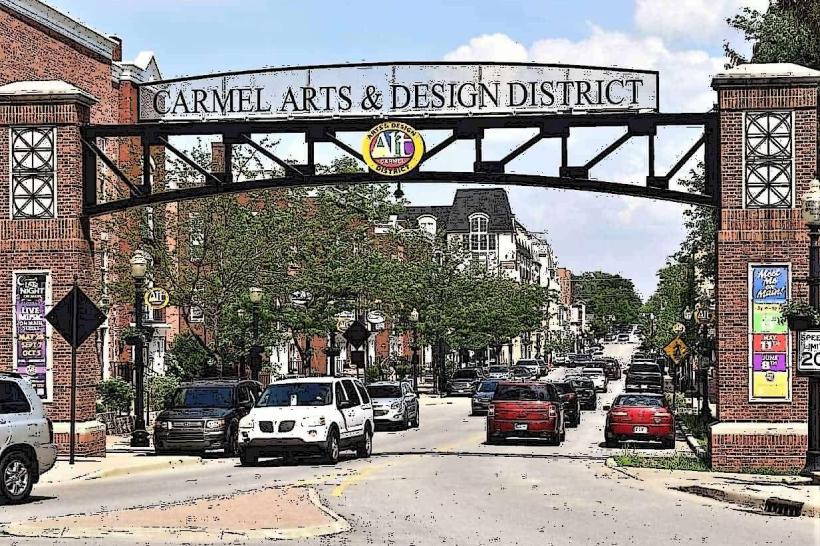
Old Town / Arts & Design District: The creative heart, featuring a high density of galleries, independent boutiques, and life-size "J. Seward Johnson" bronze statues.
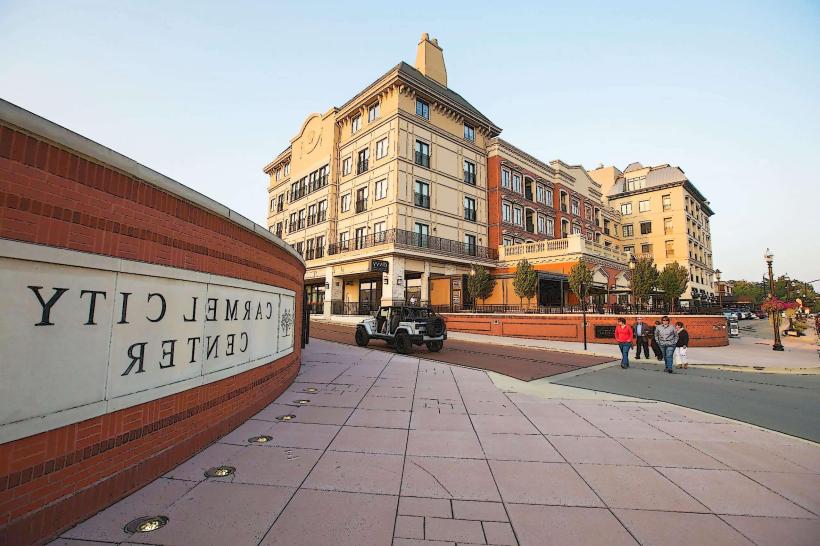
City Center: A European-style urban core featuring luxury residences, high-end retail, and the city’s premier performing arts venues.
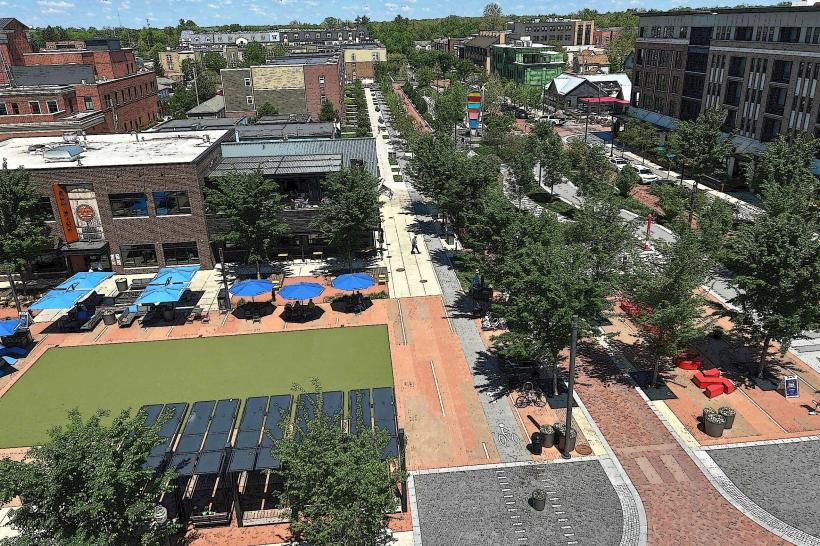
Midtown: A rapidly developed industrial-to-urban corridor connecting City Center and Old Town, anchored by the Monon Trail.
Village of WestClay: A massive, self-contained neo-traditionalist development on the western edge featuring distinct architectural styles and its own commercial hubs.
The Meridian Corridor: The primary corporate headquarters zone, housing over 40 major regional and national offices.
Top City Landmarks
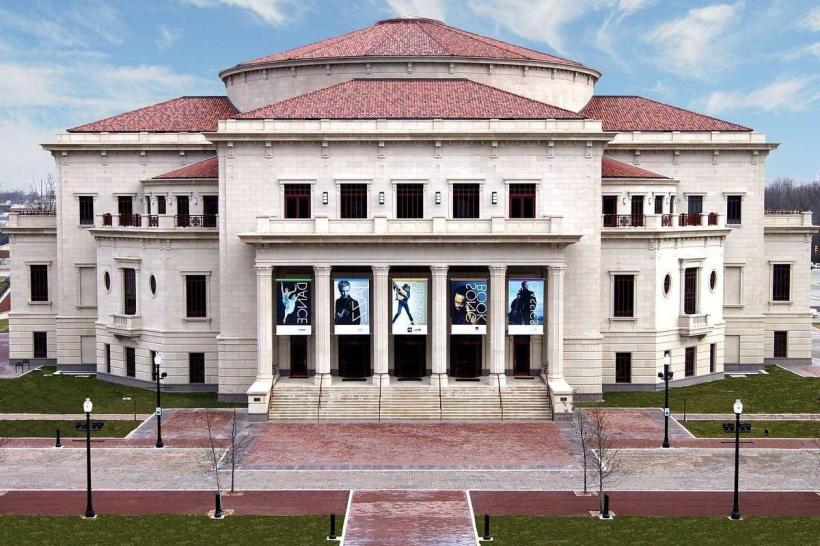
The Palladium at the Center for the Performing Arts: A world-class 1,600-seat concert hall modeled after the Villa Capra "La Rotonda."
The Monon Trail: A multi-use rail-trail that serves as the city’s primary pedestrian artery.
Carmel Clay Terrace: A premier outdoor lifestyle shopping center.
Museum of Miniature Houses: One of only a few museums in the world dedicated to the art of fine-scale miniature rooms and houses.
The Kawachinagano Japanese Garden: Located south of City Hall, celebrating Carmel's sister-city relationship with Japan.
Monon Community Center: A massive 14,000-square-meter facility and water park (The Waterpark).
Transportation Network
Movement is automotive-centric but uniquely defined by the Roundabout System, which has significantly reduced traffic fatalities and idle times. Public transit is nearly non-existent. The city is accessed via US-31 (Meridian Street) and I-465. Commercial air service is via Indianapolis International (IND), 45 km south. It is one of the most bicycle-friendly cities in the region due to the Monon Trail and extensive side-path networks. Traffic density is moderate to high during peak commute hours on US-31.
Safety & "Red Zones"
The general safety level is extremely high. Property crime and narcotics-related activity are significantly lower than regional and national averages. There are no designated "red zones." The primary hazards are traffic-related, specifically for drivers unfamiliar with navigating multi-lane roundabouts. Common scams are rare but occasionally involve fraudulent "utility" or "tax" solicitations targeting high-income households.
Digital & Financial Infrastructure
Internet speeds are elite, averaging 1000+ Mbps with ubiquitous fiber availability via Metronet, AT&T Fiber, and Xfinity. Main mobile carriers are Verizon and AT&T. Card acceptance is universal. ATMs are concentrated in the Arts & Design District and City Center.
Climate & Air Quality
Temperatures range from -6°C to 2°C in winter and 19°C to 30°C in summer. The city experiences a humid continental climate. Air quality is exceptionally high, supported by the city's vast park system and strictly enforced environmental standards.
Culture & Social Norms
The standard tipping percentage is 20–25%. A formal handshake or polite nod is the standard greeting. Dress codes are "Upscale-Casual" or "Professional." The city is culturally defined by its "Platinum" suburban lifestyle, its commitment to the arts, and its identity as a "Roundabout City."
Accommodation Zones
City Center: Recommended for luxury stays and walkable access to the Palladium.
Meridian Corridor: Recommended for business-oriented stays and national hotel chains.
Local Cost Index
1 Espresso: $5.00 (USD)
1 Standard Lunch: $22.00 (USD)
1 Cinema Ticket: $15.00.
Nearby Day Trips
Indianapolis: (Directly adjacent south).
Grand Park (Westfield): (10 km north; one of the largest sports campuses in the U.S.).
Conner Prairie (Fishers): (12 km east; premier living history museum).
Facts & Legends
Carmel has more roundabouts than any other city in the United States. Historically, it was the site of the world's first automated traffic whistle (1924). A local legend involves the "Statues of Old Town," with recurring local myths about certain bronze figures moving at night or being modeled after specific, "disappeared" residents. Another legend concerns "The Hidden Vaults of WestClay," rumored subterranean storage used by the city's ultra-wealthy elite.