Information
City: ConstanzaCountry: Dominican Republic
Continent: North America
Constanza, Dominican Republic, North America
Constanza is the highest town in the Caribbean, situated at an elevation of 1,220 meters (4,000 feet) in the Cordillera Central. Known as the "Switzerland of the Caribbean," it is defined by its alpine microclimate, pine forests, and its role as the agricultural "breadbasket" of the Dominican Republic.
Historical Timeline
The valley was inhabited by the Taíno people (named after a chief's daughter, Constanza) but remained sparsely populated for centuries. Modern agricultural development began in 1750 with European settlers. The town was formally founded in 1894. Following World War II, a significant wave of Japanese and Spanish immigrants settled here, introducing sophisticated irrigation and farming techniques that transformed the valley into a dominant producer of temperate-climate crops.
Demographics & Population
The population is approximately 50,000. It is a diverse demographic hub, with significant communities of Spanish (specifically from Burgos and Vizcaya), Japanese, and Hungarian descent. This multi-ethnic heritage is visible in local farming practices and cultural festivals.
Urban Layout & Key Districts
Constanza Valley: A fertile 8 km by 4 km valley floor dedicated to intensive agriculture.
The Town Center: A laid-back commercial grid focused around Duarte Park and the local market.
Colonia Kennedy & Colonia Húngara: Residential areas housing descendants of mid-century immigrant groups.
Valle Nuevo Plateau: A high-altitude tundra-like plain located 30 minutes south of the town center.
Top Landmarks
Valle Nuevo National Park: A "Scientific Reserve" and the highest plateau in the region, known for frost-covered mornings and endemic pine forests.
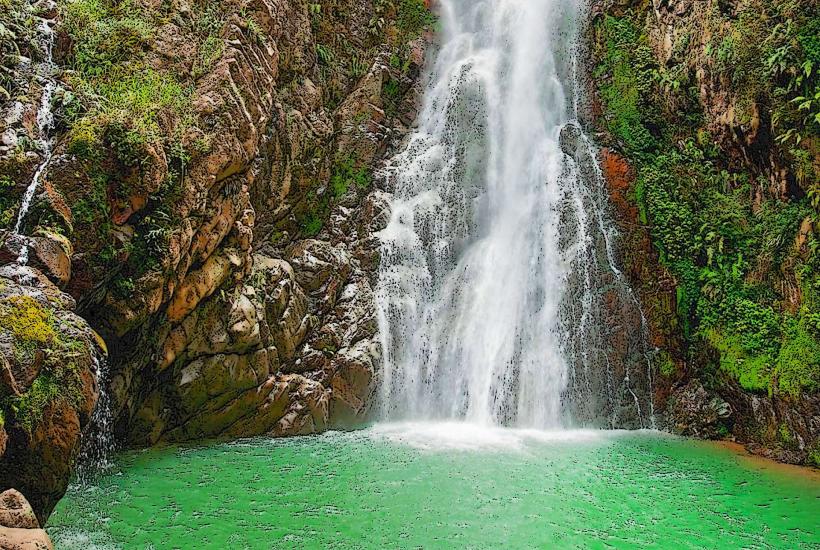
Aguas Blancas Waterfall: One of the highest waterfalls in the Caribbean, cascading 83 meters into a cold-water pool surrounded by mountain vegetation.
Monument to the Divine Child (Divino Niño): A large silver-colored statue on a hill offering panoramic views of the entire valley.
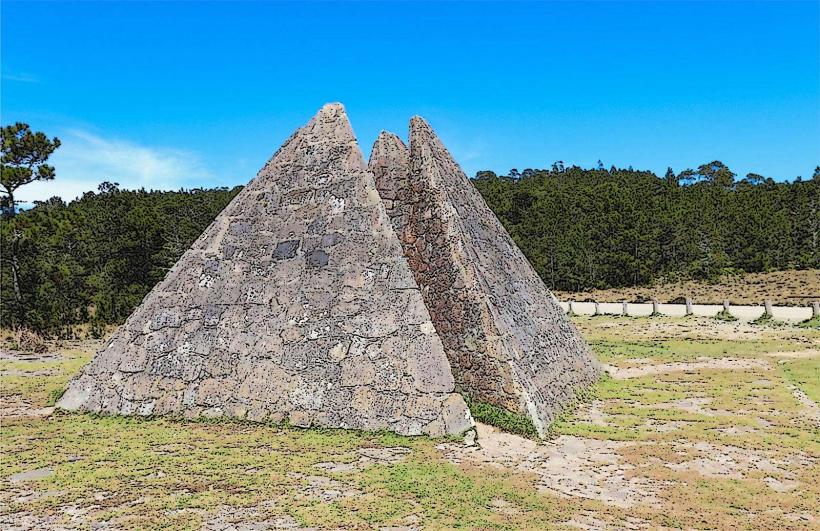
The Pyramids (Las Pirámides): A cyclopean monument marking the geographic center of the island of Hispaniola within Valle Nuevo.
Anacaona Park: The town's primary green space, named after the Taíno queen.
Transportation Network
Roads: Reached via the winding mountain roads of the Constanza-Jarabacoa or Constanza-Autopista Duarte routes. Driving requires caution due to frequent fog and steep gradients.
Public Transit: Caribe Tours and other bus lines connect the town to Santo Domingo and Santiago. Within the town, Motoconchos (motorcycle taxis) and pick-up trucks serve the rural communities.
Air: Constanza Airport (14 de Junio) handles domestic and private charter flights.
Safety & "Red Zones"
Constanza is extremely safe regarding crime.
Risks: The primary dangers are environmental. Night driving is strongly discouraged due to fog and lack of lighting on hairpin turns.
Wildfires: Occasional forest fires occur in the dry pine forests during the summer months.
Cold Stress: Visitors often underestimate the temperature drop; hypothermia can be a risk for unprepared hikers in Valle Nuevo.
Digital & Financial Infrastructure
High-speed internet is available in hotels and town-center cafes. 4G/5G mobile signals are reliable in the valley but non-existent in the national park interiors. Several banks (Banreservas, Banco Popular) provide ATMs in the town center. The currency is the Dominican Peso (DOP).
Climate & Air Quality
Climate: A subtropical highland climate. It is the coldest inhabited place in the Caribbean. Temperatures in town average 18°C (64°F) but can drop to 5°C (41°F) in winter.
Valle Nuevo: Temperatures regularly drop below 0°C (32°F) between December and March, occasionally producing frost and ice.
Air Quality: Exceptional, with the scent of pine needles and fresh agricultural soil dominating the atmosphere.
Culture & Social Norms
The culture is deeply tied to the land. Constanza is the only place in the Caribbean that holds a Strawberry Festival (May). Social norms are more conservative and rustic than in the capital. Tipping is 10%. Local cuisine features highland staples like Mashed Celery (Cepa de Apio), wood-fired pizzas, and fresh strawberries with cream.
Accommodation Zones
Valle Encantado/Altocerro: Best for panoramic views of the valley and family-style villas.
Eco-lodges (Villa Pajón): Best for serious hikers wanting proximity to the national park.
Town Center Boutique Hotels: Best for budget travelers and cultural immersion.
Local Cost Index
1 Espresso: $RD 110 ($1.85)
1 Basket of Fresh Strawberries: $RD 150 ($2.50)
1 Liter of Gasoline: $RD 150 (Fluctuating)
Nearby Day Trips
Jarabacoa: 1 hour 15 mins; for warmer mountain air and rafting.
Pico Duarte: Multi-day expeditions often originate or stage through the surrounding Cordillera Central.
Facts & Legends
A verified historical oddity is that Constanza is the only Caribbean town where you can find traditional Japanese irrigation techniques and crops like garlic and broccoli thriving at scale. Local legend speaks of the "Valley of the Enchanted" (Valle Encantado), where early explorers claimed to have seen strange lights and phantom farms that vanished as they approached.