Information
Landmark: Valle Nuevo National ParkCity: Constanza
Country: Dominican Republic
Continent: North America
Valle Nuevo National Park, Constanza, Dominican Republic, North America
Valle Nuevo National Park is a high-altitude protected area located in the central mountain range of the Dominican Republic, serving as a critical water source for the nation's major rivers. It is situated southeast of the city of Constanza.
Visual Characteristics
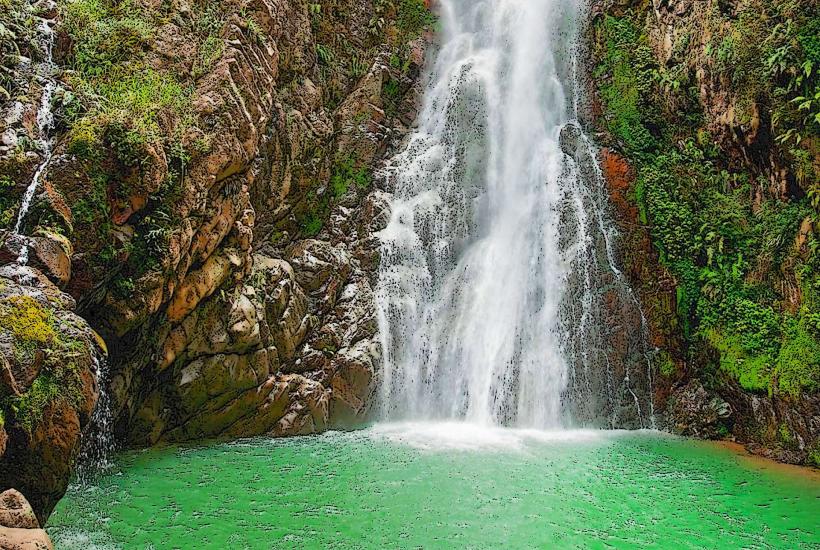
The park's landscape is characterized by extensive pine forests, primarily Pinus occidentalis, interspersed with high-altitude grasslands known as "pajonales." Cloud forests are present in higher, more humid elevations. The terrain features rolling valleys, plateaus, and steep mountain slopes, with elevations ranging from approximately 1,800 meters to over 2,600 meters at Alto de la Bandera. Colors are predominantly deep green from the conifers and grasses, with occasional brown earth tones and seasonal wildflowers.
Location & Access Logistics
Access to Valle Nuevo National Park is primarily from Constanza via the Carretera Constanza-Valle Nuevo. The road is largely unpaved and requires a 4x4 vehicle, especially during or after rainfall. The main entrance point is approximately 25 kilometers southeast of Constanza city center. Limited, informal parking areas are available near key sites such as Las Pirámides and Alto de la Bandera. There are no direct public transport options; private taxis or organized tour operators from Constanza provide the only means of access.
Historical & Ecological Origin
Valle Nuevo was established as a national park in 1983. Ecologically, it represents a unique high-altitude humid forest ecosystem, encompassing cloud forests, pine forests, and paramo-like grasslands, which are rare in the Caribbean. Geologically, the area is part of the Cordillera Central, formed by tectonic uplift and volcanic activity over millions of years, contributing to its diverse topography and rich biodiversity.
Key Highlights & Activities
Key activities include hiking on designated trails, birdwatching for endemic species such as the Hispaniolan Crossbill, and camping in authorized zones. Specific highlights include visiting Las Pirámides, a stone monument marking the geographic center of the island, and ascending to Alto de la Bandera, the second highest peak in the Dominican Republic accessible by road. Photography is a popular activity due to the unique landscapes and often misty conditions.
Infrastructure & Amenities
Infrastructure within Valle Nuevo National Park is minimal. Basic restroom facilities are available at ranger stations and some designated camping areas. Shade is abundant within forested sections but limited in open grassland areas. Cell phone signal (4G/5G) is sporadic and unreliable across much of the park due to the mountainous terrain. There are no food vendors or commercial establishments within the park; visitors must bring all necessary food, water, and supplies.
Best Time to Visit
The best time to visit Valle Nuevo National Park is during the dry season, from December to April, when rainfall is less frequent and skies are generally clearer. Morning hours are optimal for photography, offering clear light before potential afternoon fog or cloud cover. Visitors should be prepared for cold temperatures, which can drop below freezing at night, even during the dry season.
Facts & Legends
Valle Nuevo is known as "The Mother of Waters" due to its critical role as the source for numerous major rivers in the Dominican Republic, including the Yaque del Sur, Nizao, and Yuna. It is also home to the only paramo ecosystem found in the Caribbean. A practical tip for visitors is to dress in layers, as temperatures can fluctuate significantly throughout the day.
Nearby Landmarks
- Las Pirámides: 0.5km North (within the park, a specific monument)
- Alto de la Bandera: 5km South-Southeast (within the park, a specific peak)
- Valle del Tetero: 4km West (within the park, a specific valley and camping area)