Information
City: FolegandrosCountry: Greece
Continent: Europe
Folegandros, Greece, Europe
Folegandros is a rugged, volcanic island in the southern Cyclades, situated between Milos and Santorini. It is characterized by its dramatic cliffside geography, high-elevation medieval settlements, and a deliberate lack of large-scale commercial development, maintaining a "quiet" alternative to its more famous neighbors.
Historical Timeline
In antiquity, Folegandros was known as "Polykandros" or the "Island of Iron" due to its harsh, rocky terrain. It was colonized by Minoans and later used by the Romans as a place of exile. During the Venetian period (1204–1566), the island was part of the Duchy of the Archipelago, which led to the construction of its fortified Kastro. Throughout the 20th century, it was again used for political exile until tourism began to develop in the late 1980s.
Urban Layout & Main Villages
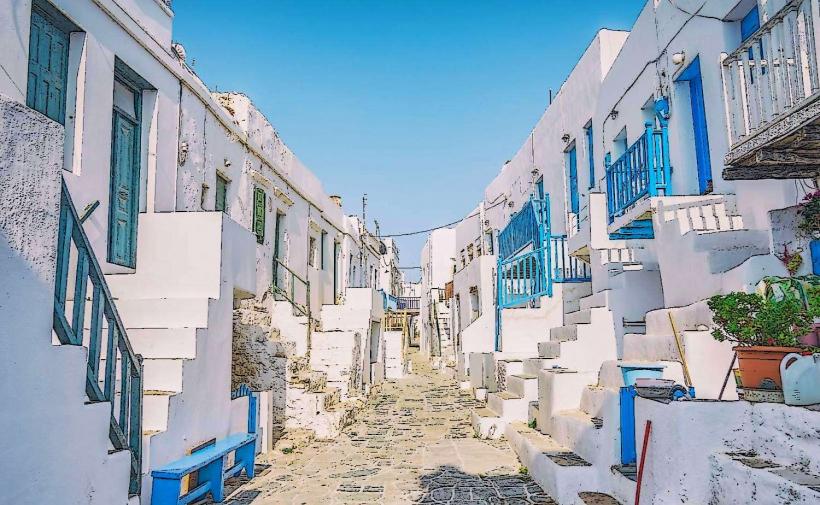
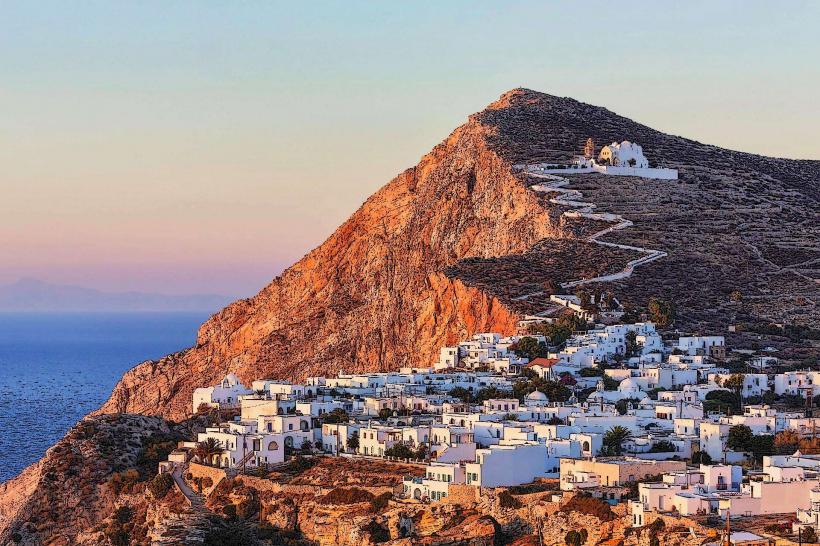
Chora (Folegandros Town): Perched on the edge of a 200m vertical cliff. It is entirely pedestrianized and composed of three consecutive squares (Pounta, Piatsa, and Dunavis) shaded by plane trees and bougainvillea.
Kastro: The oldest district of Chora, a 13th-century medieval neighborhood where the outer walls of the houses form the defensive fortification of the old castle.
Karavostasis: The island's quiet port village, featuring a pebbly beach and the primary arrival point for all vessels.
Ano Meria: A traditional rural settlement in the north where residents still live in themonies (self-sufficient agricultural units with stone walls and threshing floors).
Top Landmarks
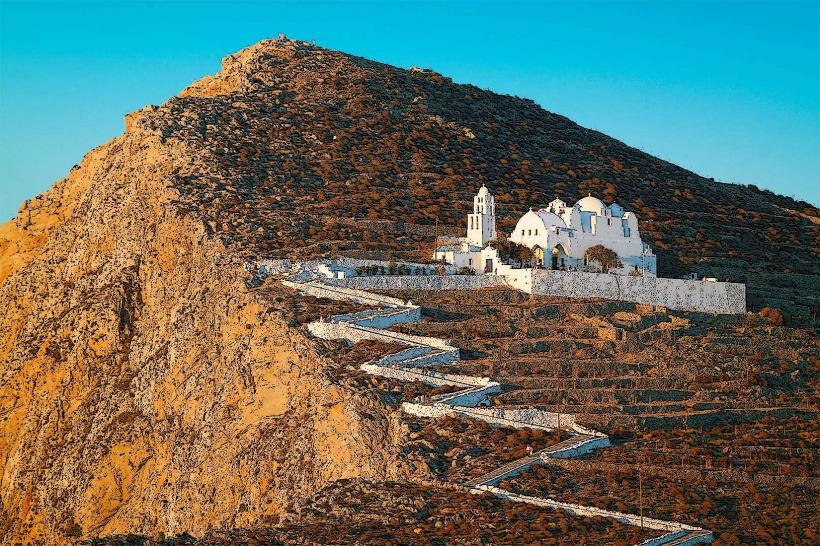
Church of Panagia: The island’s most famous landmark. A large, whitewashed church accessible via a distinct zigzagging stone path that starts from Chora. It is built on the ruins of an ancient temple.
The Cliffs of Chora: Offering some of the most dramatic views in the Aegean, rivaling the Caldera of Santorini but without the crowds.
Chrisospilia (Golden Cave): A remote sea cave on the northeast coast containing ancient inscriptions and stalactites (accessible primarily by boat and often restricted for archaeological study).
Ecological and Folklore Museum: Located in Ano Meria; a restored 19th-century farmhouse showing traditional island life.
Aspropounta Lighthouse: A 1919 lighthouse located on a desolate plateau above Livadaki beach.
Transportation Network (2026)
Sea: There is no airport on Folegandros. Access is exclusively via ferry from Piraeus (4–7 hours) or Santorini (45–60 minutes).
Land: The island has one main road (12 km long) connecting Karavostasis, Chora, and Ano Meria.
Public Transit: A reliable bus service synchronized with ferry arrivals connects the three main villages and the beach at Agali.
Taxis: There is traditionally only one taxi on the island. Advanced booking is essential for private transfers.
Hiking: Folegandros features 20 km of well-marked, ancient stone-paved trails that are the primary means of reaching secluded beaches.
Safety & Environment
Folegandros is exceptionally safe with negligible crime.
Wind: The island is highly exposed to the Meltemi (north winds). The northern beaches (Agios Georgios) can become dangerous for swimming during high winds.
Terrain: The "Kastro" and "Panagia" paths have sheer drops; proper footwear is required.
Digital & Financial Infrastructure
Digital: 5G is available in Chora and Karavostasis, but signal drops significantly in the rural northern areas of Ano Meria.
Finance: ATMs are located in Chora and Karavostasis only. While cards are accepted in most restaurants, some smaller tavernas in Ano Meria and boat taxis remain cash-only.
Gastronomy
Matsata: The island’s signature dish; fresh handmade ribbon pasta typically served with rooster, rabbit, or goat in red sauce.
Kalasouna: A traditional local pie made with onions and souroto (a local creamy white cheese).
Rakomelo: A warm distillate of raki, honey, and cinnamon, widely served in the Chora squares at night.
Local Cost Index (2026)
1 Espresso (Freddo): €3.50–€5.00
1 Plate of Matsata: €14.00–€18.00
1 Boat Taxi (Round trip to Katergo): €15.00–€20.00
1 High-Speed Ferry (from Athens): €85.00–€105.00
Facts & Legends
Legend attributes the island's name to Pholegander, the son of King Minos of Crete, who fled here. A verified historical fact: The houses in the Kastro district have been continuously inhabited for over 800 years, and their north-facing windows were originally designed as small slits to serve as lookout points for spotting pirate ships.