Information
City: FuvahmulahCountry: Maldives
Continent: Asia
Fuvahmulah, Maldives, Asia
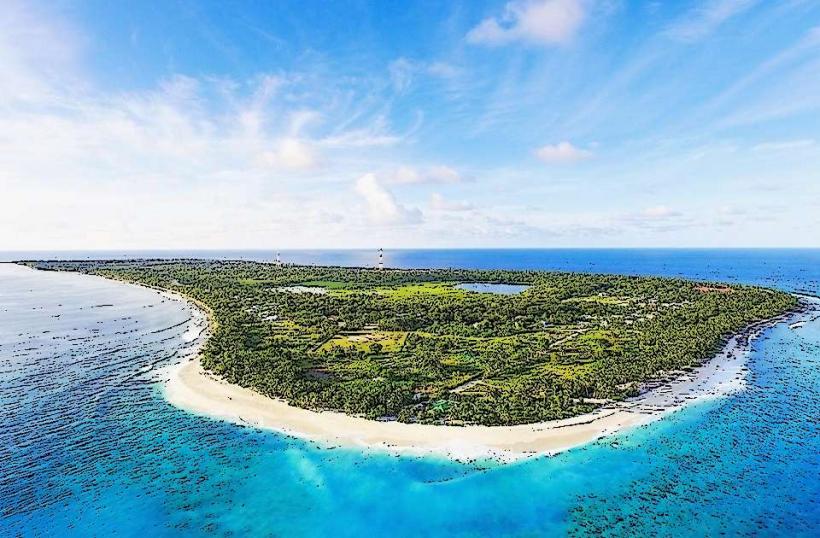
Fuvahmulah is a unique geographic anomaly in the Maldives. It is a one-island atoll located in the Gnaviyani administrative division, just south of the equator. Unlike the typical circular atoll chains of the Maldives, Fuvahmulah is a solitary, massive emerald-shaped island surrounded by the deep open ocean.
Historical Timeline
Fuvahmulah has been inhabited for millennia, originally as a Buddhist center before the 12th-century conversion to Islam. It was famously part of the United Suvadive Republic, a short-lived breakaway state (1959–1963) formed by the southern atolls. In 2004, the island was significantly altered by the Indian Ocean Tsunami, which led to the closure of its internal lagoon, eventually creating its two signature freshwater lakes.
Demographics & Population
The population is approximately 13,000, making it the third most populous island in the Maldives. The residents speak Fuvahmulah Bas, a distinct and archaic dialect of Dhivehi that is often unintelligible to speakers from the northern atolls. The community is known for its high level of education and self-sufficiency.
Urban Layout & Key Districts
The island is divided into 8 municipal wards: Hoadhadhu, Maadhado, Dhigurivaandu, Miskiyfannu, Dhadimagu, Maleko, Fuvahmulah, and Dhashukubau. The layout is characterized by wide, grid-like streets and extensive agricultural land in the interior.
Top Landmarks
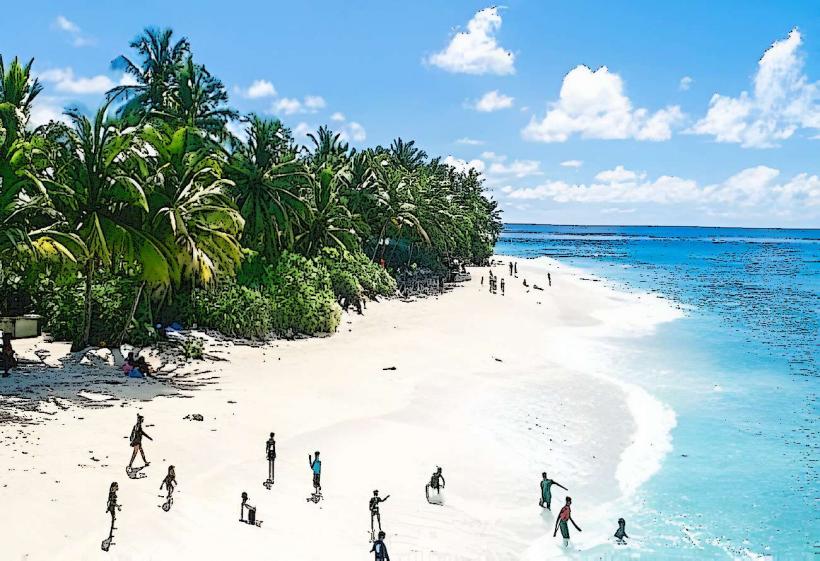
Thoondu Beach: A unique beach on the northern tip composed of smooth white pebbles (akiri) rather than sand. It is famous for a seasonal sandbank that shifts with the currents.
Bandaara Kilhi & Dhadimagi Kilhi: The two largest freshwater lakes in the Maldives. These are surrounded by marshlands and taro fields and are protected UNESCO Biosphere sites.
Gemmiskiy: Built circa 1300 AD, it is considered the oldest mosque in the Maldives, constructed from ancient coral stone.
Havitta: The remains of a pre-Islamic Buddhist stupa, though much of its structure is now buried or weathered.
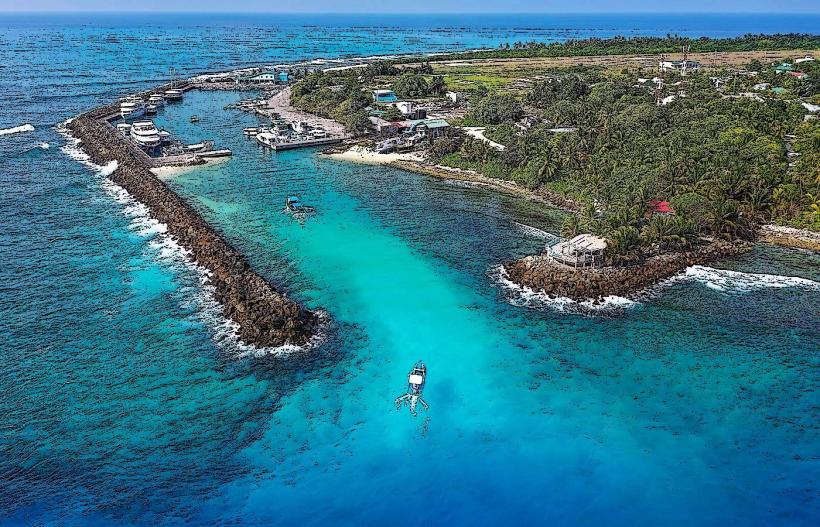
Tiger Zoo: A world-famous dive site at the harbor entrance where tiger shark sightings are guaranteed year-round.
Transportation Network
Air: Fuvahmulah Airport (FVM) receives daily 80-minute domestic flights from Malé.
Sea: Weekly passenger ferries and cargo ships connect the island to the capital, while speedboats link it to the neighboring Addu Atoll.
Local: Motorbikes and scooters are the primary transport. Unlike most Maldivian islands, Fuvahmulah has a functioning public bus service and paved roads suitable for cars.
Safety & "Red Zones"
Marine Safety: Fuvahmulah lacks a protective lagoon. The strong currents and large ocean swells make swimming on the outer beaches extremely dangerous for non-experts.
Diving Safety: Tiger shark diving is strictly regulated. Divers must be advanced-certified for many sites due to the depth and potential for high-energy currents.
Taro Marshes: The interior marshlands can be unstable; visitors should stick to designated boardwalks.
Digital & Financial Infrastructure
4G and 5G coverage is excellent across the island. The Bank of Maldives and Maldives Islamic Bank have branches and ATMs in the central districts. The Maldivian Rufiyaa (MVR) is used for all local transactions.
Climate & Ecology
Climate: Equatorial and tropical. It is exceptionally lush due to its unique "volcanic bowl" geography which traps moisture.
Ecology: A UNESCO Biosphere Reserve. It is home to the endemic Fuvahmulah frog and is a critical stopover for migratory birds. The absence of a lagoon means the reef drops off vertically into the deep sea, attracting large pelagics.
Culture & Social Norms
Agriculture: The island is the "fruit basket" of the south, producing mangoes, areca nuts (from which the island takes its name), and taro.
Religious Observance: The island is deeply traditional. Modest dress is mandatory in all public areas. There are no "bikini beaches" on the island; swimwear is restricted to private dive boats.
Language: Using a few words of Fuvahmulah Bas is highly respected by locals.
Local Cost Index
1 Espresso: ~45 MVR ($2.90)
1 Mud Bath Experience: ~100–200 MVR ($6.50–$13.00)
1 Motorbike Rental (Daily): ~150–200 MVR ($9.75–$13.00)
Nearby Day Trips
Addu City: A 45-minute speedboat ride south to explore the British colonial history of Gan and the linked islands.
Deep Sea Fishing: Fuvahmulah is the premier spot in the Maldives for big-game fishing due to the immediate proximity of the open ocean.
Facts & Legends
A verified biological fact is that Fuvahmulah is the only place in the world where Tiger Sharks can be observed in their natural habitat every single day of the year. Local legend tells of a "disappearing" island that occasionally appears on the horizon, believed to be the ancestral home of the first settlers who were guided to Fuvahmulah by a glowing white bird.