Information
City: KefaloniaCountry: Greece
Continent: Europe
Kefalonia, Greece, Europe
Kefalonia (Cephalonia) is the largest of the Ionian Islands in western Greece. Known for its dramatic limestone cliffs, deep underground caves, and the distinct black fir forests of Mount Ainos, the island is a major center for shipping and viticulture.
Historical Timeline
Mycenaean Period: One of the most important cultural centers of the era. Significant vaulted (tholos) tombs found at Tzannata and Mazarakata suggest it may have been the true seat of the Homeric kingdom of Odysseus.
Venetian Rule (1500–1797): Unlike most of Greece, the Ionian Islands never fell to prolonged Ottoman occupation. Venetian influence is seen in the island’s music, architecture, and the creation of its Catholic minority.
The British Protectorate (1809–1864): During this time, major infrastructure was built, including the De Bosset Bridge, the world's longest stone bridge over sea.
World War II & The Massacre (1943): Site of the execution of over 5,000 Italian soldiers of the Acqui Division by German forces, an event popularized by the book and film Captain Corelli’s Mandolin.
The Great Earthquake (1953): A catastrophic 7.2 magnitude quake destroyed 90% of the island's buildings. Fiskardo was the only major village spared, leaving it as the sole example of pre-earthquake Venetian architecture.
Urban Layout & Regions
Argostoli: The capital and largest town, rebuilt in a modern style with wide streets and a long palm-lined promenade. It is the island's administrative and commercial heart.
Lixouri: The second-largest town, located across the gulf from Argostoli. It has a fierce cultural rivalry with the capital and is known for its musical tradition and poets.
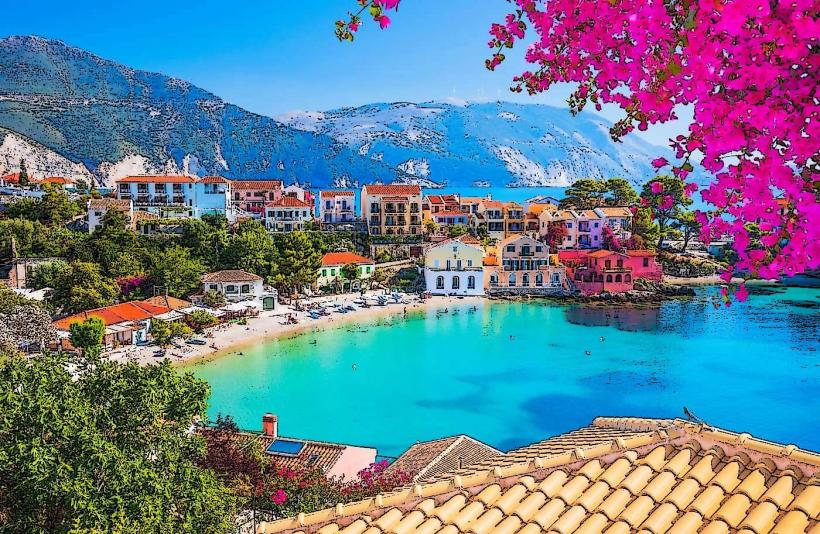
Fiskardo: Located at the northern tip, this cosmopolitan village features original 18th-century pastel houses and is the primary hub for luxury yachts.
Sami & Agia Efimia: Located on the east coast, these serve as the main gateway for ferries from the mainland and neighboring Ithaca.
Top Landmarks
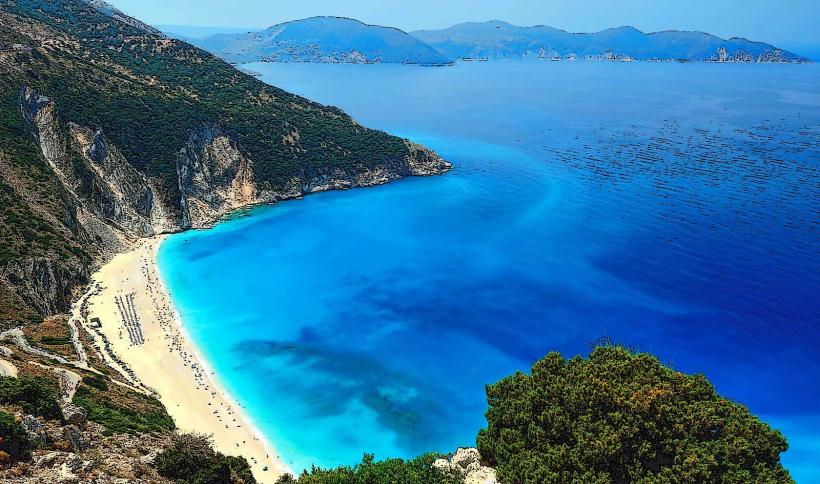
Myrtos Beach: Frequently cited as one of the best beaches in the world, characterized by white pebbles and electric-blue water framed by sheer cliffs.
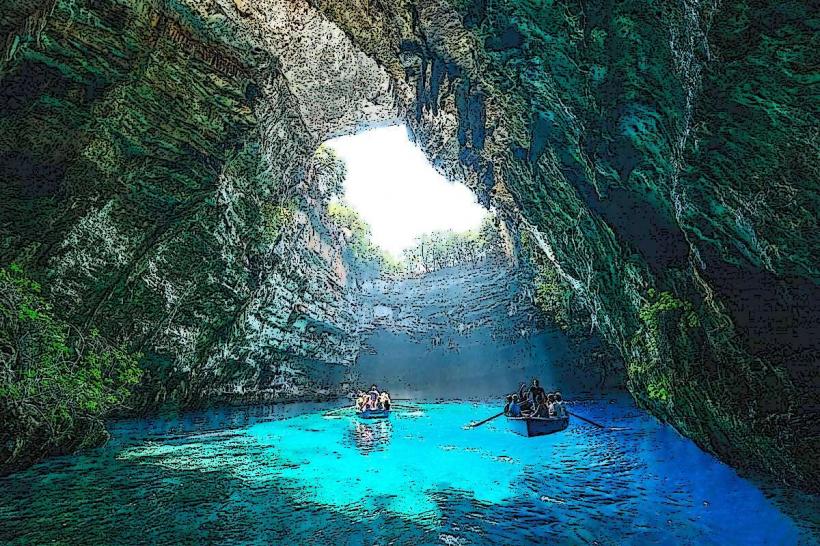
Melissani Lake Cave: A "B-shaped" underground lake where the roof collapsed centuries ago. Sunlight creates a neon-blue effect on the water; boat tours explore the cavern.
Mount Ainos National Park: The highest peak in the Ionian (1,628m), home to the endemic Abies Cephalonica (Kefalonian Fir) and a herd of semi-wild horses.
Drogarati Cave: A 150-million-year-old cavern with exceptional acoustics, occasionally used for orchestral concerts.
Monastery of Saint Gerasimos: Dedicated to the island’s patron saint; his incorrupt relics are housed here and are a major site of pilgrimage.
Katavothres: A rare geological phenomenon near Argostoli where seawater disappears into cracks in the ground, travels across the island underground, and resurfaces at Melissani Cave.
Transportation & Infrastructure (2026)
Air: Kefalonia Airport "Anna Pollatou" (EFL) is located 8 km from Argostoli, serving daily Athens flights and high-volume European charters.
Sea: Primary ferry ports are Sami (to Patras/Ithaca) and Poros (to Kyllini). A regular shuttle ferry connects Argostoli and Lixouri every 30 minutes.
Road: Due to the island's size and mountainous terrain, a car is essential. In 2026, the main peripheral road network features upgraded safety barriers and expanded EV charging stations in major villages.
Digital: 5G is universal in all coastal settlements and mountain villages.
Economy & Gastronomy
Robola Wine: A dry, crisp white wine (PDO) produced from grapes grown on the limestone slopes of Mount Ainos.
Kefalonian Meat Pie (Kreatopita): A hearty traditional pie made with three types of meat, rice, and a distinct blend of spices.
Wild Goats: Local legends claim the goats on the island have "golden teeth" due to the high mineral content of the soil and plants they consume.
Local Cost Index (2026)
1 Espresso (Freddo): €3.50–€5.00
1 Standard Dinner: €25.00–€40.00
1 Daily Car Rental: €40.00–€80.00
1 Entrance to Melissani Cave: €8.00–€10.00
Facts & Legends
Legend says the island was named after the mythical hero Cephalus, who was granted the island by Amphitryon. A verified historical fact: The Abies Cephalonica fir tree is so unique and fire-resistant that its timber was specifically used in the construction of the Knossos Palace in Crete and later for the masts of the Venetian navy.