Information
City: Le MansCountry: France
Continent: Europe
Le Mans, France, Europe
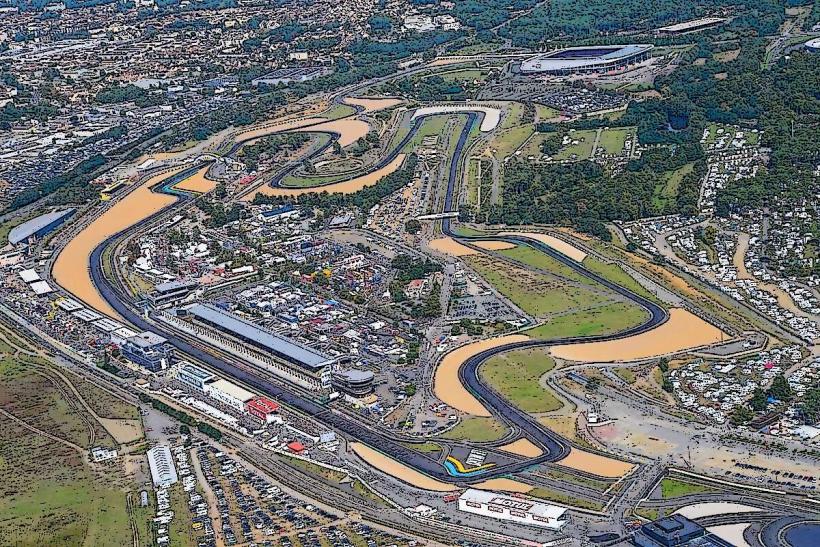
Le Mans is a city in the Pays de la Loire region of northwestern France, situated at the confluence of the Sarthe and Huisne rivers. It is the capital of the Sarthe department and is globally recognized as the site of the 24 Hours of Le Mans endurance motor race.
Visual Characteristics
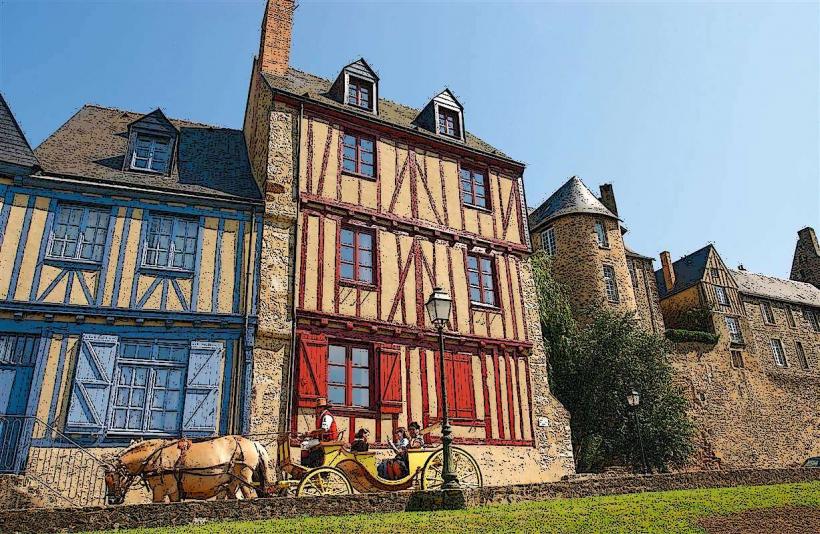
The city features a sharp aesthetic divide between the medieval Cité Plantagenêt and the modern urban center. The old town is characterized by its exceptionally well-preserved 3rd-century Roman walls, narrow cobblestone streets, and timber-framed houses. The Cathédrale Saint-Julien integrates Romanesque and Gothic styles with massive stone flying buttresses. The modern districts utilize 19th-century limestone facades and mid-20th-century concrete structures.
Location & Access Logistics
Le Mans is positioned 200 kilometers southwest of Paris. It is a major rail hub; the Gare du Mans provides TGV connections to Paris in 55 minutes. The city is served by two tramway lines (T1 and T2) and an extensive bus network managed by Setram. Vehicle access is via the A11, A28, and A81 motorways. During the 24 Hours of Le Mans (June), local road access is severely restricted as portions of the public D139 and D338 roads are converted into the Mulsanne Straight of the racing circuit.
Historical & Ecological Origin
Originally the Gallic capital of the Aulerci Cenomani (Vindinum), it became a primary Roman stronghold. In the 12th century, it was the birthplace of Henry II of England and the ancestral home of the Plantagenet dynasty. Geologically, the city is built on a sandstone and limestone ridge overlooking the Sarthe valley. The surrounding environment is characterized by the Bocage Cénomans, a landscape of hedgerows and small agricultural plots.
Key Highlights & Activities
Visitors can traverse the Cité Plantagenêt to view the Roman walls, which feature unique red-brick and white-stone geometric patterns. The Musée des 24 Heures du Mans, located at the circuit entrance, displays over 120 historic racing vehicles. The Cathédrale Saint-Julien is accessible for viewing its 12th-century stained glass and the tomb of Berengaria of Navarre. The "Nuit des Chimères" is a summer light installation that projects holographic imagery onto the Roman walls and cathedral.
Infrastructure & Amenities
The pedestrianized old town and city center are equipped with public restrooms near Place de la République and the Cathedral. Reliable 5G cellular coverage is available throughout the urban core and at the Bugatti Circuit. The Setram network provides automated bike-sharing stations. Food services are high-density in the Saint-Nicolas district, while the Halles du Mans provides an indoor market for regional Sarthe produce, including rillettes.
Best Time to Visit
The climate is temperate oceanic. June is the peak period for motorsport events, involving high hotel occupancy and increased noise levels. May and September offer stable weather with temperatures between 16°C and 22°C for outdoor exploration. Photography of the Roman walls is optimal at night during the summer light shows or at sunrise from the Pont Perrin.
Facts & Legends
The Roman walls of Le Mans are considered the most complete in France and among the best-preserved in the former Roman Empire. A historical oddity: Wilbur Wright performed the first public flight demonstrations in Europe at the Le Mans racecourse in 1908. Legend holds that the "Menhir de la Cathédrale," a prehistoric standing stone embedded in the cathedral's exterior wall, provides fertility to those who touch it.
Nearby Landmarks
Cathédrale Saint-Julien: 0.1km North of center
Cité Plantagenêt: 0.2km North
Musée de Tessé: 0.5km Northeast
Circuit des 24 Heures du Mans: 6.0km South
Abbaye de l'Épau: 4.0km East