Information
City: MeteoraCountry: Greece
Continent: Europe
Meteora, Greece, Europe
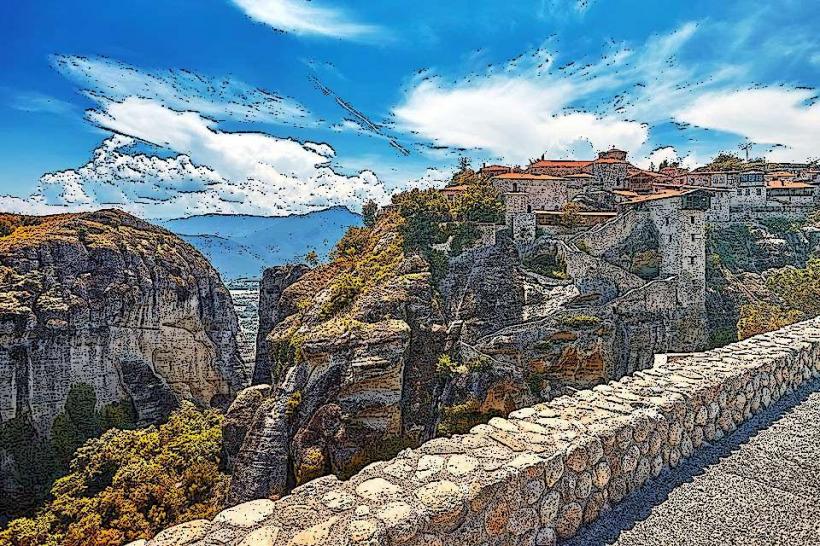
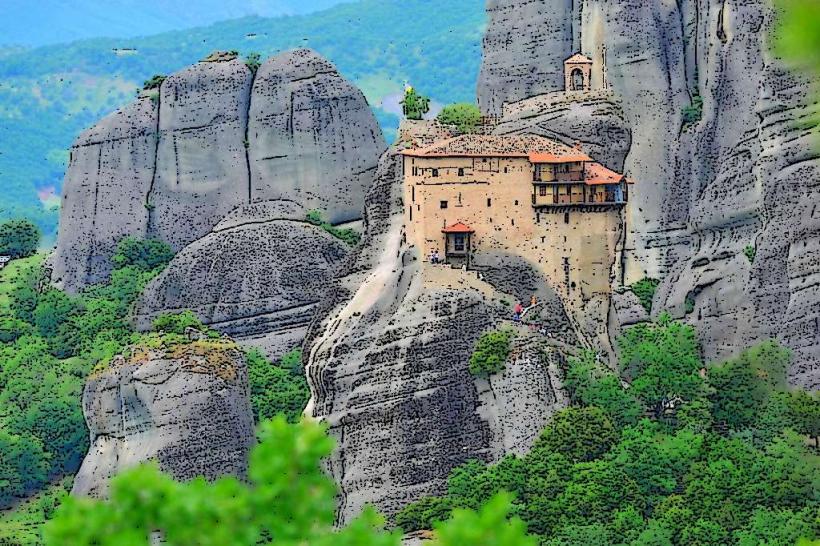
Meteora is a geological and religious site in central Greece, located near the town of Kalabaka in the Plain of Thessaly. It is characterized by massive sandstone rock pillars that rise up to 400 meters, hosting one of the most significant complexes of Eastern Orthodox monasteries in the world.
Historical Timeline
The rock formations were created approximately 60 million years ago through a series of seismic shifts and subsequent erosion. Hermit monks first arrived in the 11th century, living in caves and fissures. During the political instability of the 14th century, the first organized monasteries were built on the inaccessible peaks for protection. At its peak in the 16th century, there were 24 active monasteries. Today, only six remain inhabited and open to the public.
Urban Layout & Access Points
Kalabaka (Kalampaka): The main commercial town at the foot of the rocks, serving as the primary hub for hotels, dining, and the railway station.
Kastraki: A smaller, more traditional village located directly among the rock pillars, offering a quieter atmosphere and hiking trailheads.
The Monastic Loop: A paved 15-km road circles the peaks, connecting all six active monasteries.
The Six Active Monasteries
All monasteries are UNESCO World Heritage sites.
Great Meteoron (Megalo Meteoro): The largest, oldest, and highest. Founded in 1340, it features a significant museum and the Church of the Transfiguration.
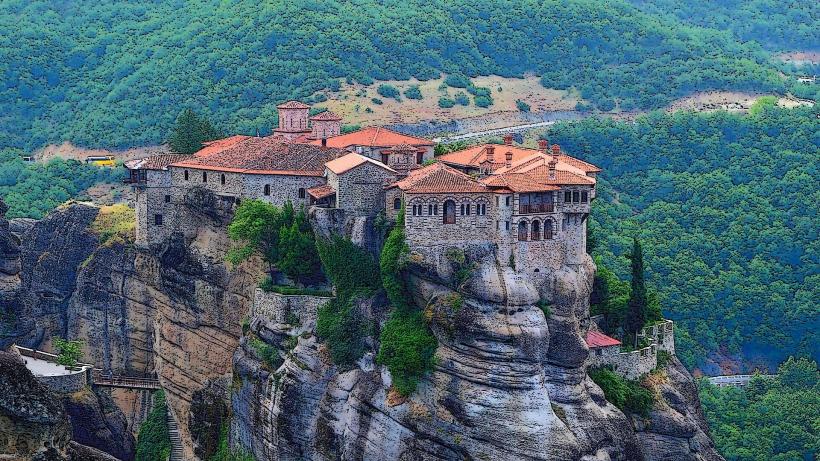
Varlaam: The second largest, known for its 16th-century frescoes by Frangos Katelanos and a massive 16th-century oak barrel.
Holy Trinity (Agia Triada): The most difficult to reach, requiring a descent into a canyon and a climb of 140 steps. It was featured in the James Bond film For Your Eyes Only.
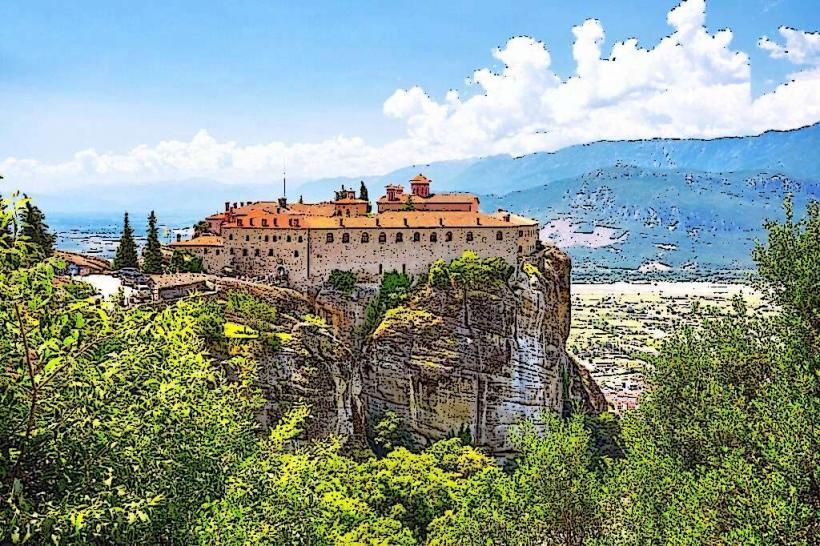
St. Stephen (Agios Stefanos): The most accessible, reached by a small bridge rather than stairs. It is a nunnery with views overlooking Kalabaka.
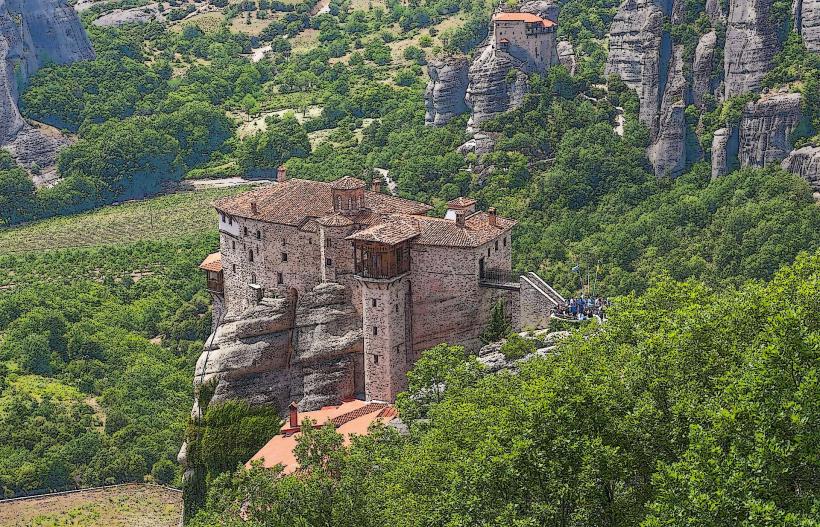
Rousanou: A nunnery built on a strikingly vertical rock, noted for its 16th-century Cretan-style paintings.
St. Nicholas Anapafsas: The first monastery encountered from Kastraki, built on a narrow rock with a unique multi-level structure.
Transportation Network
Train: The most common route. Direct trains run from Athens (Larissa Station) to Kalabaka (approx. 4–5 hours). Direct service also exists from Thessaloniki (approx. 3 hours).
Bus: Managed by KTEL Trikala. Direct buses from Athens are rare; most require a transfer at Trikala.
Local Transport: From Kalabaka, local buses run to the monasteries between March and November. Taxis are available for fixed-price "circuit tours."
Safety & Visitor Regulations (2026)
Dress Code: Extremely strict. Men must wear long trousers (no shorts). Women must wear long skirts (no trousers) and cover their shoulders. Most monasteries provide wrap-around skirts at the entrance.
Entrance Fees: As of 2026, the fee is €5.00 per monastery (cash only).
Physicality: Expect significant walking and steep stone stairs at all sites except St. Stephen.
Weekly Schedule & Opening Hours (2026)
Monasteries operate on rotating closing days to ensure at least some are open daily.
| Monastery | Summer (Apr–Oct) | Winter (Nov–Mar) | Closed On |
|---|---|---|---|
| Great Meteoron | 09:30 – 15:00 | 09:30 – 14:00 | Tue, Wed, Thu (Winter) |
| Varlaam | 09:00 – 16:00 | 09:00 – 15:00 | Fri |
| St. Stephen | 09:00 – 17:30* | 09:30 – 17:00* | Mon |
| Holy Trinity | 09:00 – 17:00 | 10:00 – 16:00 | Thu |
| Rousanou | 09:00 – 15:30 | 09:30 – 14:00 | Wed |
| St. Nicholas | 09:00 – 17:00 | 09:00 – 16:00 | - |
| *Note: St. Stephen usually closes for a midday break (13:30–15:30). |
Digital & Financial Infrastructure
Kalabaka has 100% 5G coverage and ubiquitous ATMs. Within the monastic complex, mobile signal is generally strong on the peaks but can drop in the deep gorges. Card acceptance is universal in the towns, but cash is required for monastery entry fees.
Local Cost Index
1 Espresso (Freddo): €3.00–€4.00
1 Standard Lunch (Kalabaka): €15.00–€22.00
1 Taxi (Full Circuit): €40.00–€60.00
Facts & Legends
Legend says that the founder of the Great Meteoron, St. Athanasios, did not climb the rock but was carried to the top by an eagle. A verified historical fact: Until the 1920s, there were no stairs; monks and supplies were hoisted up in rope nets or used retractable wooden ladders that could be pulled up in the event of an attack.