Information
Landmark: Monastery of Saint StephenCity: Meteora
Country: Greece
Continent: Europe
Monastery of Saint Stephen, Meteora, Greece, Europe
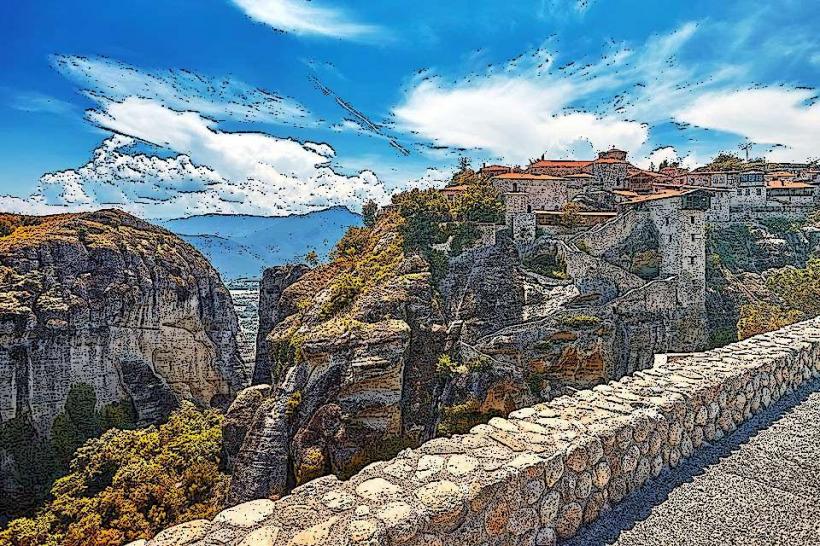
The Holy Monastery of Saint Stephen is one of the six active Eastern Orthodox monasteries in Meteora. It is situated on the southeastern tip of the Meteora rock complex and is the most accessible of all the monasteries, as it is reached via a stationary bridge rather than steep staircases. Since 1961, it has functioned as a nunnery.
Visual Characteristics
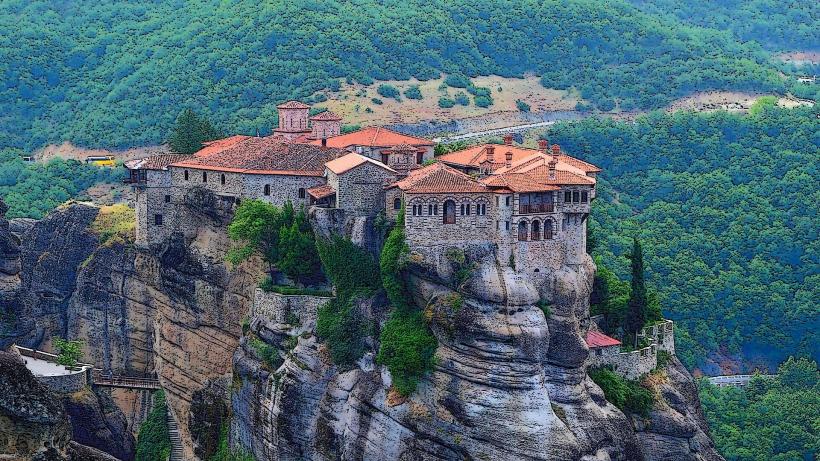
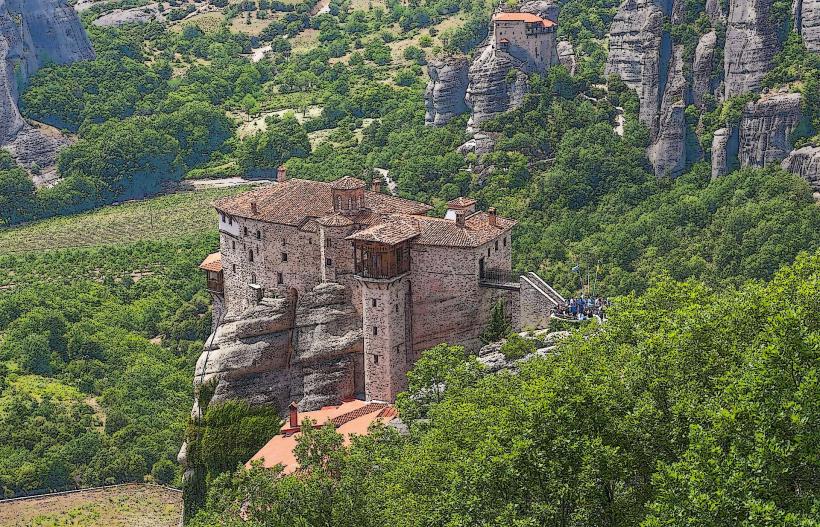
The monastery complex is characterized by a fortress-like exterior with high stone walls and a prominent bell tower. It features two main churches: the small, single-aisled 16th-century Church of Saint Stephen and the larger 18th-century Katholikon of Saint Charalambos. The architecture follows the post-Byzantine style with red-tiled roofs and stone masonry. The Katholikon is topped by three domes and contains an intricate, hand-carved wooden iconostasis.
Location & Access Logistics
The site is located at the southern end of the Meteora road circuit, approximately 1.5km beyond the Monastery of the Holy Trinity and 7km from Kalabaka. It is the only monastery that does not require climbing steps; a 10-meter stone bridge connects the main road directly to the monastery entrance, making it the primary choice for visitors with limited mobility. A strict dress code is enforced: shoulders and knees must be covered, and women must wear long skirts (provided at the entrance).
Historical & Ecological Origin
Evidence of ascetic life on the rock dates back to the 12th century, though the first church was built in 1350 by Antonios Kantakouzenos. The monastery received significant support from the Byzantine Emperor Andronikos III Palaiologos, who stayed there in 1333. Geologically, the monastery sits on a massive sandstone and conglomerate pillar formed over 60 million years ago. During WWII and the subsequent Greek Civil War, the monastery suffered significant damage and was abandoned until it was restored as a convent in 1961.
Key Highlights & Activities
The Katholikon of Saint Charalambos: Houses the skull of the saint, which is considered a sacred relic. The church is decorated with modern hagiography in the traditional Byzantine style.
The Museum (Old Refectory): One of the finest in Meteora, exhibiting rare Byzantine icons, gold-embroidered liturgical vestments, and 15th-century manuscripts.
The Terrace View: Offers an unobstructed panoramic view of the Thessalian Plain, the city of Kalabaka, and the Peneus River.
The Old Church of Saint Stephen: Although damaged during the war, it preserves some 16th-century frescoes.
Infrastructure & Amenities
The monastery maintains a well-stocked shop selling religious items, hand-painted icons, and books. Public restrooms are available near the entrance. 5G cellular coverage is excellent. The site features a large, paved courtyard with benches and shaded areas under the porticos. There are no food services on-site, but mobile vendors are frequently located in the adjacent parking area.
Best Time to Visit
The monastery is closed on Mondays. Optimal visiting hours are 09:00–10:30 or 15:30–17:30. Due to its accessibility, it is often the most crowded monastery; arriving at opening is necessary to avoid tour groups. For photography, the morning light is ideal for views of the Thessalian Plain, while the late afternoon provides the best lighting for the monastery’s eastern facade.
Facts & Legends
A historical fact of the monastery is its role as a "Secret School" during the Ottoman occupation, where monks taught the Greek language and history to local children. According to local belief, the relics of Saint Charalambos are credited with protecting the region from various plagues and illnesses throughout the centuries.
Nearby Landmarks
Holy Monastery of the Holy Trinity: 1.0km Northwest
Psaropetra Lookout: 1.8km Northwest
Kalabaka City Center: 7.5km South (via road)
Theopetra Cave: 10.0km Southeast
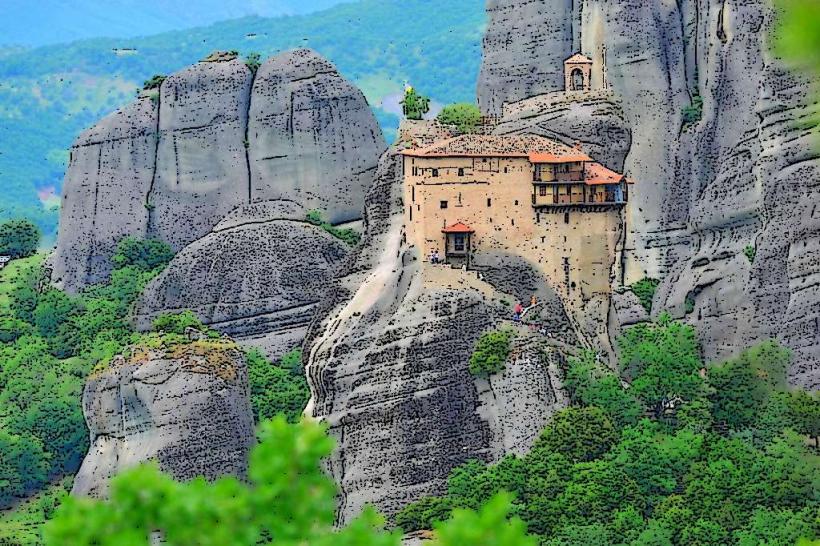
Monastery of Rousanou: 3.5km Northwest