Information
Landmark: Rousanou MonasteryCity: Meteora
Country: Greece
Continent: Europe
Rousanou Monastery, Meteora, Greece, Europe
Overview
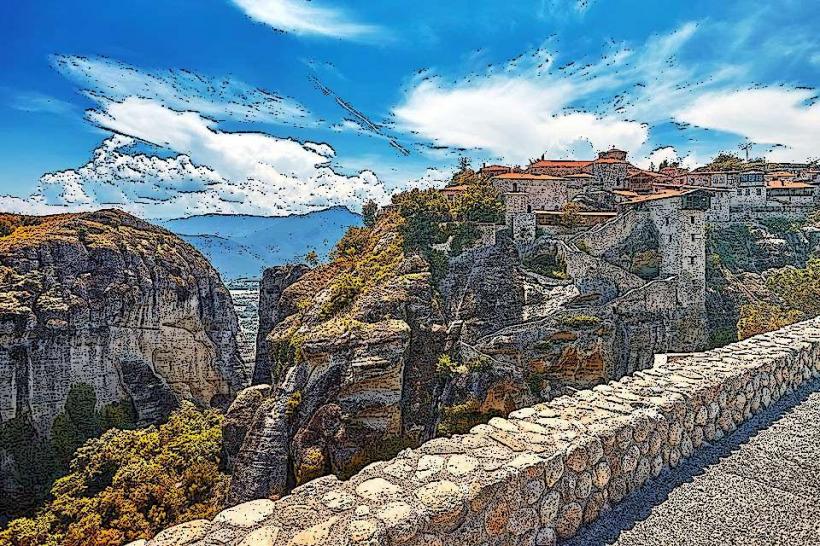
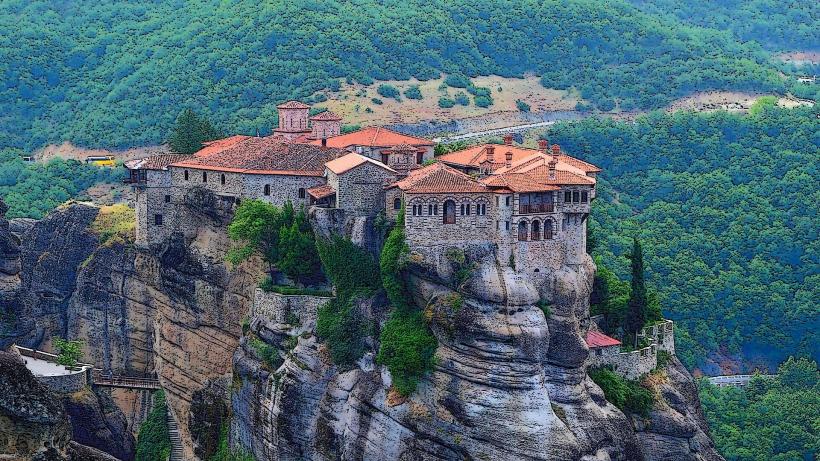
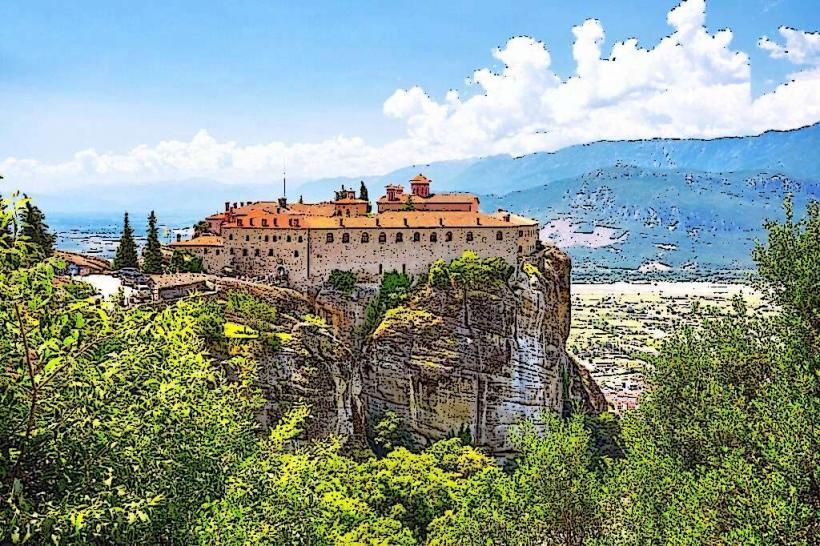
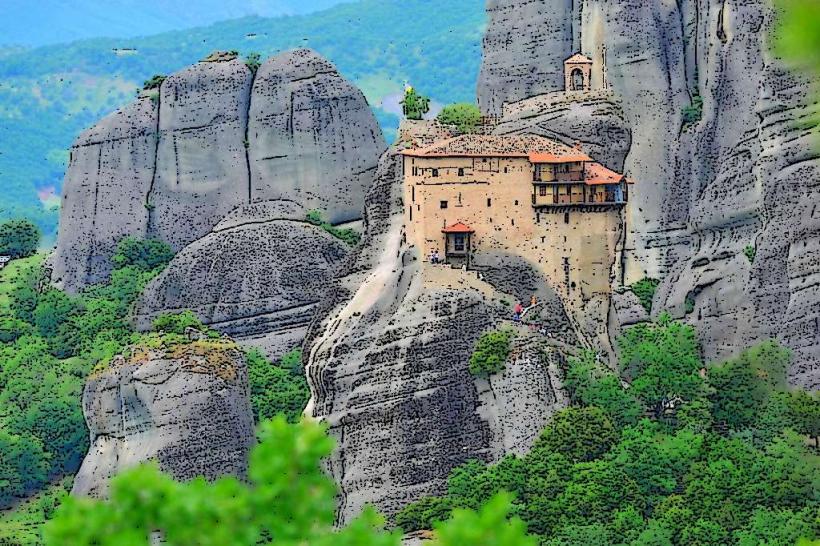
Perched on a rocky pillar in central Greece’s Meteora region, Rousanou Monastery is smaller than most, yet its setting is unforgettable-stone walls rising above a sweep of green and distant cliffs, to boot perched high on a sheer pillar of stone like its sister monasteries, it looks out over Meteora’s dramatic cliffs, where silence hangs in the warm, sunlit air.Rousanou Monastery draws visitors for its deep spiritual roots, its rich, winding history, and the breathtaking cliffs and greenery that wrap around it, as well as first.Rousanou Monastery likely took shape in the 16th century, but its story reaches back to the 14th, when hermits first came to the rocky cliffs and made their homes there, also at first, the site held a modest hermitage with a single wooden door, and over the years it grew into a thriving monastery, loosely People still argue over who founded it, therefore some accounts point to a woman named Saint Rousanou, while others credit monks who came to the area searching for a quiet, windswept cliff where they could pray in peace.Somehow, In the 16th century, they built and expanded the monastery, its stone walls rising into a venue that soon became a vital center of Orthodox monastic life, while like the other Meteora monasteries, it thrived in those years, drawing monks and pilgrims from across Greece-some trudging up the steep stone steps with the scent of pine in the air.During this period, the monastery’s identity centered on Greek Orthodox worship, with Byzantine icons glowing in the candlelight, in conjunction with rousanou-like many Meteora monasteries-fell into decline during the Ottoman era, when its monks struggled with pressures from outside and unrest within their own walls.Still, the monastery kept running through the centuries, even as its influence faded and grand neighbors like the Great Meteoron and Varlaam drew most of the pilgrims, in turn restoration and revival began in the 20th century, when, after decades of crumbling walls and faded paint, people finally stepped in to save and preserve the monastery.Thanks to these efforts, the monastery still stands, its stone walls cool to the touch, welcoming worshippers and pilgrims alike, at the same time two.The Rousanou Monastery sits perched on a sheer rock pillar, towering about 400 meters-over 1,300 feet-above sea level, with its stone walls seeming to cling to the cliffside, furthermore perched high above the valley, the monastery commands a sweeping view of Meteora’s towering rock pillars and the wide Thessalian Plain stretched out like a patchwork quilt far below.The monastery is modest in size, yet its arches and stone walls show the hallmarks of Byzantine design, touched with hints of post-Byzantine style, at the same time perched on one of Meteora’s smaller rocks, the monastery still opens out to a sweeping view of the cliffs and valleys below, loosely Visitors reach the site by crossing a narrow footbridge from the base of the rock straight into the monastery, also they built the bridge to take the region of the antique ladder system, once the only way monks and visitors could haul themselves up the rock’s steep face.Today, visitors reach the monastery by climbing a narrow set of stone steps and crossing the wooden footbridge, in addition the monastery’s main buildings gather close around a towering central rock, with the Katholikon-the main church of Rousanou-dedicated to the Holy Trinity.Famous Greek iconographers of the era covered the church walls with Byzantine-style frescoes, their gold halos glowing softly in the dim light, in turn sparkling frescoes show moments from the lives of Christ, the Virgin Mary, and several saints, their colors still deep and warm-a vivid tribute to the monastery’s rich faith.Cells and Rooms: The monastery holds a cluster of tiny monks’ cells along with other spaces-a warm refectory where bread’s scent lingers, and quiet rooms set aside for study and prayer, moreover the rooms are plain yet practical, built to serve the austere needs of the monks-bare walls, a narrow bed, nothing more, kind of The iconostasis stands between the altar and the congregation, a tall, ornate screen that’s one of the church’s most striking features, while breathtaking icons cover its walls, many painted in the 17th century with colors that still glow like fresh lacquer.The iconostasis isn’t just a barrier for worship-it’s the heart of the church’s artistry, its gilded panels catching the light like fire, at the same time like the other Meteora monasteries, Rousanou rose on its rocky perch with defense at the forefront-thick walls and a sheer drop on every side, moderately The monastery sat sheltered by the rugged hills, and its stone walls and tall watchtowers added another layer of defense against intruders, at the same time number three.Rousanou Monastery is celebrated for its vivid frescoes and delicate icons, the heart of its artistic heritage, where gold leaf glints softly in the afternoon light, as well as frescoes: Inside the main church, vivid wall paintings follow the Byzantine style, touched with rich colors and ornate detail from the post-Byzantine era.Radiant scenes cover the walls and ceilings of the katholikon-moments from Christ’s life, vivid biblical tales, and portraits of solemn saints gazing down, in conjunction with these frescoes burst with vivid color, intricate scenes, and a quiet, lingering sense of the sacred.Truthfully, The church’s iconostasis glows with a row of 17th-century icons, each painted by renowned masters, their colors still rich as aged gold, and the icons brim with intricate detail, showing Christ, the Virgin Mary, and saints, their robes painted in deep gold and crimson, kind of Sacred Objects: Inside the monastery, you’ll find a trove of treasured artifacts-aged manuscripts with curling edges, gleaming liturgical vessels, and finely woven priests’ vestments-that deepen its spiritual importance, along with number four.Like the other Meteora monasteries, Rousanou became a hub of monastic life, where monks spent their days in prayer, practiced strict ascetic routines, and pored over worn pages of sacred texts, on top of that at Rousanou, the monks upheld Eastern Orthodox tradition, and their monastery became a vital refuge for religious life-candles flickering in its chapel-even through the long years of Ottoman rule in Greece.Over the centuries, Orthodox Christians have traveled to Rousanou Monastery, turning it into a revered pilgrimage site where candles flicker in the quiet stone chapel, then people came to the monastery for peace of mind, to join the chanting in the chapel, and to share quiet moments with the monks.Even now, pilgrims come for its calm surroundings and deep spiritual meaning, pausing to breathe in the scent of incense drifting through the air, and during Ottoman rule, the Meteora monasteries-Rousanou among them-stood high on their cliffs and played a vital role in resisting foreign control.The monks sheltered persecuted Greeks, offering them safety and a warm meal, and helped keep Greek culture and Orthodox Christianity alive through those harsh, uncertain years, likewise five.At Rousanou Monastery, visitors reach the entrance by climbing a set of worn stone steps and crossing a narrow footbridge that links the rock’s base to the building, likewise from the bridge, visitors can take in the area’s striking cliffs and trek toward the monastery with towering Meteora rocks rising around them like ancient sentinels.Monastery Grounds: Step through the gates and you’ll find yourself free to wander the cool, stone corridors of the chu.
Author: Tourist Landmarks
Date: 2025-10-07