Information
City: New SalemCountry: USA North Dakota
Continent: North America
New Salem, USA North Dakota, North America
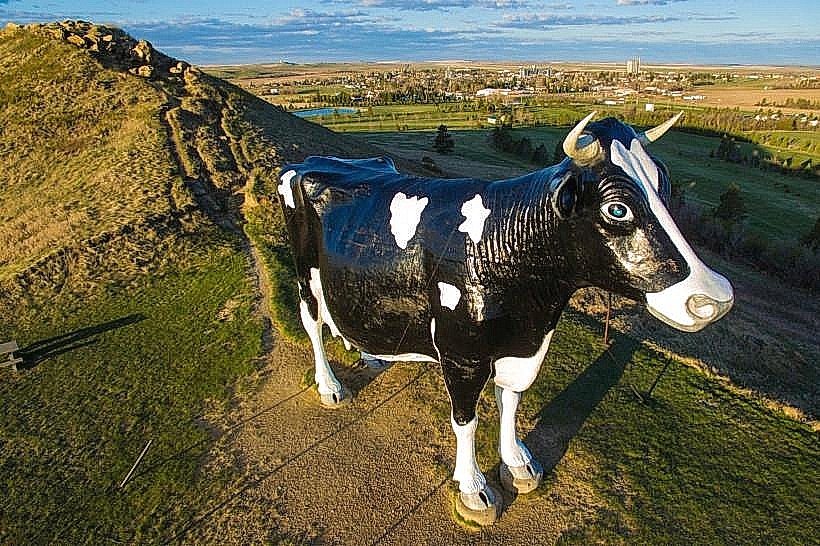
New Salem is an incorporated city in Morton County, North Dakota, situated approximately 50 km west of the Bismarck-Mandan metropolitan area along Interstate 94. Known as the "City of the Holstein," it is defined by its legacy as a 19th-century German evangelical colony, its dominance in the regional dairy industry, and its status as the home of Salem Sue, the world's largest Holstein cow.
Historical Timeline
Inhabited by the Lakota Sioux. Founded in 1882 by John Christiansen, followed shortly by settlers from the German Evangelical Synod of North America, who organized via a Colonization Bureau in Chicago. The Northern Pacific Railroad played a critical role in the city's establishment by donating land to encourage settlement. In the early 20th century, New Salem became a pioneer in coordinated dairy farming through the "New Salem Breeding Circuit." In 1974, the city solidified its dairy identity by erecting Salem Sue. In the 21st century, it serves as a tranquil bedroom community for the Bismarck capital region while maintaining its independent agricultural core.
Demographics & Population
The 2026 population is approximately 1,150. The demographics are predominantly White (96%). The economy is driven by Agriculture (dairy, wheat, and cattle), followed by healthcare and professional services, with a significant portion of the workforce commuting to Bismarck.
Urban Layout & Key Districts
New Salem is organized on a compact grid south of I-94.
Main Street: The commercial core featuring local service businesses, small-town dining, and traditional brick architecture.
School Hill: The elevated northern district overlooking the interstate, dominated by the Salem Sue monument.
Custer Trail District: Area surrounding 8th Street, housing the city's primary historical and community institutions.
Residential Core: Characterized by high homeownership rates (approx. 75%) and a mix of historic early-20th-century and modern housing.
Top City Landmarks
Salem Sue (World's Largest Holstein Cow): A 38-foot-high, 50-foot-long fiberglass statue weighing 12,000 pounds. It sits on a high ridge, visible for several kilometers, and offers panoramic views of the Missouri River valley.
Custer Trail Museum: Operated by the New Salem Historical Society; a multi-building complex including a pioneer church, schoolhouse, and a unique collection of early dairy farming equipment.
New Salem Auditorium: A historic community gathering space and architectural landmark in the town center.
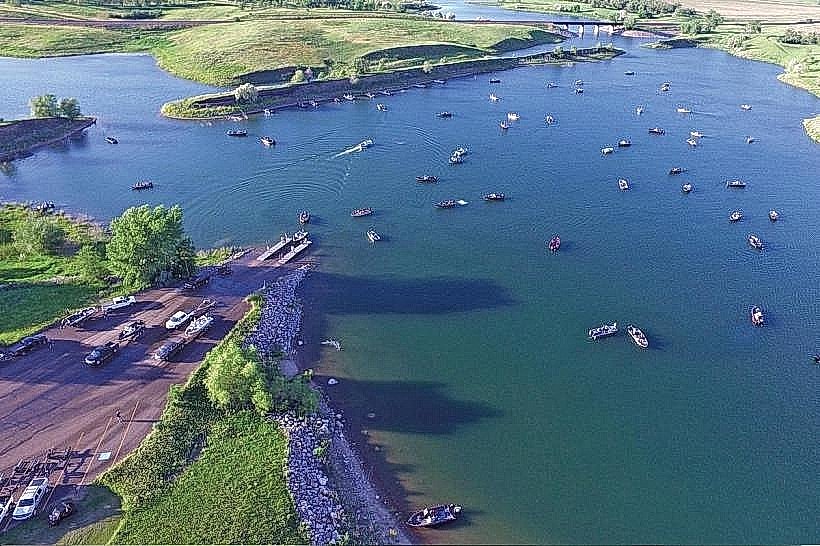
Fish Creek Dam: Located 15 km southwest; a major regional destination for trout fishing, camping, and boating.
The "Old Red" Trail: A designated historic scenic byway (Old Highway 10) that runs through New Salem, celebrating the route's early automotive history.
Transportation Network
Movement is automotive-centric. The city is a primary access point for I-94 (Exit 127) and ND-31. There is no public transit. Commercial air service is via Bismarck Municipal (BIS), 55 km east.
Safety & "Red Zones"
The general safety level is very high. Crime rates are significantly below the state and national averages. There are no "red zones." Environmental hazards include extreme winter blizzards, blustery winds, and dangerous wind chills frequently reaching -30°C.
Digital & Financial Infrastructure
Internet speeds average 200–500 Mbps with fiber availability via Midco and WRT (West River Telecommunications). Main mobile carriers are Verizon and AT&T. Card acceptance is universal. North Dakota has a low state income tax. Sales tax is 5% (state) plus 1.5% (city).
Climate & Air Quality
Temperatures range from -16°C to -2°C in winter and 15°C to 30°C in summer. The "High Plains" location results in a windy, semi-arid climate with high visibility. Air quality is pristine.
Culture & Social Norms
The standard tipping percentage is 20%. A "Quiet-Conservative" greeting is standard. Dress codes are "Ranch-Workwear" or "Casual." The city is culturally defined by its German Heritage, Dairy Pride (the high school teams are named the "Holsteins"), and its role as a peaceful rural alternative to the capital city.
Local Cost Index
1 Espresso: $4.25 (USD)
1 Standard Lunch: $14.00 (USD)
1 Museum Admission: $5.00–$10.00.
Nearby Day Trips
Bismarck/Mandan, ND: (50 km east; featuring the State Capitol and Heritage Center).
Lake Sakakawea: (70 km north; the state's largest reservoir).
Knife River Indian Villages: (85 km northeast; historic earth lodge sites).
Facts & Legends
The fossil plant genus †Susiea was named in honor of Salem Sue. Historically, New Salem was home to one of the most successful "Breeding Circuits" in U.S. history, which standardized dairy quality across the region. A local legend involves the "Phantom of School Hill," a light reportedly seen moving around the base of the cow statue during moonless winter nights. Another legend concerns the "Founders' Secret," a rumored time capsule buried by the original German Evangelical settlers near the site of the first church.