Information
City: NewtonCountry: USA Massachusetts
Continent: North America
Newton, USA Massachusetts, North America
Newton is an independent city in Middlesex County, bordering Boston to the west. Known as the "Garden City," it is defined by its unique "thirteen villages" structure, its elite educational landscape, and its status as one of the most affluent and highly educated residential communities in the United States.
Historical Timeline
Inhabited by the Massachusett people for millennia. Primary governance eras include its 1681 separation from Cambridge and its 1873 incorporation as a city. A critical historical event was the 19th-century arrival of the "Circuit" railroad, which transformed the agricultural town into a premier "commuter suburb." In the 20th century, Newton became a center for industrial innovation (Raytheon was founded here) before evolving into a predominantly residential and professional-services hub.
Demographics & Population
The population is approximately 88,000. The demographics are White (68%), Asian (16%), Hispanic or Latino (5%), and Black or African American (3%). It is a high-income enclave with a median household income exceeding $160,000. It has a significant Jewish population and a massive concentration of residents with graduate degrees.
Urban Layout & Key Districts
Newton lacks a single central downtown, instead functioning as a collection of thirteen distinct villages.
Newton Centre: The largest commercial hub, featuring high-end retail and the primary stop on the MBTA Green Line.
Chestnut Hill: An affluent village shared with Brookline and Boston, home to Boston College and luxury shopping centers.
Newton Corner: The gateway to the city from I-90, characterized by high-density commercial space and transit infrastructure.
Auburndale / Waban: Predominantly residential villages known for historic architecture and the scenic Charles River.
Upper & Lower Falls: Historic industrial sites on the river, now featuring a mix of retail and luxury housing.
Top City Landmarks
Boston College: While a major portion of the campus is in Boston, its core administrative and athletic facilities define the Chestnut Hill district.
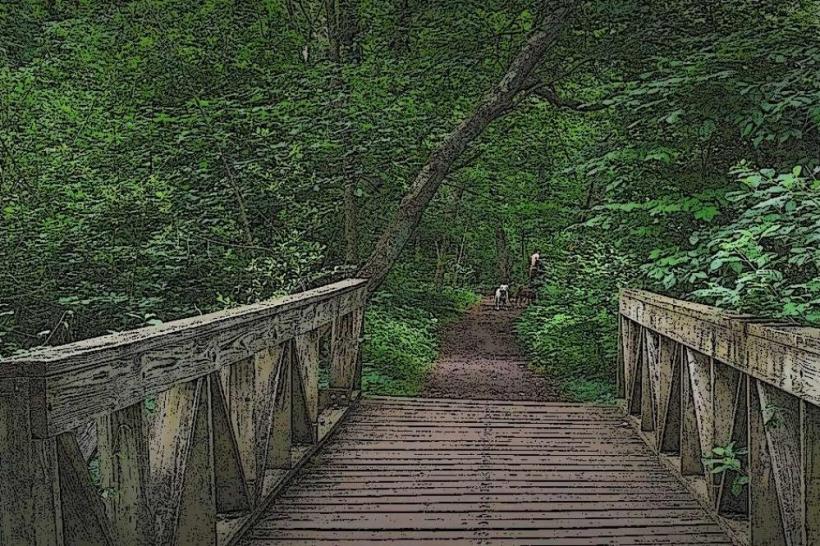
Echo Bridge: A historic 1877 masonry arch bridge in the Hemlock Gorge Reservation, noted for its exceptional acoustic properties.
Heartbreak Hill: The infamous ascending stretch of the Boston Marathon (miles 20–21) that defines the race's difficulty.
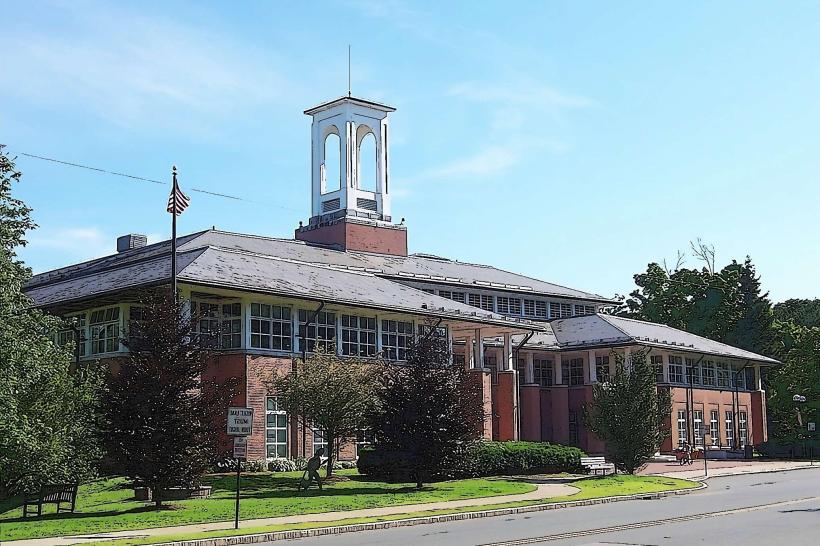
The Newton Free Library: One of the most active and well-funded public libraries in the Commonwealth.
Jackson Homestead: A site on the Underground Railroad, now serving as the Newton History Museum.
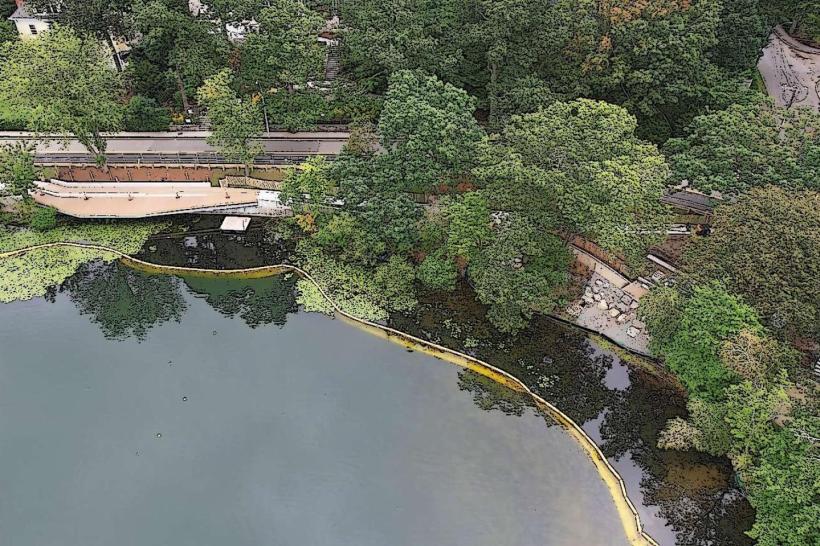
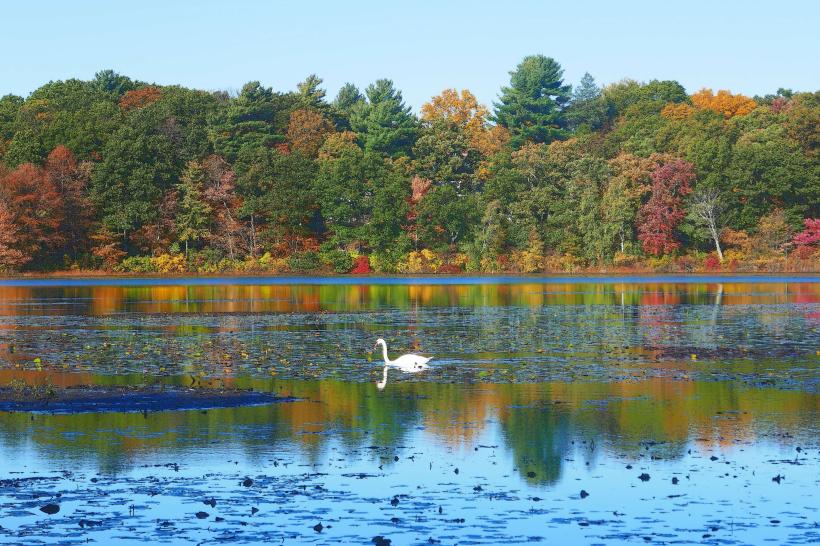
Crystal Lake: A 33-acre glacial lake used for public swimming and recreation.
Transportation Network
Movement is serviced by the MBTA Green Line (D-Branch), the Commuter Rail (Framingham/Worcester Line), and an extensive express bus network. The city is bisected by I-90 (Mass Pike) and Route 128 (I-95). Commercial air service is via Logan International (BOS), 15 km east. Ride-sharing is universal. Traffic density is high, particularly at the "Superstation" (Newton Corner) and along Route 9.
Safety & "Red Zones"
The general safety level is exceptionally high. Newton is consistently ranked among the safest cities of its size in the United States. Property crime, specifically "theft from unlocked vehicles" and porch piracy, is the primary issue. There are no designated "red zones." Common scams involve fraudulent "contractor" solicitations and "IRS" or "Social Security" phone scams targeting the city's elderly population.
Digital & Financial Infrastructure
Internet speeds average 600+ Mbps with fiber availability via Verizon Fios and Xfinity. Main mobile carriers are Verizon, AT&T, and T-Mobile. Card acceptance is universal. ATMs are ubiquitous in all village centers.
Climate & Air Quality
Temperatures range from -5°C to 3°C in winter and 18°C to 28°C in summer. Subject to the "urban forest" effect, providing significant canopy shade and slightly cleaner air than neighboring Boston. Air quality is high, though impacted by vehicle emissions near the I-90/I-95 interchange.
Culture & Social Norms
The standard tipping percentage is 20–25%. A handshake is the standard greeting. Dress codes are "Suburban-Professional" or "Academic-Chic." The city is culturally defined by its "Village" localism, its intense focus on public education, and its identity as a prestigious extension of the Boston intellectual elite.
Accommodation Zones
Newton Corner: Recommended for business travel and proximity to the Mass Pike.
Chestnut Hill: Recommended for proximity to Boston College and high-end shopping.
Local Cost Index
1 Espresso: $5.00 (USD)
1 Standard Lunch: $24.00 (USD)
1 MBTA Subway Fare: $2.40 (Single).
Nearby Day Trips
Walden Pond: (15 km west in Concord).
Boston: (10 km east).
Lexington Battle Green: (15 km north).
Facts & Legends
Newton is the birthplace of the "Newton" apple (though the Fig Newton cookie was actually named after the city by a bakery in Cambridge). Historically, the city was a leader in the abolitionist movement. A local legend involves the "Ghost of the Jackson Homestead," a rumored spectral figure of a 19th-century child. Another legend concerns the "Secret Underground Railroad Tunnels," many of which are rumored to remain beneath the older homes in the Newton Corner area.