Information
Landmark: Norumbega Park Conservation AreaCity: Newton
Country: USA Massachusetts
Continent: North America
Norumbega Park Conservation Area, Newton, USA Massachusetts, North America
Norumbega Park Conservation Area in Newton, Massachusetts, is both a tranquil natural space and a site of rich local history. Located along the Charles River in the village of Auburndale, this 13-acre conservation area today serves as a peaceful spot for recreation and ecological appreciation, but its past as a bustling amusement park from the late 19th through mid-20th century lends it unique cultural importance.
Historical Background
Originally opened on June 13, 1897, Norumbega Park was built by the directors of the Commonwealth Avenue Street Railway. The goal was to stimulate weekend ridership on the trolley line extending from Boston to the suburban village of Auburndale. The park was named after the mythical Norumbega, a supposed Norse settlement in New England, and inspired by the nearby Norumbega Tower in Weston.
During its prime, Norumbega Park was one of the premier amusement parks in the Greater Boston area. It featured an impressive array of attractions for the time:
Canoeing and Boating: The park's location on the Charles River made it a regional destination for boating, with rental canoes and a popular riverside boathouse.
Zoological and Botanical Features: A small zoo and curated plantings added to the charm of the setting.
Outdoor Theater and Stage Shows: The park offered open-air performances and vaudeville acts.
Totem Pole Ballroom: Built in 1930, this elegant venue hosted big band performances by legends like Benny Goodman, Duke Ellington, Glenn Miller, and Frank Sinatra. It became an icon of the Swing Era, and many performances were broadcast nationally.
Despite its popularity, Norumbega Park began to decline after World War II. The rise of the automobile, changing entertainment tastes, and urban development contributed to its eventual closure in 1963. The ballroom was demolished in the 1970s, and the land was later acquired for conservation.
Present-Day Conservation Area
After the amusement park closed, the land transitioned into a conservation area managed by the City of Newton. Today, the Norumbega Park Conservation Area retains only a few relics of its past, including old lamp posts, stone retaining walls, and traces of paths and structural foundations. These quiet reminders of its former life are now surrounded by native vegetation and meandering trails.
Natural Landscape and Ecology
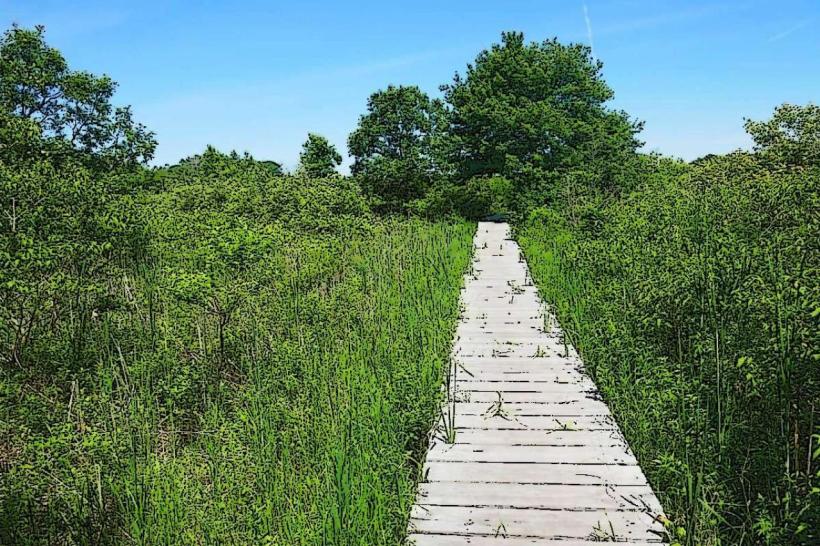
The conservation area is primarily wooded and features a mix of upland forest and riverside wetland. The terrain includes gentle slopes, knolls, and patches of meadow. The ecosystem supports:
Native hardwood trees such as maple, oak, and beech.
Bird species including robins, cardinals, woodpeckers, and hawks.
Small mammals like chipmunks, rabbits, and squirrels.
Plant diversity with labeled species for educational use-some installed by Newton Conservators to encourage ecological literacy.
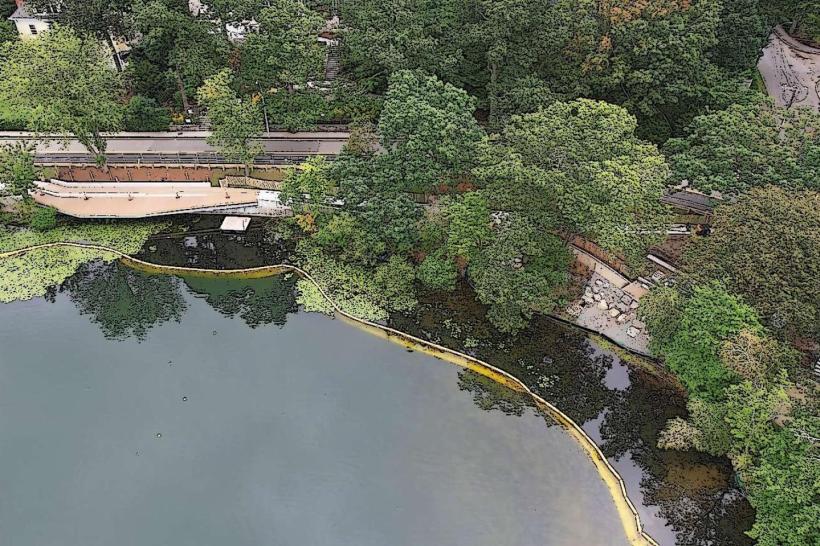
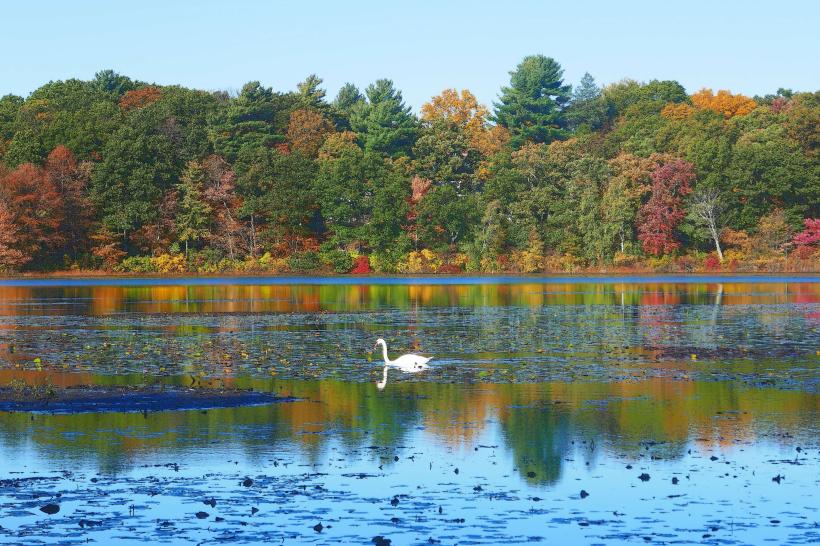
The proximity to the Charles River adds to the biodiversity and also provides seasonal opportunities for wildlife viewing.
Trails and Access
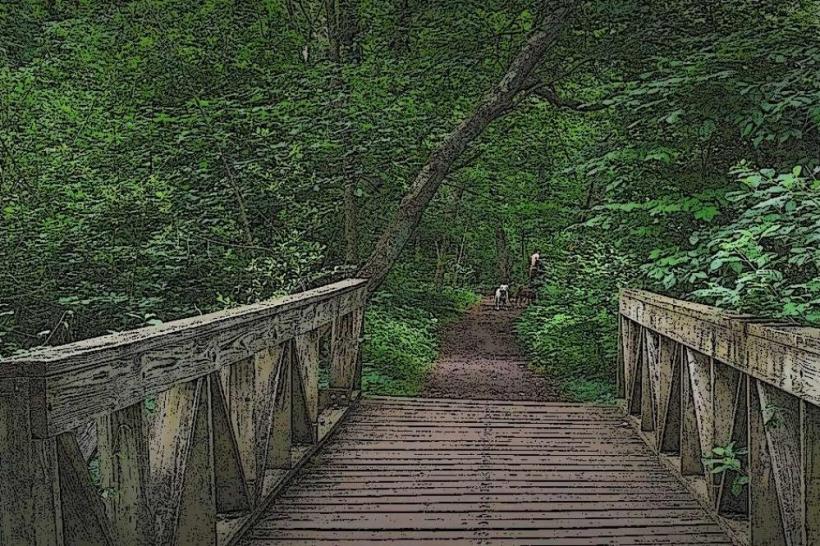
Norumbega Park has an informal network of walking paths suitable for light hiking, nature strolls, and dog walking. One main trail forms a loop through the property, passing wooded areas and open meadows before nearing the riverbank. Some segments are wheelchair-friendly, particularly near the entrance, while others have steeper, unpaved sections.
Trail highlights:
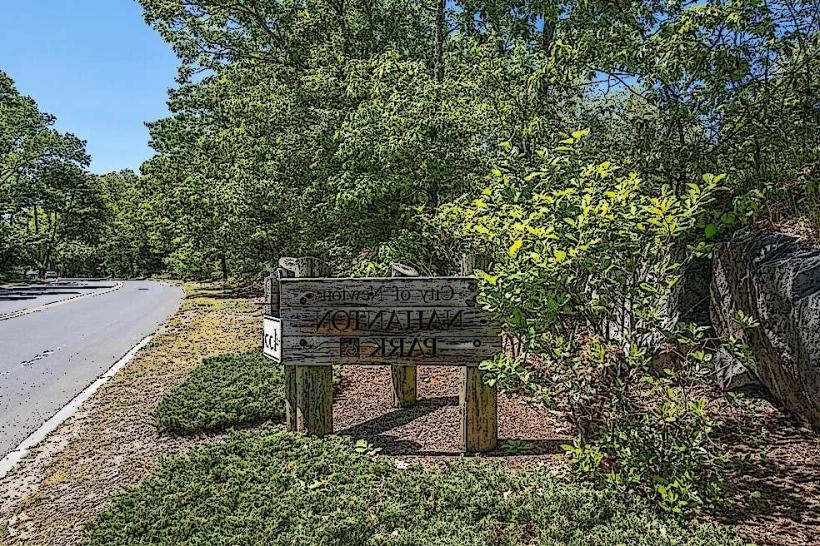
Woodbine Street and Islington Road Entrances: The two primary access points with limited parking available.
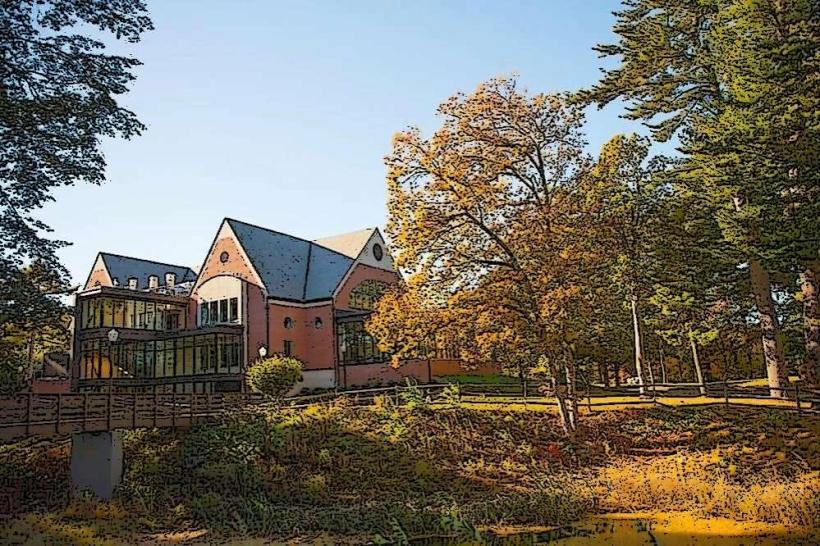
River Overlook: Scenic views of the Charles River, especially pleasant in fall foliage season.
Old Infrastructure: Visitors can find hidden fragments of the amusement park era embedded in the woods.
For public transportation, the area is approximately a half-mile walk from the Auburndale MBTA commuter rail station, making it relatively accessible to Boston-area visitors.
Recreation and Use
Today, Norumbega Park is used primarily for:
Walking and light hiking
Birdwatching and nature photography
Dog walking (on-leash)
Quiet reflection and historical exploration
No playgrounds, restrooms, or formal facilities exist, reinforcing the park’s role as a low-impact conservation space rather than an urban recreational park.
Conservation and Stewardship
The site is protected as a conservation property by the Newton Conservation Commission. Maintenance focuses on preserving native habitat, promoting public access, and managing invasive species. Newton Conservators-a local nonprofit-provides stewardship support through trail cleanups, educational programming, and ecological signage.
Summary
Norumbega Park Conservation Area is a peaceful and historically rich green space in Newton. While its days as a grand amusement park are long gone, its natural beauty and lingering historical artifacts offer a layered experience for today’s visitors. It blends ecological diversity, quiet recreation, and cultural memory, making it a unique destination for those interested in both history and nature.