Information
City: OlsztynCountry: Poland
Continent: Europe
Olsztyn, Poland, Europe
Olsztyn functions as the administrative, academic, and cultural capital of the Warmian-Masurian Voivodeship. Situated in the heart of the Masurian Lake District, it serves as a specialized node for dairy technology, tire manufacturing, and solar physics. It is defined by its unique geography-containing 16 lakes within city limits-its status as a former residence of Nicolaus Copernicus, and its role as the primary gateway to the Great Masurian Lakes.
Historical Timeline
Olsztyn was established by the Warmian Chapter in 1353. The primary era of governance was defined by its role as a strategic fortress of the Prince-Bishopric of Warmia. The primary event shaping its modern identity was the post-1945 transition from German Allenstein to Polish Olsztyn and the subsequent industrialization via the Michelin (formerly Stomil) tire plant. Historically, Nicolaus Copernicus served as the city’s administrator between 1516 and 1521, organizing the defense against the Teutonic Knights.
Demographics & Population
The population is approximately 170,000 (2026 estimate). The demographic profile is influenced by the University of Warmia and Mazury (UWM), which hosts over 18,000 students. The workforce is specialized in food processing, high-tech tire production, and the growing IT and renewable energy sectors.
Urban Layout & Key Districts
The city is organized around the historic core and the massive Forest Park (Las Miejski).
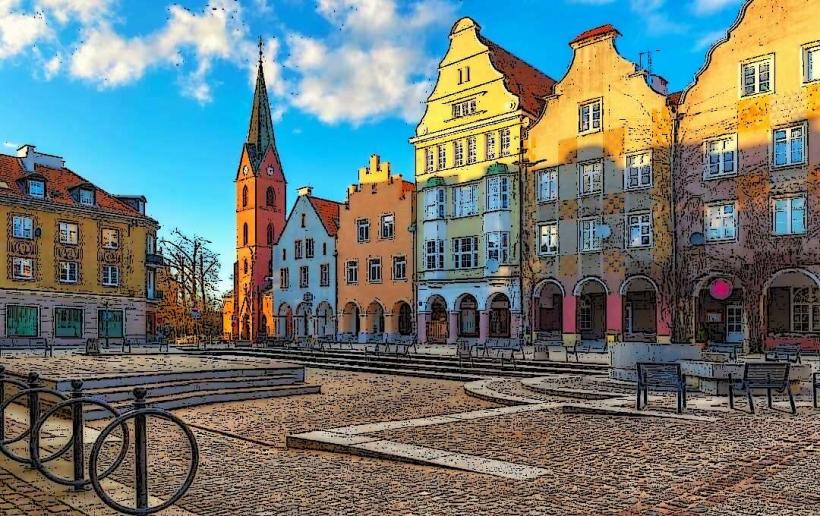
Old Town (Stare Miasto): A specialized medieval district containing the High Gate, the Castle, and the 14th-century Cathedral.
Kortowo: A specialized academic district; it is one of the largest and most green university campuses in Poland, situated on Lake Kortowskie.
Jaroty: A specialized high-density southern residential district, the most populous in the city.
Dajtki: A specialized western district located between Lake Ukiel and Lake Kortowskie, featuring the city's sport airport.
Top City Landmarks
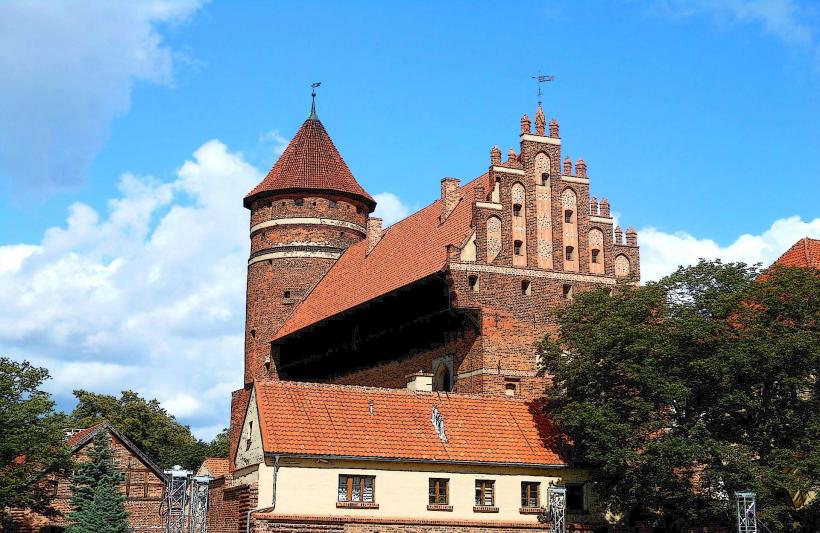
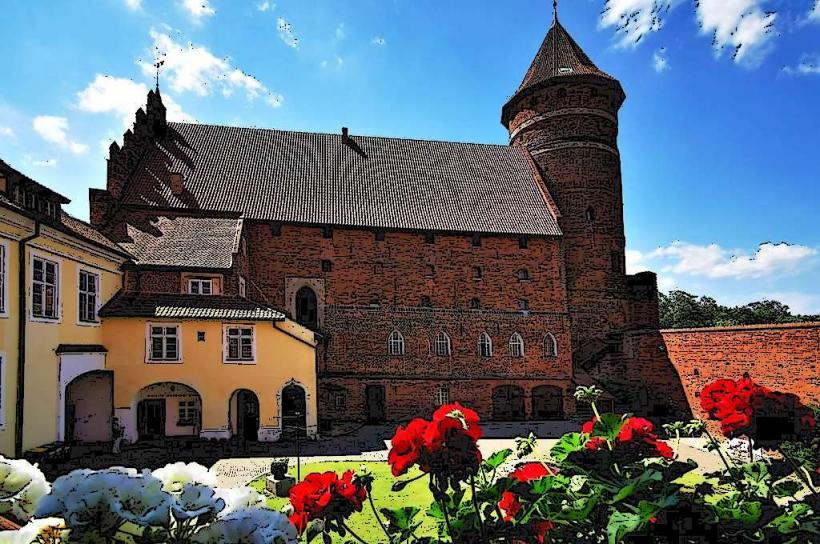
Warmian Chapter Castle: A specialized 14th-century Gothic fortress where Nicolaus Copernicus lived; it features an original astronomical chart drawn by Copernicus on a cloister wall.
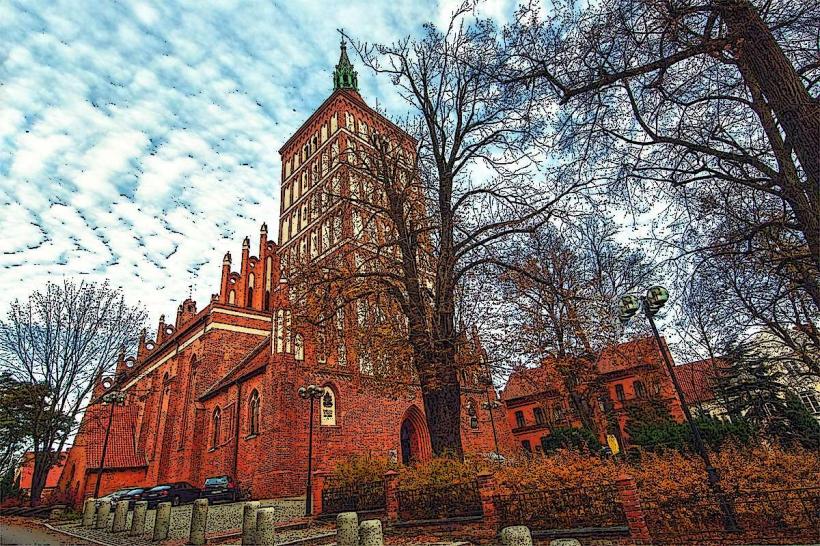
St. James’s Cathedral: A specialized 14th-century brick Gothic basilica, the highest structure in the Old Town.
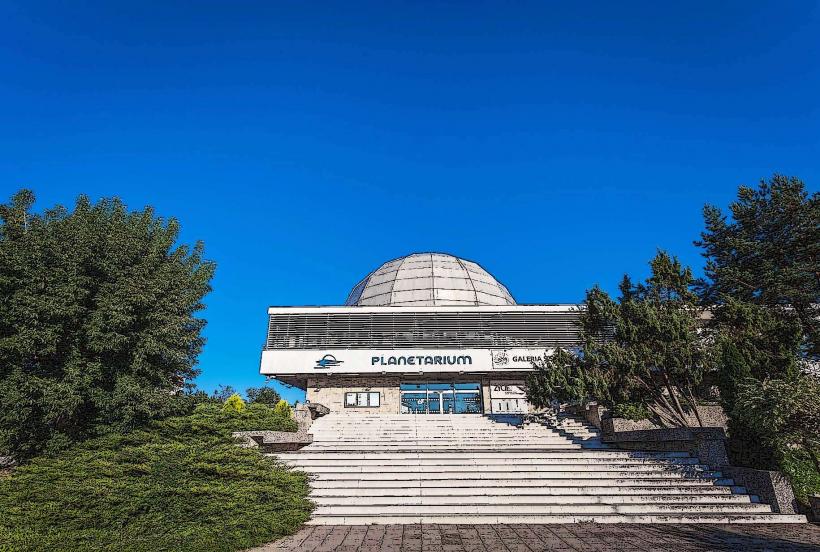
Olsztyn Planetarium and Observatory: The second-largest specialized astronomical facility in Poland, built as a monument to Copernicus.
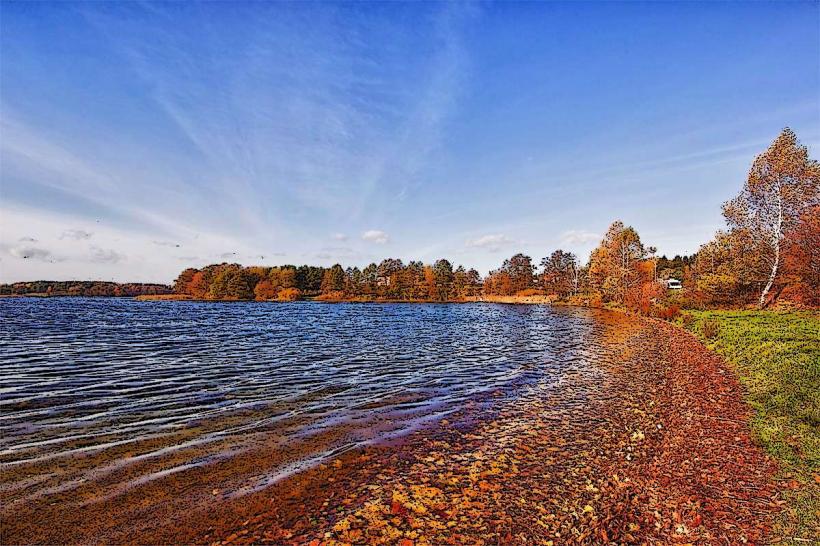
Lake Ukiel (Krzywe): A specialized municipal recreational complex featuring an integrated system of piers, beaches, and water sports infrastructure.
High Gate (Wysoka Brama): The specialized primary entrance to the Old Town and the only preserved gate from the city’s medieval defensive walls.
Las Miejski (City Forest): A specialized 1,050-hectare forest complex within city limits, featuring historic sanatoriums and the Łyna River gorge.
Transportation Network
Olsztyn is the primary transit hub for the S16 and S51 expressways.
Olsztyn-Mazury Airport (SZY): Located 55km south in Szymany, providing international regional links.
Tram Network: Reintroduced in 2015 as a specialized modern transit system; as of 2026, it utilizes high-capacity low-floor vehicles and integrated digital priority signaling.
Olsztyn Główny Station: A major rail hub; in 2026, it operates as a newly reconstructed multimodal transit center.
Cycling Infrastructure: A specialized network of "Greenways" connecting the 16 city lakes.
Safety & "Red Zones"
The general safety level is high. Olsztyn is statistically one of the safest provincial capitals in Poland. There are no "red zones." Standard urban awareness is recommended in the Zatorze district late at night.
Digital & Financial Infrastructure
The city is a leader in Agri-Tech and Geodesy. Internet speeds average 500–1000 Mbps. 5G is universal. In 2026, the city utilizes a specialized "Eco-Olsztyn" platform for real-time monitoring of lake water quality and forest fire risks.
Climate & Air Quality
Olsztyn has a temperate continental climate with lake-effect humidity. Average temperatures range from -3°C in January to 24°C in July. Air quality is exceptionally high due to the surrounding 20% forest coverage and the lack of heavy coal-based industry.
Culture & Social Norms
Social norms are characterized by a relaxed "Warmian" pace of life and a strong focus on outdoor recreation. Tipping (10%) is standard. The primary cultural event is Olsztyn Green Festival (August) and the Warmian Christmas Market.
Local Cost Index (2026 Estimates)
1 Espresso: 10–13 PLN
1 Pint of Local Beer: 13–18 PLN
1 Standard Lunch: 35–55 PLN
Monthly Transit Pass: 110 PLN
Nearby Day Trips
Gierłoż (Wolf's Lair): 1 hour 15 mins away; the specialized ruins of Adolf Hitler’s WWII Eastern Front headquarters.
Frombork: 1 hour 30 mins away; a specialized coastal town where Copernicus wrote "De revolutionibus" and is buried in the Cathedral.
Lidzbark Warmiński: 45 mins away; featuring the specialized Castle of the Warmian Bishops, often called the "Prussian Carcassonne."
Facts & Legends
Olsztyn is the site of the only original astronomical instrument created by Nicolaus Copernicus still in existence (the wall chart). Legend states that a hidden tunnel connects the Castle with the Cathedral to allow secret movement during sieges. A verified fact is that the city contains 16 lakes within its administrative borders, the largest being Lake Ukiel. Historically, the city was the site of the 1920 Warmia and Masuria plebiscite, which determined the region's post-WWI national status.