Information
City: PulaCountry: Croatia
Continent: Europe
Pula, Croatia, Europe
Pula functions as the administrative center of the Istria County and the primary industrial and educational hub of the Istrian peninsula. Situated on the southern tip of the peninsula, it serves as a specialized node for shipbuilding (Uljanik), stone cutting, and viticulture. It is defined by its 3,000-year history, its exceptionally preserved Roman architecture, and its former status as the main naval base for the Austro-Hungarian Empire.
Historical Timeline
Pula was established by the Histri, an ancient Illyrian tribe, before the Roman conquest in 177 BC. The primary era of governance was defined by the Roman Empire, which elevated Pola to a major administrative and military center. The primary event shaping its modern identity was its 19th-century designation as the Kriegshafen (War Harbor) of the Austro-Hungarian Monarchy, which triggered an industrial and population boom. Historically, it transitioned through Byzantine, Venetian, and Italian rule before becoming part of Croatia in 1947.
Demographics & Population
The population is approximately 52,200 (2026 estimate). The demographic profile is characterized by a high degree of multiculturalism, including a significant Italian minority and a large student population attending the Juraj Dobrila University of Pula. The workforce is specialized in technical engineering, maritime services, and a rapidly expanding IT sector.
Urban Layout & Key Districts
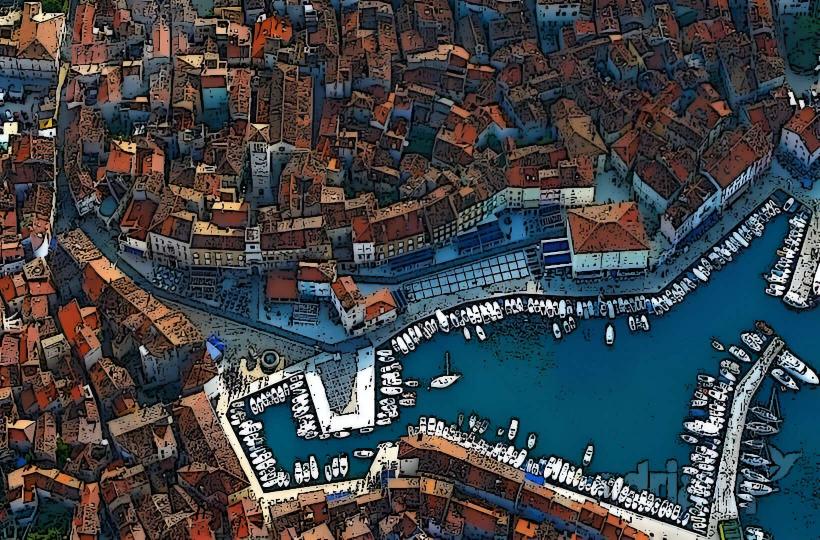
The city is organized around a circular core following the ancient Roman street pattern, bounded by the harbor and the surrounding hills.
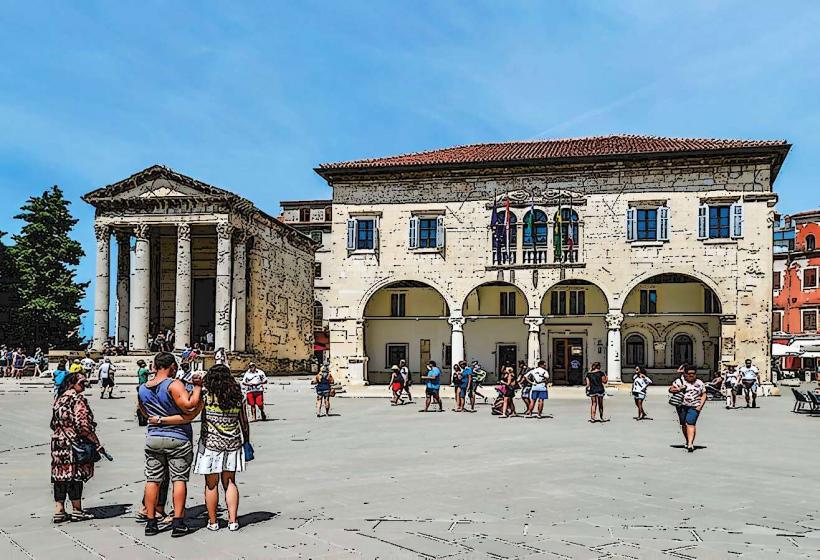
Old Town (Stari Grad): A specialized historic zone featuring the Roman Forum and a dense concentration of ancient monuments.
Stoja: A specialized western district known for its industrial history, rocky beaches, and the large Max City commercial center.
Verudela: A specialized tourist peninsula south of the center, characterized by high-density resort infrastructure and the city's aquarium.
Kaštel Hill: The specialized highest point in the center, housing the Venetian fortress and offering views over the harbor and Arena.
Top City Landmarks
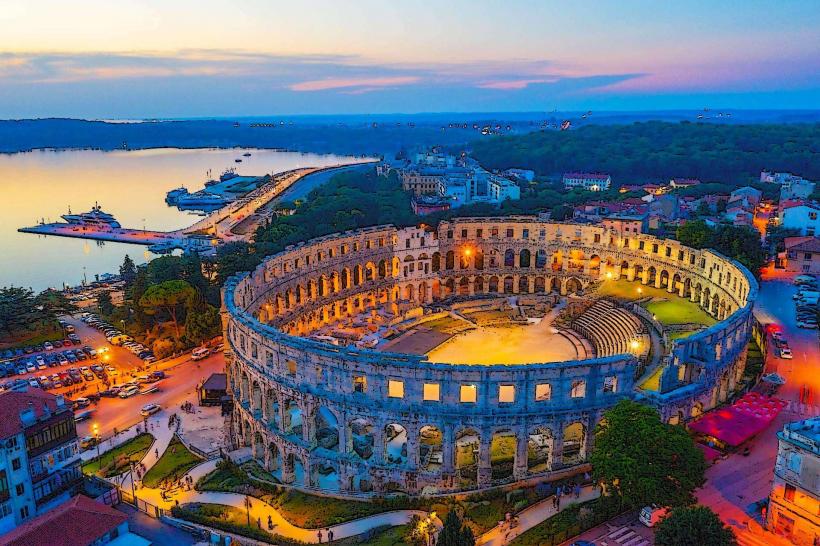
Pula Arena: A specialized 1st-century Roman amphitheater; it is one of the six largest surviving arenas in the world and the only one with all four side towers entirely preserved.
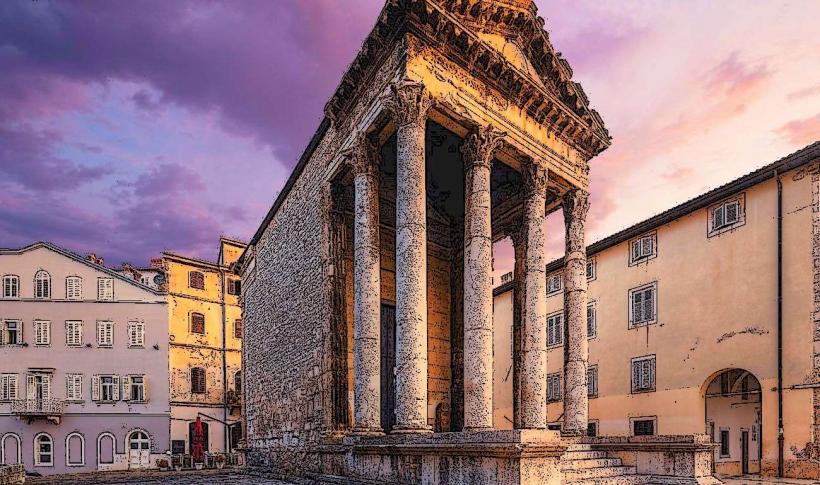
Temple of Augustus: A specialized Roman podium temple on the Forum dedicated to the goddess Roma and Emperor Augustus, built between 2 BC and 14 AD.
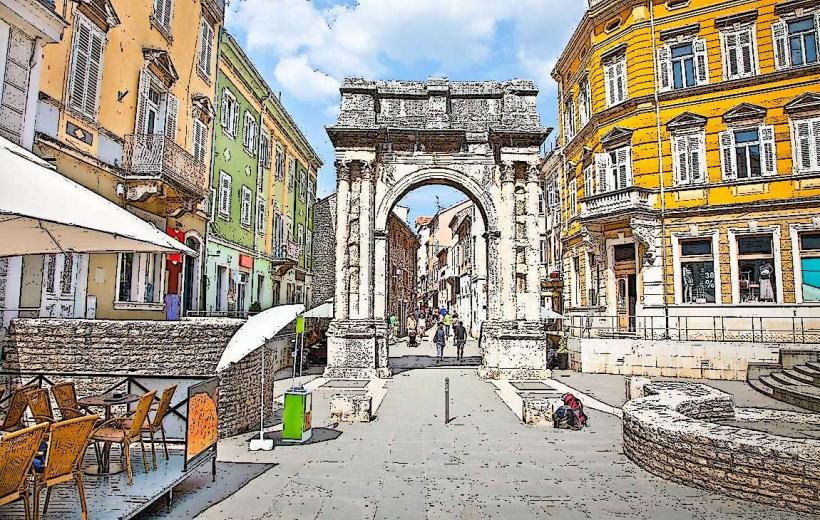
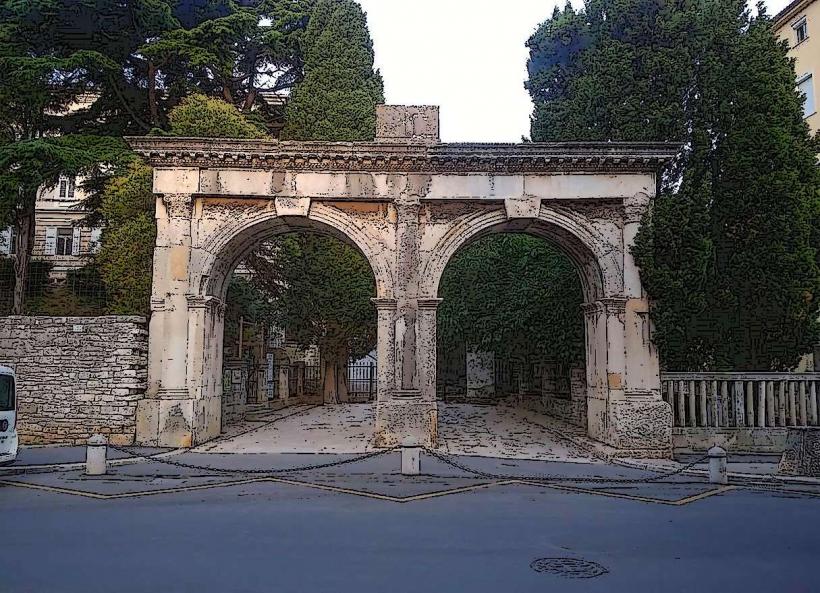
Arch of the Sergii: A specialized Hellenistic-style triumphal arch built to commemorate the Sergi family’s participation in the Battle of Actium.
Pula Castle (Kaštel): A specialized star-shaped Venetian fortress from the 17th century, now housing the Historical and Maritime Museum of Istria.
Lighting Giants (Svjetleći divovi): A specialized modern installation at the Uljanik shipyard where massive industrial cranes are illuminated in a synchronized light show.
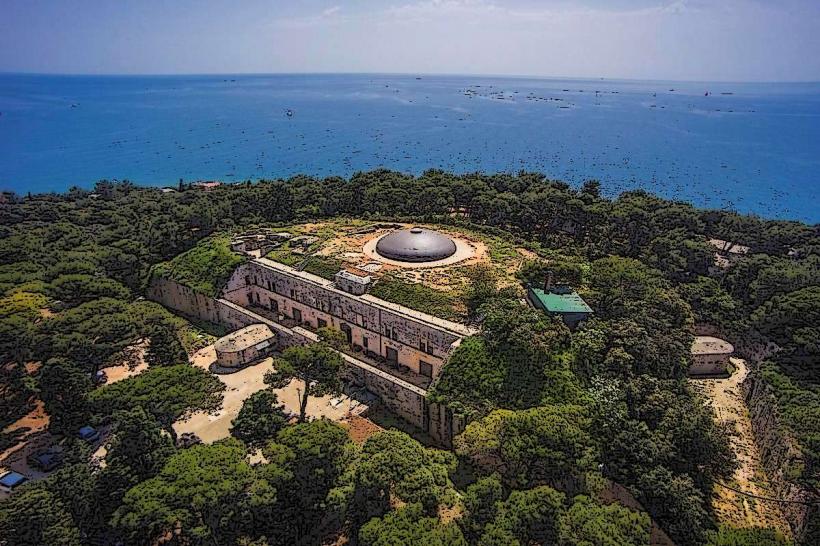
Pula Aquarium: Housed within a specialized 19th-century Austro-Hungarian fortress (Verudela), it is the largest aquarium in Croatia.
Transportation Network
Pula is the primary transit node for the Istrian peninsula.
Pula Airport (PUY): A major international gateway with specialized low-cost carrier connections; in 2026, it serves as the key entry point for the Istrian tourist market.
Railway Hub: Historically significant; as of 2026, free public rail transport has been introduced for residents of Istria on the Pula–Zagreb route to improve regional connectivity.
Port of Pula: A specialized natural harbor; in 2026, it serves as a major hub for ferry lines to Venice (Venezia Lines) and catamarans to Dalmatian islands.
Public Transit (Pulapromet): A specialized bus network. In 2026, it utilizes a modernized fleet with integrated digital ticketing systems.
Safety & "Red Zones"
The general safety level is very high. Pula is statistically one of the safer urban centers in the Mediterranean. There are no "red zones." Standard urban awareness is recommended around the central bus station and the industrial port area late at night.
Digital & Financial Infrastructure
The city is a leader in Maritime Tech and Smart City Systems. Internet speeds average 400–1000 Mbps. 5G is universal. In 2026, the city participates in the national DIGIT Project, a €106 million initiative focused on the digital and green transition of the industrial sector.
Climate & Air Quality
Pula has a Mediterranean climate with cool winters and warm summers. Average temperatures range from 6°C in January to 28°C in July. Air quality is generally moderate to good; the city utilizes a specialized real-time AQI monitoring network to track emissions from the maritime and industrial zones.
Culture & Social Norms
Social norms are characterized by "Istrianship"-a regional identity that blends Slavic and Italian influences with a strong anti-fascist tradition. Tipping (10%) is standard. The primary cultural event is the Pula Film Festival (held in the Arena) and the Dimensions/Outlook festivals.
Local Cost Index (2026 Estimates)
1 Espresso: €1.50 – €3.00 (Forum/Arena pricing)
1 Pint of Local Beer: €3.00 – €5.00
1 Standard Lunch: €15.00 – €30.00
Arena Entry: €15.00
Nearby Day Trips
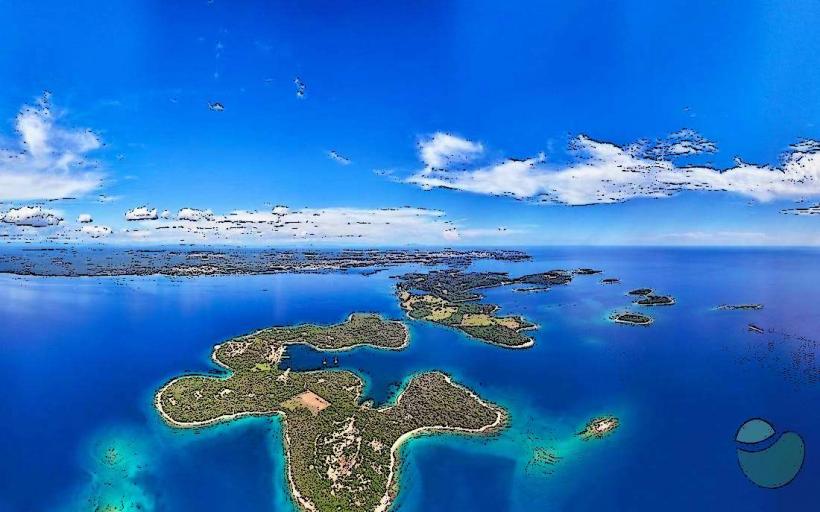
Brijuni National Park: 15 mins by ferry from nearby Fažana; a specialized archipelago featuring Roman villas, a safari park, and dinosaur footprints.
Cape Kamenjak: 20 mins away; a specialized nature reserve at the southernmost tip of Istria, known for its rugged cliffs and clear water.
Rovinj: 45 mins away; a specialized historic "gem" of Istria, often compared to Venice for its architectural style and narrow streets.
Facts & Legends
Pula is the site mentioned in Dante’s Divine Comedy, which references the city's ancient cemetery. Legend states that the Arena was built by fairies who carried stones from the Učka mountains at night but had to flee at dawn, leaving the structure without a roof. A verified fact is that the city’s communal palace on the Forum was built in 1296, incorporating parts of an ancient Roman temple into its back wall. Historically, the city’s population exploded from 1,100 to 40,000 within just 50 years after becoming the main Austro-Hungarian naval base.