Information
City: RennesCountry: France
Continent: Europe
Rennes, France, Europe
Rennes is the capital of the Brittany region in northwestern France, situated at the confluence of the Ille and Vilaine rivers. It serves as a major administrative, judicial, and university center for the western French interior.
Visual Characteristics
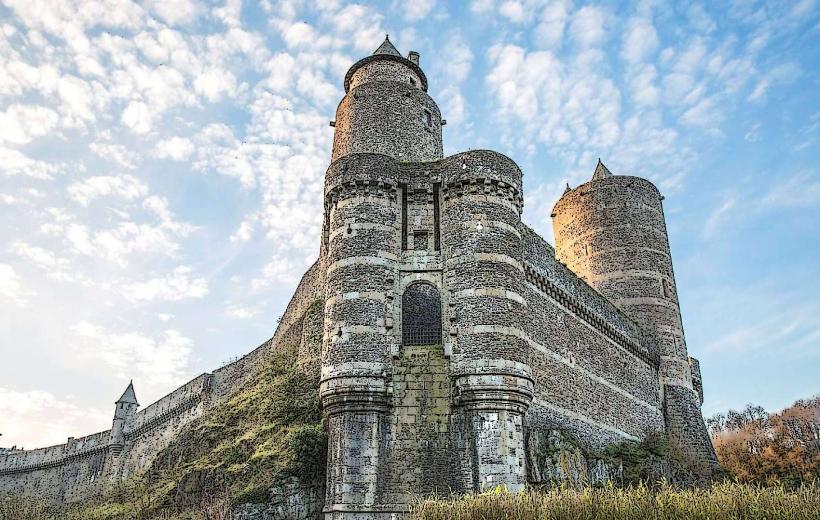
The urban landscape is defined by a distinct divide between medieval and 18th-century architecture. The "Vieille Ville" features approximately 280 half-timbered houses (maisons à pans de bois) with vibrant facades and exposed wood beams. In contrast, the eastern sections, rebuilt after the Great Fire of 1720, consist of grand neoclassical granite and tuffeau stone structures. The skyline is punctuated by the Parlement de Bretagne and the modern, colored facades of the Les Champs Libres cultural center.
Location & Access Logistics
Rennes is located 350 kilometers west of Paris. It is a primary transit hub for the Breton peninsula; the Gare de Rennes provides high-speed TGV connections to Paris in 1 hour and 25 minutes via the LGV Bretagne-Pays de la Loire. The STAR transit network operates two fully automated metro lines (Line A and Line B) and an extensive bus system. Vehicle access is via the N136 ring road (Rocade), with parking concentrated in underground facilities at Place des Lices and Charles de Gaulle.
Historical & Ecological Origin
Originally the Gallic capital of the Redones tribe (Condate), the city became a Roman regional hub. It served as the seat of the Duchy of Brittany's parliament from 1554 until the French Revolution. Geologically, the city sits on a basin of Brioverian schist and silt. It is surrounded by the "Ceinture Verte" (Green Belt), an ecological preservation zone that limits urban sprawl and maintains the biodiversity of the Vilaine valley.
Key Highlights & Activities
Visitors can traverse the Palais du Parlement de Bretagne to view 17th-century French paintings and ornate gilded ceilings. The Thabor Park, a 10-hectare landscape garden combining French, English, and botanical styles, is open for recreation. The Musée des Beaux-Arts contains a significant collection of European art, including Georges de La Tour’s The Newborn Christ. Every Saturday morning, the Place des Lices hosts one of the largest outdoor markets in France.
Infrastructure & Amenities
The city center is equipped with public restrooms near the Place de la République and the Place des Lices. Reliable 5G cellular coverage is universal. The "LE vélo STAR" bike-sharing system provides short-term rentals at over 50 automated stations. Drinking water fountains are available in all major public parks. Food and retail density is highest in the pedestrianized corridors between the Sainte-Anne and République metro stations.
Best Time to Visit
The climate is oceanic, with frequent but light rainfall. The optimal months for outdoor exploration are May through September, with temperatures averaging 18°C to 24°C. Photography of the half-timbered houses is best in the morning in the Saint-Michel district. The "Les Tombées de la Nuit" arts festival in July involves significant street performances and temporary pedestrian zones.
Facts & Legends
Rennes is known as the "City of the Red Head" due to the specific red schist used in its oldest fortifications. A historical oddity: the 1720 Great Fire burned for six days, destroying 900 timber houses and leading to the city’s strict neoclassical stone reconstruction. Legend holds that the Portes Mordelaises, the medieval city gates, served as the ceremonial entrance for the Dukes of Brittany before their coronations in the nearby cathedral.
Nearby Landmarks
Parlement de Bretagne: 0.1km East of center
Place des Lices: 0.2km West
Thabor Park: 0.8km East
Rennes Cathedral: 0.1km South of Place des Lices
Les Champs Libres: 0.7km South