Information
City: RijekaCountry: Croatia
Continent: Europe
Rijeka, Croatia, Europe
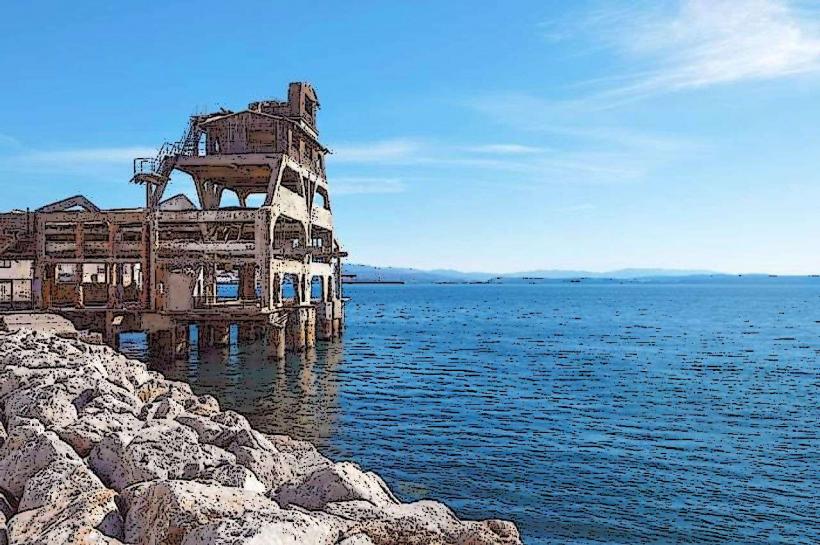
Rijeka functions as the administrative center of Primorje-Gorski Kotar County and the primary deep-water port of Croatia. Situated on the northern tip of Kvarner Bay, it serves as a specialized node for maritime logistics, pharmaceutical production (JGL), and naval engineering. It is defined by its Austro-Hungarian architectural heritage, its industrial grit, and its role as a critical junction for the Pan-European Corridor Vb.
Historical Timeline
Rijeka (historically Fiume) was a strategic Roman settlement (Tarsatica). The primary era of governance was defined by its status as a Corpus Separatum (1779–1918) within the Austro-Hungarian Empire, granting it administrative autonomy. The primary event shaping its modern identity was the 1924–1943 period as an Italian enclave, followed by its integration into Yugoslavia as a heavy industrial powerhouse. Historically, it was the site where the world's first self-propelled torpedo was developed in 1866.
Demographics & Population
The population is approximately 108,000 in the city proper, with a metropolitan area of 245,000 (2026 estimate). The demographic profile is characterized by a workforce specialized in shipping, metallurgy, and academia, supported by the University of Rijeka, a leading center for medicine and engineering in the Adriatic region.
Urban Layout & Key Districts
The city is organized linearly along a narrow coastal strip, bounded by steep hills.
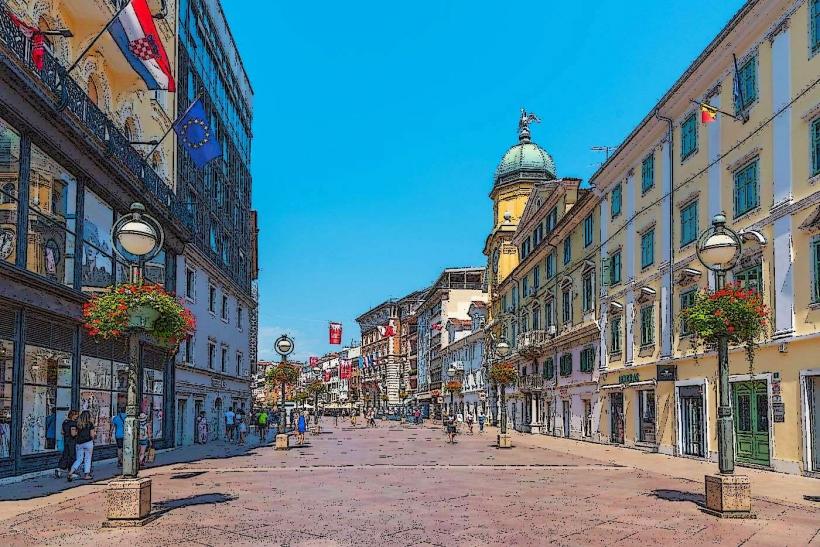
Korzo: The specialized central pedestrian promenade; the cultural and commercial axis of the city.
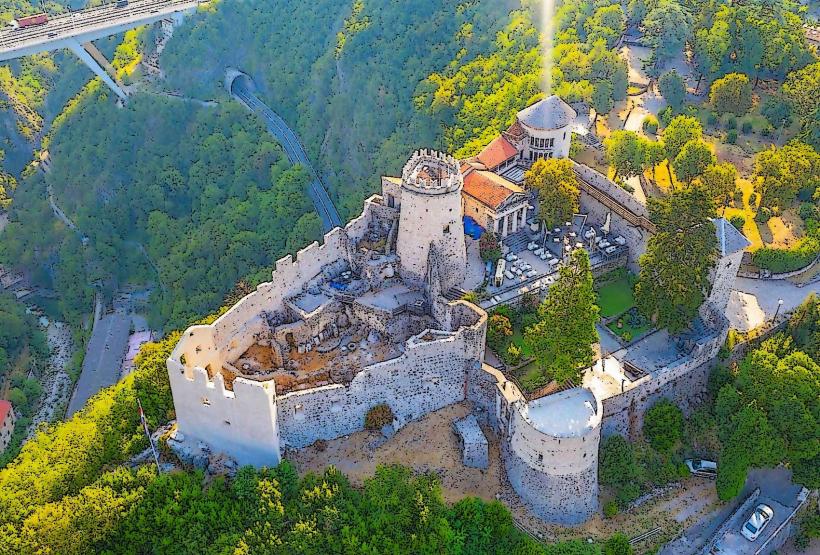
Trsat: A specialized hilltop district housing a medieval fortress and one of Croatia’s most important pilgrimage sites.
Delta: A specialized area between the Dead Canal and the Rječina River, serving as a transit and events hub.
Kantrida: A specialized western district famous for its football stadium built into a rock quarry.
Top City Landmarks
Trsat Castle: A specialized 13th-century defensive lookout on a 138-meter hill, offering panoramic views of Kvarner Bay.
City Clock Tower: A specialized baroque landmark on Korzo, originally one of the main city gates.
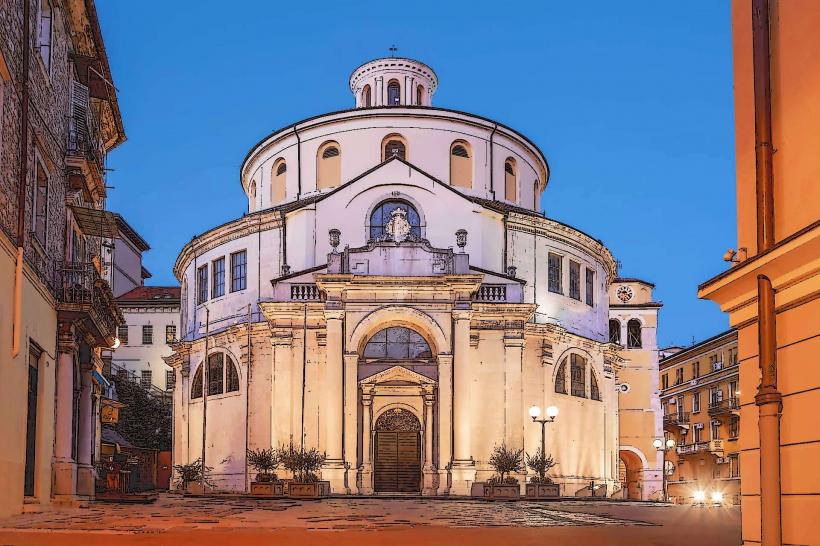
St. Vitus Cathedral: A specialized 17th-century baroque rotunda, the only one of its size in Croatia, inspired by Santa Maria della Salute in Venice.
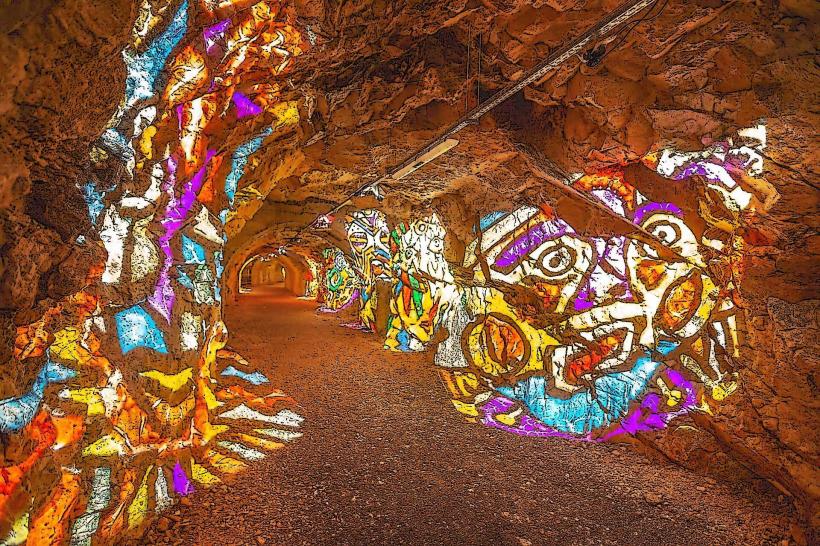
Rijeka Tunnel: A specialized 330-meter underground passage built by the Italian military between 1939 and 1942, now used as a pedestrian tourist route.
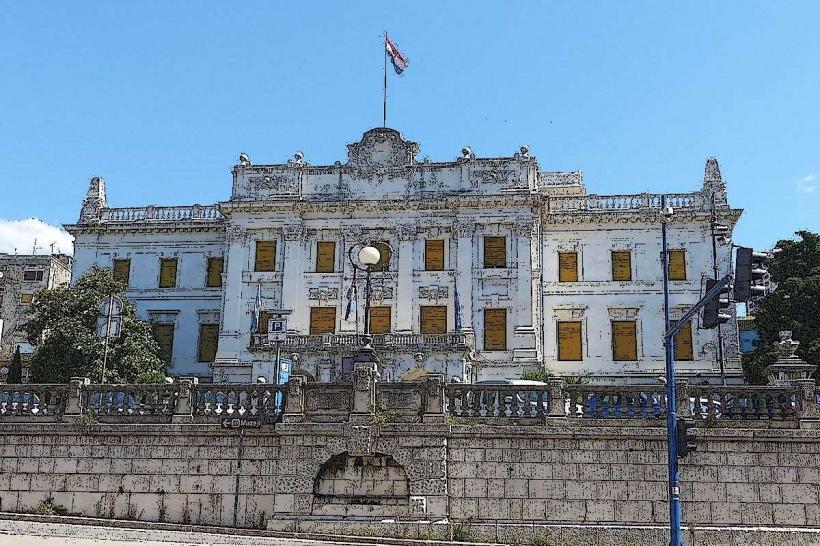
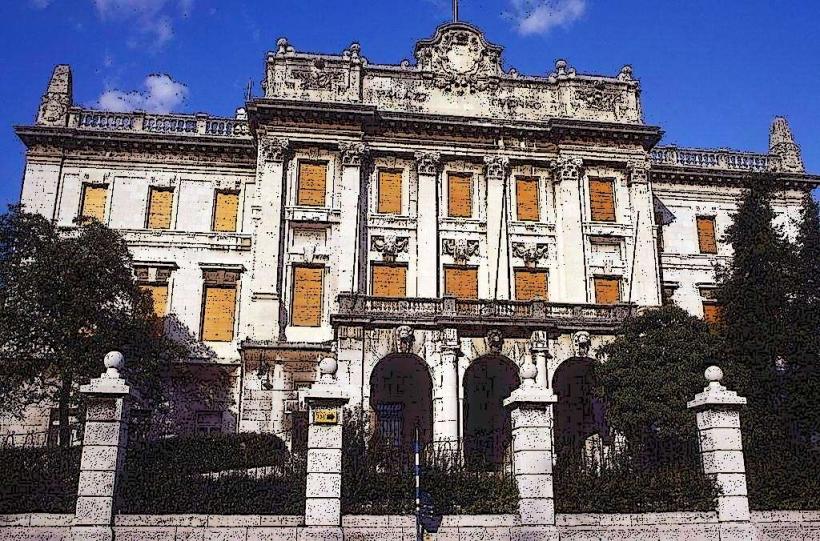
The Governor’s Palace: A specialized Neo-Renaissance structure that now houses the Maritime and Historical Museum of the Croatian Littoral.
Molo Longo: A specialized 1.7-km breakwater extending into the harbor, serving as a maritime promenade.
Transportation Network
Rijeka is the most important rail and road hub for Croatian maritime trade.
Port of Rijeka: A specialized international transit hub; in 2026, the Zagreb Pier Container Terminal operates as a fully automated deep-water node.
Rijeka Airport (RJK): Located 27 km away on the island of Krk, connected to the mainland by the Krk Bridge.
Road Infrastructure: The intersection of the A1, A6, and A7 motorways, linking the city to Zagreb (1.5 hours), Ljubljana, and Trieste.
Public Transit (Autotrolej): A specialized bus network. In 2026, the fleet is being transitioned to hydrogen and electric propulsion to meet EU urban mobility standards.
Safety & "Red Zones"
The general safety level is very high. Rijeka is statistically secure for residents and transit. There are no "red zones." Standard urban awareness is sufficient around the central railway station area late at night.
Digital & Financial Infrastructure
The city is a leader in Maritime ICT and Biotechnology. Internet speeds average 400–1000 Mbps. 5G is universal. In 2026, the city utilizes the "Smart RI" platform to manage port logistics and real-time air quality data.
Climate & Air Quality
Rijeka has a maritime-influenced humid subtropical climate. It is known as the "Rainiest City in Croatia." Average temperatures range from 6°C in January to 26°C in July. Air quality is generally high due to the "Bura" wind, though industrial zones are strictly monitored.
Culture & Social Norms
Social norms are characterized by "Luka različitosti" (Port of Diversity), reflecting a tolerant, cosmopolitan industrial identity. Tipping (10%) is standard. The primary cultural event is the Rijeka Carnival (one of the largest in Europe).
Local Cost Index (2026 Estimates)
1 Espresso: €1.80 – €2.50
1 Pint of Local Beer: €3.50 – €5.00
1 Standard Lunch: €12.00 – €20.00
Bus Ticket: €1.55
Nearby Day Trips
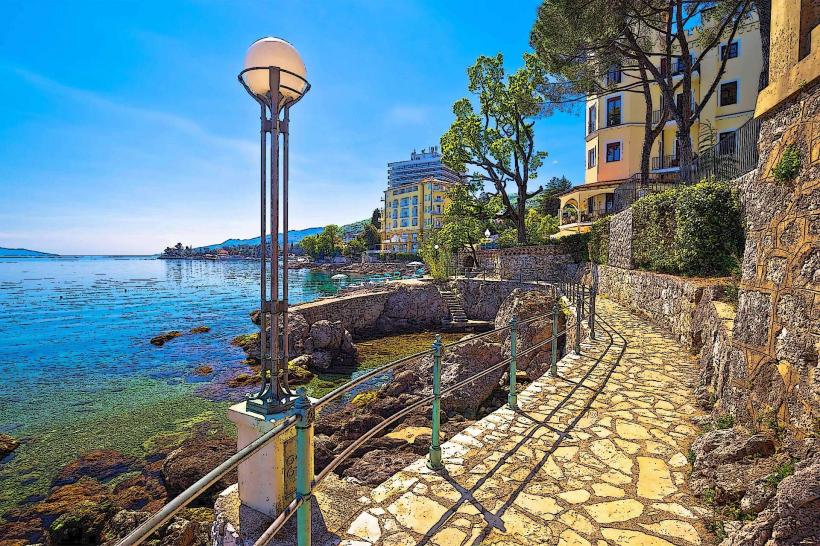
Opatija: 15 mins away; a specialized historic "wellness" town known for its 19th-century Austro-Hungarian villas and the Lungomare walk.
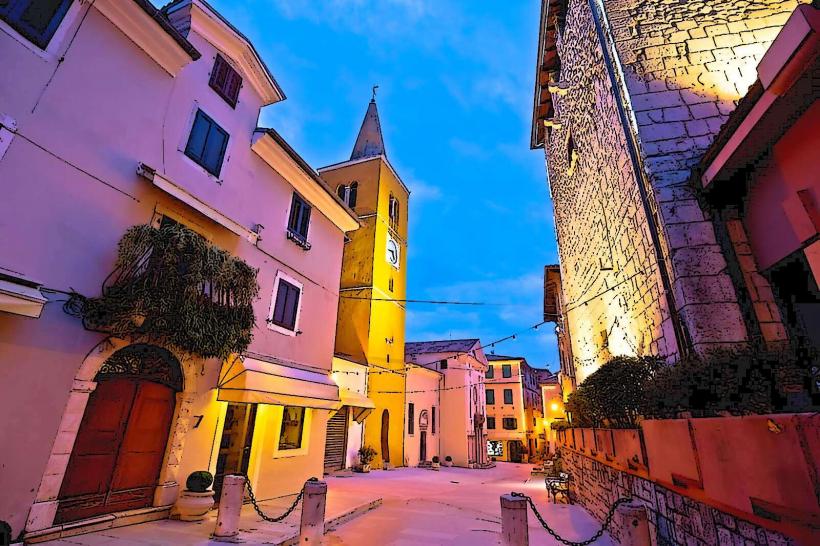
Krk Island: 30 mins away; a specialized island destination featuring medieval towns and the Baška tablet site.
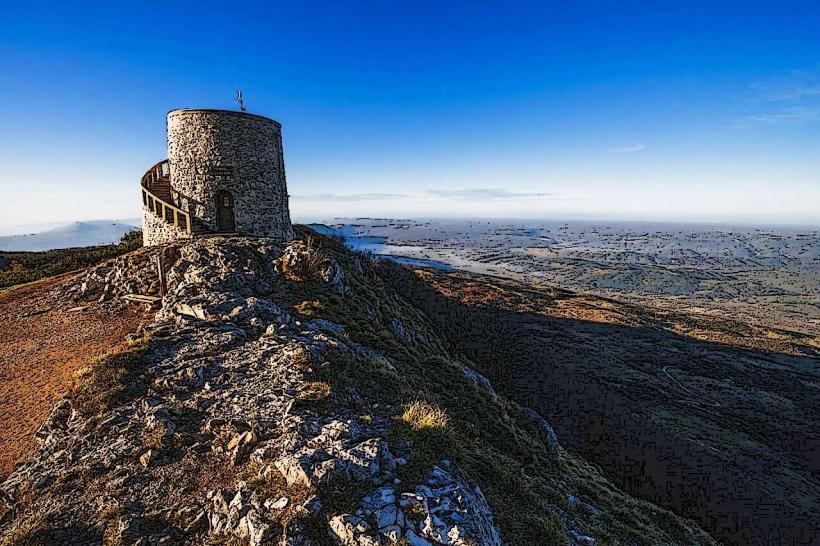
Risnjak National Park: 45 mins away; a specialized mountain wilderness area known for lynx and brown bears.
Facts & Legends
Rijeka is the site where the modern torpedo was invented by Ivan Luppis and Robert Whitehead. Legend states that the "Trsat Dragon" protects the Trsat sanctuary. A verified fact is that the city changed its ruling state seven times between 1918 and 1924. Historically, Rijeka was the first city in the region to have an international shipping line to New York.