Information
City: San SalvadorCountry: El Salvador
Continent: North America
San Salvador, El Salvador, North America
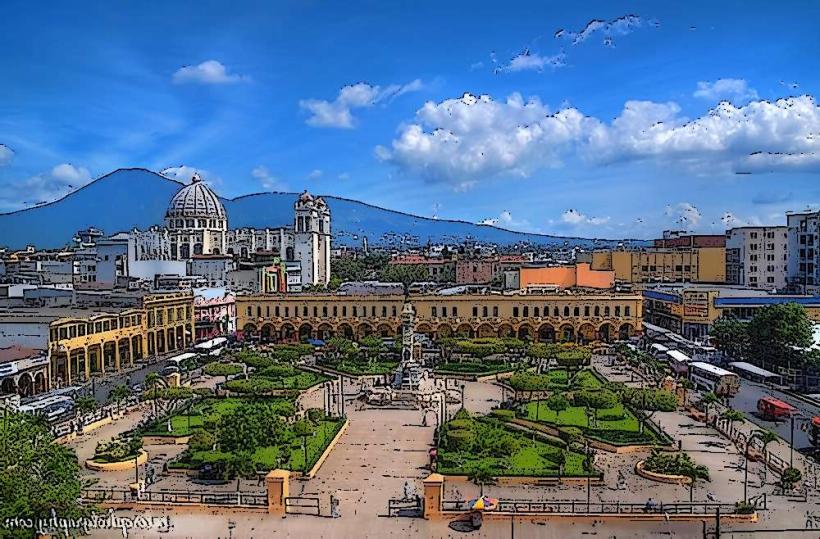
San Salvador is the political, financial, and cultural epicenter of El Salvador, located in the Boquerón Valley. As of 2026, the city is recognized as one of the safest capitals in Latin America following a radical transformation of its public security and urban infrastructure.
Historical Timeline
Founded in 1525, the city has been reconstructed multiple times due to seismic activity (major earthquakes in 1854, 1873, 1917, and 1986). During the Salvadoran Civil War (1979–1992), it was the site of intense urban combat. The 2022–2026 period marks its "Renaissance," defined by the recovery of territorial control from gangs and the massive revitalization of the Historic Center, including the opening of the new National Library of El Salvador (BINAES).
Demographics & Population
The San Salvador Metropolitan Area (AMSS) has an estimated population of 2.4 million, while the central district houses approximately 1.1 million. The ethnic composition is predominantly Mestizo (86%) and White (12%). The median age is 33 years.
Urban Layout & Key Districts
The city is divided into six main districts:
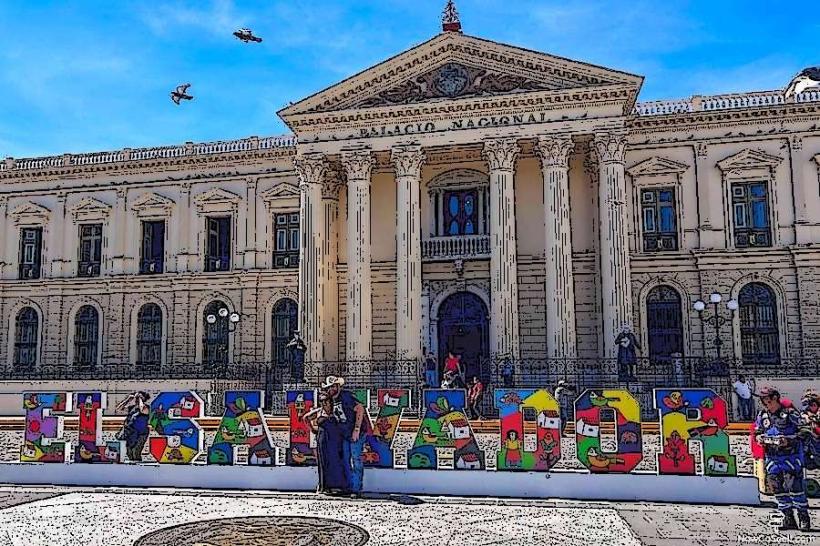
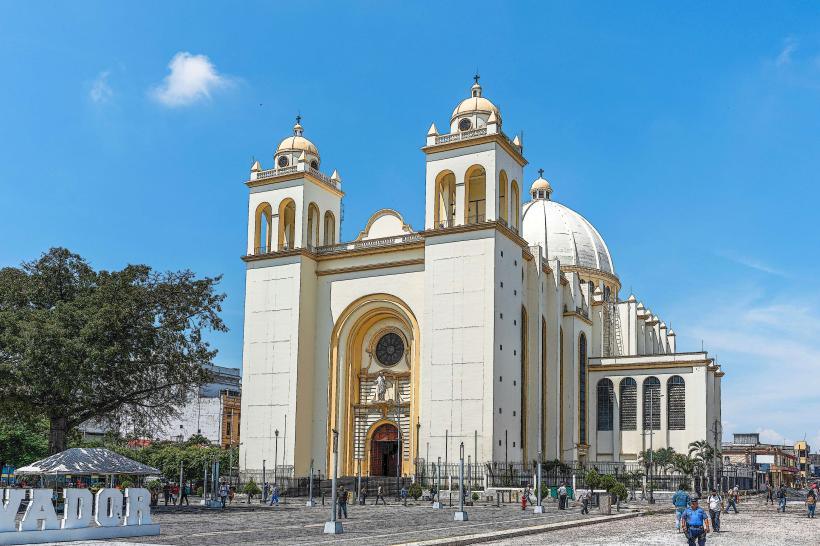
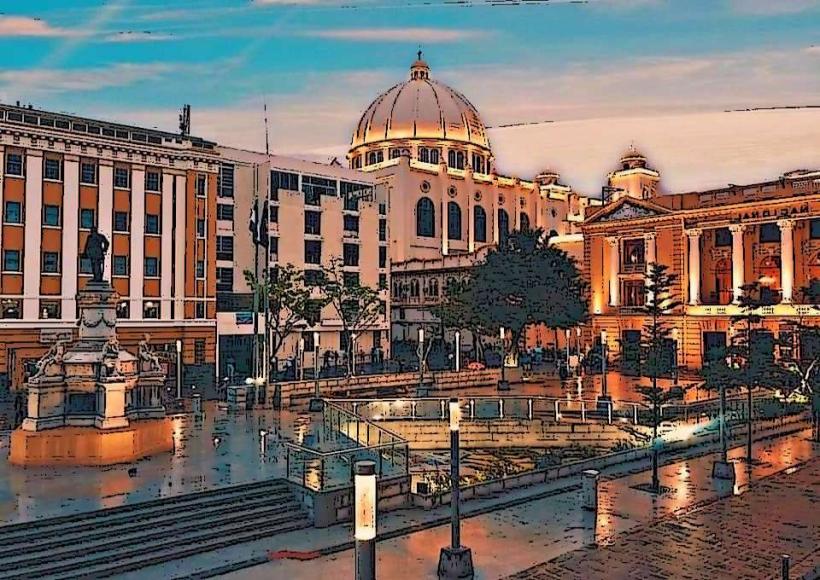
District 1 (Historic Center): The political heart containing the National Palace, Metropolitan Cathedral, and the revitalized Plaza Libertad.
District 3 (Escalón / San Benito): The financial and entertainment hub. The Zona Rosa is the center for nightlife, luxury hotels, and embassies.
Antiguo Cuscatlán: An adjacent municipality functioning as the modern commercial node (Multiplaza, La Gran Vía).
Santa Tecla: A residential and cultural suburb to the west, fully integrated into the capital's dynamics.
Top City Landmarks
National Library (BINAES): A seven-story building open 24/7, serving as a symbol of technological modernization.
National Palace: A neoclassical landmark featuring over 100 rooms reflecting 19th-century coffee wealth.
El Rosario Church: A brutalist structure with stained glass creating a unique chromatic spectrum; it houses the tomb of independence heroes.
Metropolitan Cathedral: The site of the crypt of Saint Oscar Romero.
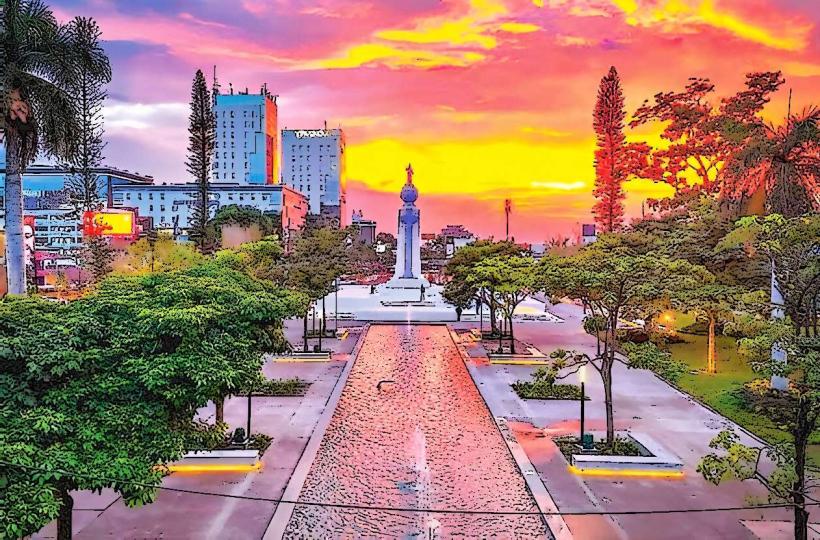
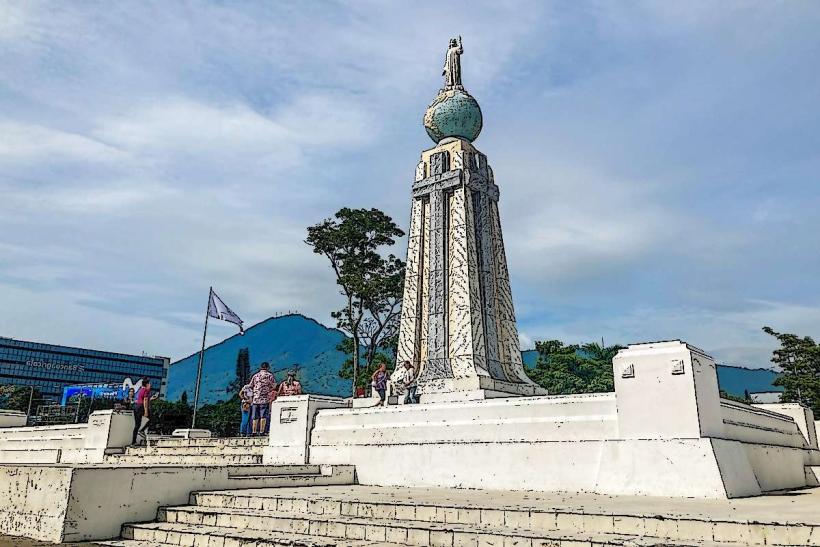
Monumento al Divino Salvador del Mundo: An iconic plaza and national symbolic reference point.
Transportation Network
Roads: Direct connection to the Pan-American Highway and the highway to Surf City.
Mobility: Public buses and microbuses are the primary transit mode. Uber and InDrive are the standard secure methods for tourists.
Airport: El Salvador International Airport (SAL) is located 40 km (40 minutes) south.
Traffic: High congestion persists on Bulevar Los Próceres and Constitución during peak hours.
Safety & Security
In 2026, San Salvador records historically low homicide rates. Former high-conflict sectors like Soyapango and Mejicanos are now accessible. Standard precautions against pickpocketing should be maintained in dense markets. The Historic Center is under constant patrol by the Tourism Police (POLITUR).
Digital & Financial Infrastructure
Connectivity: Average speeds of 100 Mbps in commercial areas. Broad 5G coverage via Claro, Tigo, and Digicel.
Economy: US Dollar (USD) and Bitcoin (BTC) are legal tender. Bitcoin infrastructure is robust in malls and tourist zones.
Banking: High density of traditional ATMs and Chivo (BTC) ATMs.
Climate & Air Quality
Tropical climate with temperatures between 18°C and 32°C. The rainy season (May–October) features intense afternoon thunderstorms. Air quality has improved in the center due to pedestrianization, though smog persists on main transit arteries.
Local Cost Index (USD)
Coffee in Zona Rosa: $3.50 – $5.00
Mid-range Dinner for Two: $30.00 – $50.00
Single Pupusa: $0.60 – $1.25
Nearby Day Trips
El Boquerón (San Salvador Volcano): 20 minutes from the center.
Surf City (La Libertad): 35 minutes via the new highway.
Lake Ilopango: A volcanic caldera 15 km east of the city.
Facts & Legends
A verified historical oddity: the National Theater was built with materials imported exclusively from Europe, including Italian marble and French crystal. A prominent local legend is that of "El Cipitio", a boy with backward feet who eats ashes and lures people away with his whistle. Urban lore also maintains that the National Palace is connected to the Metropolitan Cathedral via secret colonial tunnels.