Information
City: Satu MareCountry: Romania
Continent: Europe
Satu Mare, Romania, Europe
Satu Mare serves as the administrative capital of Satu Mare County and functions as a primary cross-border economic gateway due to its proximity to the Hungarian and Ukrainian borders. It is situated in northwestern Romania on the Lower Someș alluvial plain, bisected by the Someș River.
Historical Timeline
Satu Mare was first documented as Castrum Zotmar in the Gesta Hungarorum (referencing a 10th-century fort) and officially as Villa Zotmar in 1150. The city developed as two separate settlements, Szatmár and Németi, which were united in 1712 under a single administrative charter granted by Emperor Charles VI. Significant eras include the medieval period as a royal salt trade post, the Ottoman suzerainty (16th–17th centuries), and the Austro-Hungarian era (1867–1918). The primary event shaping the current urban form was the devastating flood of May 14, 1970, which destroyed large sections of the lower-lying city and led to a total reconstruction of the Civic Center (Centru Nou) in the 1970s and 80s using Brutalist and Socialist-Modernist architecture.
Demographics & Population
The population within city limits is approximately 102,000, while the metropolitan area encompasses roughly 243,000. The top three ethnic demographics are Romanian (approx. 56%), Hungarian (approx. 35%), and Romani (approx. 1.2%), with a small historical German (Sathmar Saxon) minority. The median age of the population is 42.5 years.
Urban Layout & Key Districts
Satu Mare is organized along the Someș River, which separates the historical northern districts from the modern southern sectors. Centru Vechi (Old Town) is the historical and religious core located on the northern bank, centered around Liberty Square. Centru Nou (New Center/Civic Center) is the modern administrative hub located south of the river, dominated by the Administrative Palace. Micro 16 and Micro 17 are the largest residential districts located in the western and southern peripheries, while the Industrial Zone South houses major manufacturing plants.
Top City Landmarks
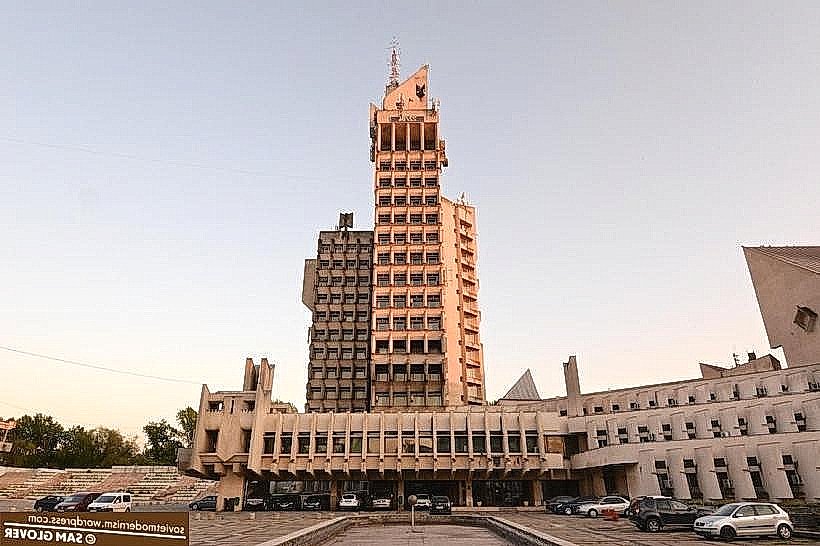
The Administrative Palace (the tallest building in Transylvania at 97m)
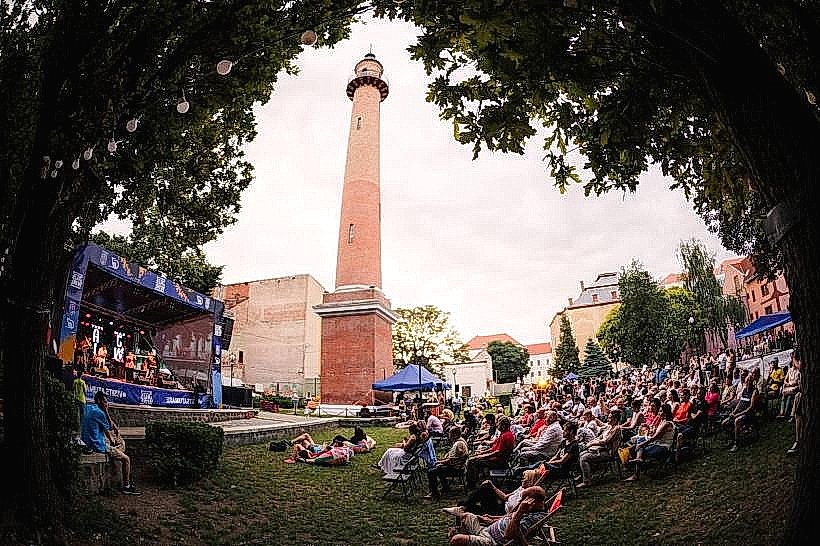
The Firemen's Tower (Turnul Pompierilor)
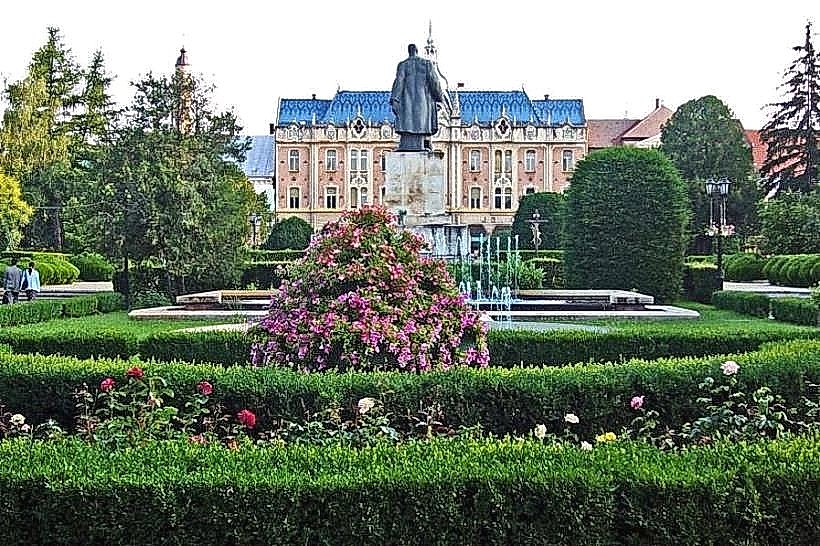
Hotel Dacia (formerly Pannonia Hotel – Art Nouveau landmark)
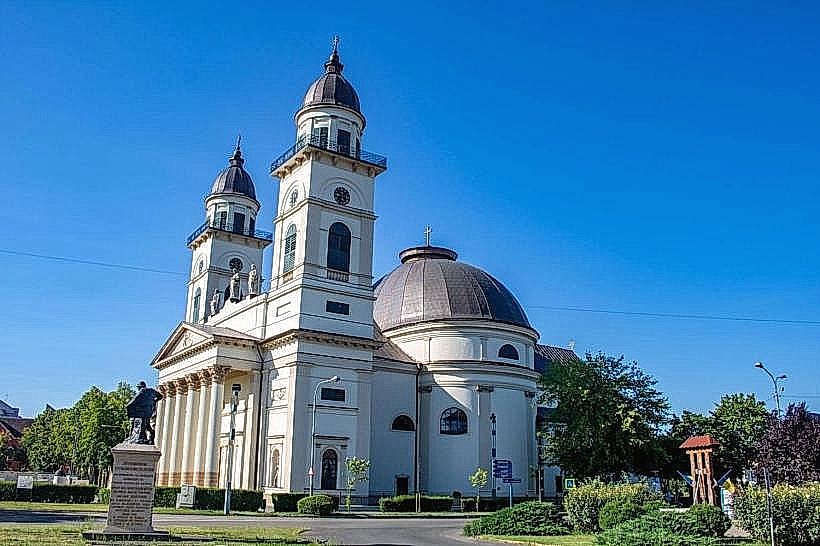
The Roman Catholic Ascension Cathedral
The Reformed "Church with Chains" (Biserica cu Lanțuri)
Transportation Network
Internal movement is facilitated by a bus network operated by Transurban; there is no Metro or Tram system. Bolt and Uber are the primary ride-sharing apps. Official taxis are painted yellow and must display the tariff (approx. 3.50–4.00 RON/km) on the front doors. Traffic density is moderate but peaks on the Decebal and Golescu bridges during 07:30–08:30 and 16:30–17:30.
Safety & "Red Zones"
Satu Mare maintains a high safety rating. The Ostrovului area and parts of the Micro 14 residential district are identified as lower-income zones with higher rates of petty theft and should be avoided late at night. Common scams are infrequent, but visitors should avoid unregulated "touts" near the main train station and the Petea border crossing.
Digital & Financial Infrastructure
Average internet speed is 135 Mbps via widespread fiber-optic coverage. Main mobile carriers are Orange, Digi Mobil, and Vodafone. Card acceptance is high in the city center, malls (Shopping City Satu Mare), and restaurants; cash (RON) is required for small kiosks and for use at the central agricultural market. ATMs are densely distributed around Liberty Square and the Civic Center.
Climate & Air Quality
Temperatures range from -5°C to 2°C in winter (January) and 17°C to 29°C in summer (July). Air quality is generally good, though particulate matter (PM2.5) levels occasionally increase during winter due to domestic heating and proximity to the industrial zones. Flooding remains a managed risk during heavy spring rains along the Someș riverbed.
Culture & Social Norms
The standard tipping rate is 10% in restaurants. Handshakes are the standard formal greeting. The city is officially bilingual in many contexts; public signage and local interactions frequently utilize both Romanian and Hungarian. Dress code is casual, but conservative attire (covered shoulders/knees) is expected in both Catholic and Orthodox religious sites. Public smoking is prohibited in all indoor venues.
Accommodation Zones
Stay in Centru Vechi (Old Town): Recommended for immediate walking access to historical sites, Art Nouveau architecture, and central dining.
Stay in Centru Nou (New Center): Recommended for proximity to administrative offices, Shopping City Satu Mare, and modern business hotels.
Local Cost Index
1 Espresso: 11 RON ($2.40)
1 Standard Lunch: 42 RON ($9.15)
1 Bus Ticket: 3 RON ($0.65)
Nearby Day Trips
Karolyi Castle (Carei): 35 km
Ardud Fortress: 20 km
Maramureș Mountains (Luna Șes): 50 km
Facts & Legends
A verified historical oddity of Satu Mare is the "Administrative Palace," which was built to withstand an 8.0 magnitude earthquake and is the tallest building in Transylvania, designed in a Brutalist style to symbolize a stylized flower. Local legend regarding the "Church with Chains" suggests the chains surrounding the site were forged to protect the religious ground after a local dispute between the city's main ethnic groups in the 18th century, serving as a boundary for sacred space.